

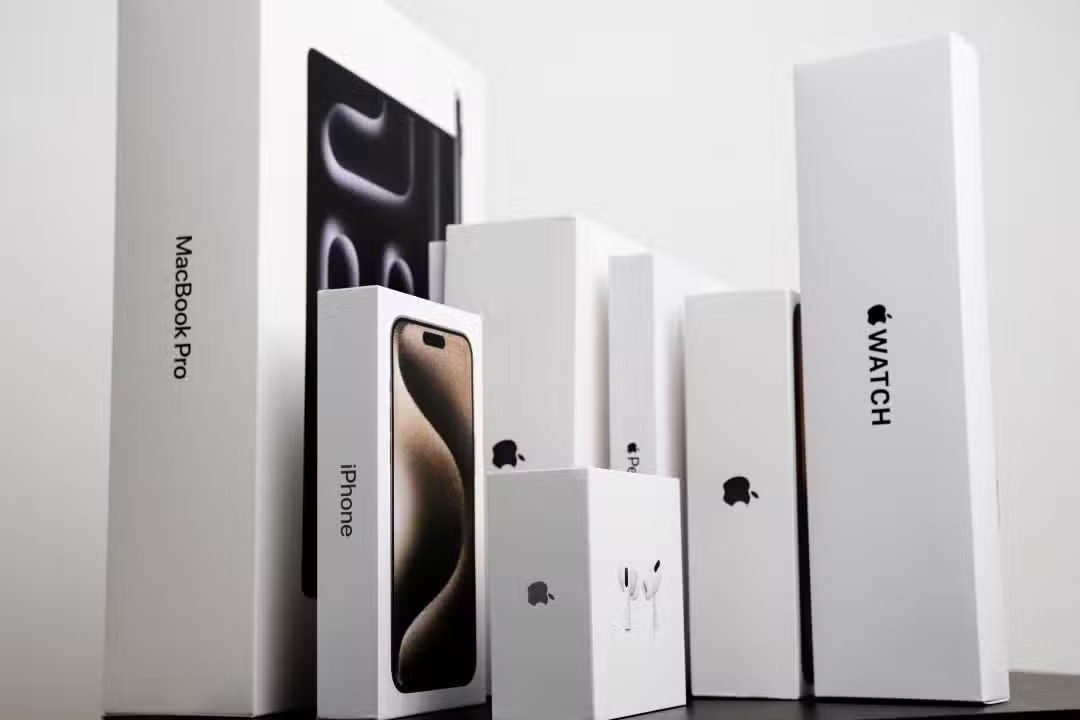
Executive Director Tim Cook presented an unprecedented collection of hardware prototypes during the event celebrating Apple’s fiftieth anniversary. The exhibit revealed original circuit boards that gave rise to the first iPhone and iPod models. The collection kept confidential by the company demonstrates the initial stages of development of the devices. The company’s Engenheiros used large components before the miniaturization required for the consumer market.
The technological exhibition details the transition from desktop computers to pocket-sized mobile devices. The exposed material illustrates the trial and error process in Cupertino’s laboratories in recent decades. Especialistas in hardware consider the revelation a milestone in understanding the history of personal computing. The preservation of these artifacts documents the engineering trajectory that transformed the global telecommunications and digital entertainment industry.
The evolution of engineering behind mobile devices
The prototypes displayed highlight the complexity of the process of creating new electronics. The first versions of the devices worked on gigantic breadboards. Developers needed to test the viability of logic circuits before designing the final product design. The technical team connected cables and processors across large surfaces to make it easier to identify system faults. The work required absolute precision from programmers.
Reducing the size of components represented the biggest obstacle for the company’s engineers. The chips needed to operate energy efficiently without generating excessive heat in users’ hands. The anniversary display shows exactly the contrast between development boards and finished products. The public can observe the evolution of microprocessors over the years. The internal architecture of the equipment underwent drastic changes until it reached the current standard.
The exhibition also rescued original components from the Apple II, manufactured in the late 1970s. The pioneering personal computer established the financial and structural foundations of the company. The direct comparison between the logic boards of 1977 and the circuits of the first smartphone highlights the exponential leap in data processing capacity. Visitors were able to observe the transition from discrete transistors to high-density integrated circuits.
The impact of the original iPod on the digital audio market
The event dedicated a specific space to the music player originally launched in 2001. The prototype of the first iPod reveals a robust structure and considerably larger than the commercialized version. Engineers used a complex testing interface to calibrate the device’s mechanical hard drive. The touch-sensitive navigation wheel went through several iterations until it worked smoothly. The device changed the way we consume media.
Physical documentation of this development helps to understand the company’s strategy at the beginning of the millennium. The MP3 player market lacked an integrated solution with music library management software. The prototype demonstrates the original data transfer connections and battery testing. The industrial design team worked in parallel with hardware engineers to house the technology in a compact chassis.
- The player required the creation of an anti-shock storage system to prevent track skipping.
- The user interface on a monochrome screen required exhaustive readability tests under different lights.
- The audio connectors required structural reinforcement to withstand heavy daily use.
- File synchronization relied on high-speed ports that were still rare at the time.
Displaying these technical details demystifies the corporate innovation process. The success of the audio player financed the company’s subsequent research into the telephone industry. Profits made from the sale of digital music have established a new business model for the global music industry. The device served as the architectural basis for the brand’s future launches.
Placas developing the brand’s first smartphone
The most anticipated section of the exhibit included preliminary iPhone circuits developed between 2006 and 2007. The original test boards took up the space of an entire table. Radio, processing, and memory components were spread out to allow individual measurements with oscilloscopes. Integrating the touchscreen with the operating system required the creation of unique diagnostic tools. The telephone redefined the concept of mobile communication.
Engineers faced technical difficulties in unifying cell phone, wireless internet and Bluetooth antennas on the same circuit. The prototype exposed by Tim Cook displays the improvised metal shields used to prevent electromagnetic interference between the modules. The calibration of the proximity sensors and accelerometer took place on these exact development boards. The software needed to respond instantly to physical commands simulated in the labs.
The transition from the desktop board to the pocket format required the invention of new component soldering techniques. The company had to order specific machinery to assemble miniaturized logic boards on a large scale. The historical record of this process proves the volume of resources invested in materials research. The scratch-resistant glass screen has also undergone stress testing on these primary evaluation units.
Preservação from the technological collection for future generations
Maintaining a physical file with prototypes serves educational and patent registration purposes. The company stores the boards in environments with strict temperature and humidity control to prevent circuit degradation. The collection serves as reference material for new engineers hired by the manufacturer. Analyzing past mistakes guides the development of next generations of devices.
The anniversary exhibition marks a rare opening of the company’s coffers to public scrutiny. The brand’s culture of industrial secrecy often prevents the disclosure of behind-the-scenes materials. The decision to display the prototypes demonstrates recognition of the historical importance of this equipment for modern society. Museus technology companies around the world frequently request to borrow these pieces for temporary exhibitions about the digital age.
The company’s archivists use anti-static gloves and specialized tools to handle historical equipment. The oxidation of copper contacts and the degradation of old plastics require conservation techniques similar to those applied in art museums. Restoration work ensures that circuit boards maintain their original factory characteristics. The initiative protects the corporation’s intellectual and physical assets against the effects of time.
The physical record of computing evolution ensures the integrity of the Vale’s industrial memory of the Silício. Documenting the engineering steps provides a realistic perspective on the time required to turn an idea into a viable product. Old circuit boards represent the material foundation of today’s application economy. Cataloging these artifacts remains a priority for technology sector archivists.