

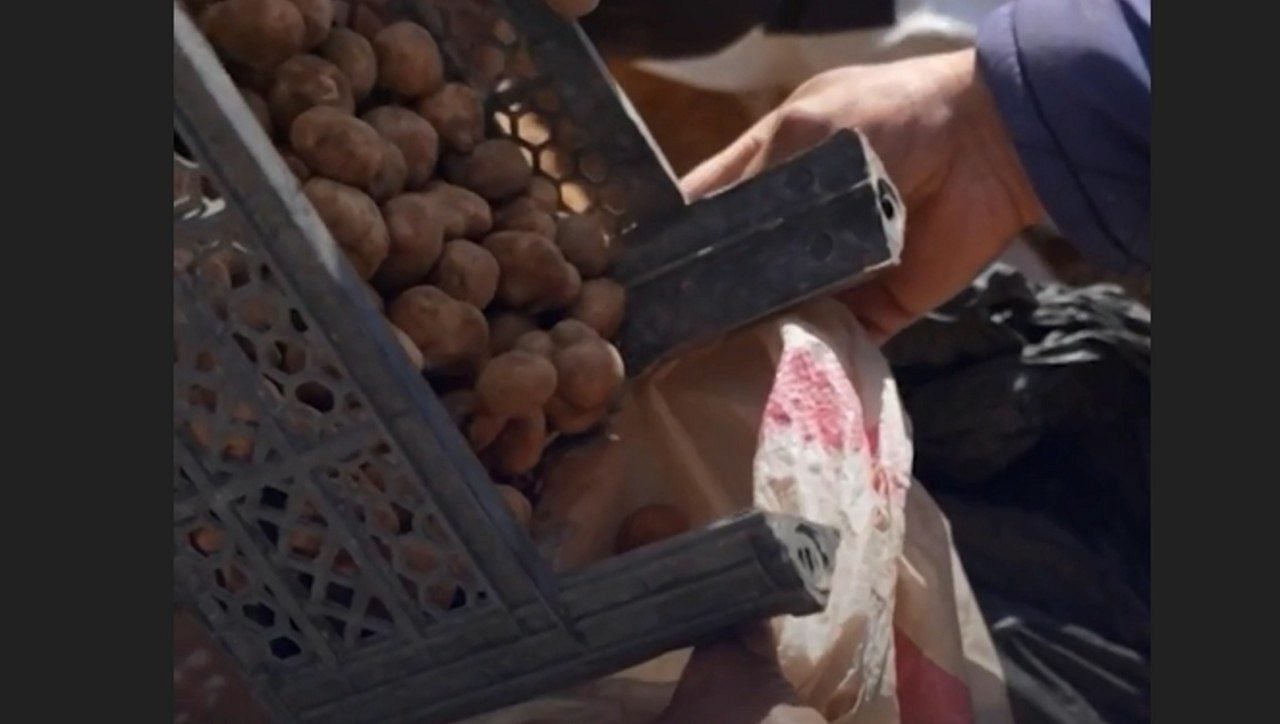
Truffle extraction in the northeast of Síria has become an activity of high financial and physical risk for local residents. Trabalhadores enter areas contaminated by explosives in the province of Deir El-Zour to look for the delicacy hidden beneath the ground. The product reaches prices close to US$50 per kilo on the commercial market. The practice occurs in a scenario of severe economic scarcity after years of uninterrupted armed conflict in the country.
The vulnerability of these professionals goes beyond military artifacts buried in the desert. Células remnants of extremist groups carry out frequent attacks against extraction convoys during expeditions. Stability in the province remains fragile and unpredictable. Esse context forces dozens of families to ponder daily between the lack of basic resources and the possibility of violent death during fieldwork.
Explosões constant and serious injuries mark collectors’ routine
Landmine accidents represent the main cause of mortality among rural workers dedicated to this specific function. Hassan Al-Daham Al-Hassan is part of the group of survivors who suffer permanent physical consequences after work. The collector suffered multiple fractures to his arm and has metal shrapnel lodged in his back. The injury occurred after his vehicle passed over an unexploded explosive device. The truck was completely destroyed.
Similar Relatos multiply throughout the province’s hospitals during the harvest season. Hamza Al-Mohammad also suffered serious injuries during a recent expedition in the same region. Ele was walking through an apparently clear area when he triggered an explosive hidden in the undergrowth. Recovery requires medical resources that are rarely available at local healthcare facilities. Hospitais operate at reduced capacity due to years of continuous bombing. Faltam basic supplies such as antibiotics, anesthetics and intensive care beds.
Falta of mapping and state action worsens humanitarian crisis
The absence of public policies aimed at territorial security intensifies the dangers faced by the civilian population. Vítimas of the explosions report that there are no warning signs or physical blocks in the highest risk areas. The central government faces logistical and financial limitations to act comprehensively in the province. Isso leaves residents without any type of technical guidance on safe routes for daily traffic.
Trabalhadores injured classify the current scenario as an ongoing and silent humanitarian disaster. Eles point out structural flaws in territorial management in the post-acute conflict period. The main demands of the local community include:
- Instalação immediate visual signaling in perimeters contaminated by military explosives.
- Divulgação of maps updated with risk zones confirmed by security authorities.
- Execução of professional demining operations on civil and commercial use routes.
- Criação of government checkpoints to monitor access to isolated rural areas.
- Estabelecimento of safe corridors for the flow of regional agricultural production.
The implementation of these measures is hampered by a lack of state budget and qualified personnel for the role. Organizações international companies specializing in demining encounter bureaucratic and security barriers to operating in the region. The work of sweeping and cleaning the soil is progressing at a pace much slower than the urgent needs of the local population.
Security Vácuo allows extremist cells to operate
Territorial control in Deir El-Zour presents significant fragmentations between different armed forces. Syrian state Forças maintains bases in the main urban areas, but encounters operational difficulties in patrolling the vast rural expanse. Esse distancing facilitates the tactical movement of paramilitary groups. Combatentes linked to Estado Islâmico use the open desert as a refuge zone and ambush planning.
Truffle collectors become easy targets during expeditions that often last several days. Eles camp in isolated areas without any type of armed escort or satellite communications equipment. The arid terrain and frequent sandstorms make it difficult to visually track approaching threats. Extremist attacks aim to steal valuable merchandise and vehicles used for transportation. On many occasions, workers are kidnapped to pay financial ransoms.
International Mercado Drives Disproportionate Risk-Profit Cycle
Global economic dynamics have a direct influence on the danger routine within Síria. Truffles extracted in the country are in high demand in international gastronomic markets due to their specific quality and intense flavor. The war drastically reduced the volume of official exports of the product. Essa continued shortages have driven prices of the delicacy to record highs abroad.
Consumidores endings in luxury restaurants are rarely aware of the extreme extraction conditions. The significant profit generated by the sale does not reach the workers who risk their lives in the minefields. The smuggling route involves multiple intermediaries until reaching ports and airports in neighboring countries. Intermediários buy cargo for lower prices in Syrian villages and multiply their margins when crossing borders. The collector receives only a minimal fraction of the final price paid by the European or Asian consumer.
Economic Sobrevivência overcomes fear of fatal accidents
The destruction of Syrian productive infrastructure has eliminated most formal employment opportunities in the northeast region. Fábricas closed its doors and local businesses shrank drastically in the last decade of instability. Truffle collecting appears as one of the rare alternatives for injecting quick capital for severely indebted families. The value obtained from a few kilos of the fungus exceeds the monthly salary of several traditional professions in the country.
Prior knowledge of the risks does not keep workers away from areas contaminated by explosives. The harvest season occurs over a short period of the year, usually after the winter rains. Essa narrow time window creates a race against time among residents. Collectors develop empirical techniques to try to identify disturbed soil or blast wires in the earth. Intuition replaces non-existent safety equipment. The need to buy food and ensure basic sustenance keeps the constant flow of people towards the desert.