Quail, cachara and three other birds carry poison in their skin and feathers
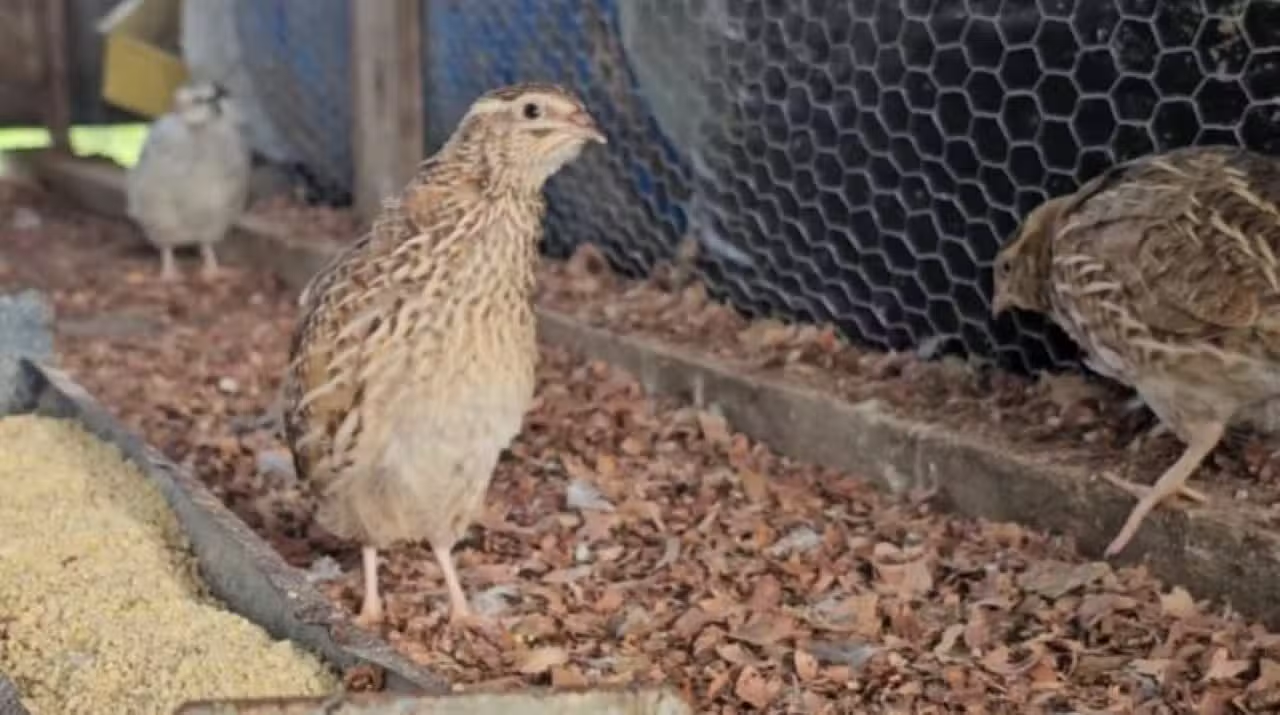
Alguns birds have developed an impressive toxic defense mechanism throughout evolution. The quail, contrary to what many believe, has poisonous substances in its skin and feathers. The poison does not affect those who consume its eggs, as the toxin is concentrated only in the animal’s body structures, not in the yolk or white.
Cientistas identified at least four species of birds that use poison as a protection strategy against predators. The system works in a similar way to that of poisonous frogs, with the difference that these birds accumulate toxins without suffering harm. Pesquisadores are also investigating how these animals avoid self-intoxication during the storage of lethal substances in specific tissues.
Como the poison is stored in birds
The chemical defense mechanism in birds involves absorption of toxic alkaloids through food. The quail consumes plants and insects that contain these substances, which gradually accumulate in the skin and feathers without causing poisoning in the host animal. Diferente of insects and amphibians that produce their own toxins, these birds function as biological receptacles for environmental poisons.
Estudos point out that the immune system of these birds has undergone specific genetic mutations that prevent the absorption of the poison by the body. Toxic molecules are stored in the outer layers of the body, creating a chemical barrier against predators. Qualquer animal that tries to bite or ingest the bird comes into immediate contact with the harmful substance.
Known Espécies and its characteristics
Pesquisadores specially mapped the following poisonous birds:
- Codorna from Flórida (Colinus virginianus) — presents accumulation of alkaloids in moderate concentration
- Cáchara or pegaguete (Geositta cunicularia) — South American species with toxins in feathers and skin
- Pitohui (Pitohui toxicus) — Papua New Guinean bird with one of the most potent venoms among birds
- Ifrita (Ifrita kowaldi) — also from Oceania, with significant toxicity to external structures
- Coruja-do-mato or loja (neotropical species) — still little studied regarding the exact concentration of toxins
The pitohui has become the most famous species among scientists for presenting extremely potent neurotoxins, capable of causing paralysis in large animals. A single bird contains enough venom to incapacitate multiple predators. The region’s native Papuans have known about these birds for centuries and purposefully avoided them during hunts.
Segurança of egg consumption
The absence of toxins in the eggs of poisonous birds is due to biochemical isolation during reproduction. The poisonous substances remain in the epidermal cells and feather structures, without migrating to the reproductive system. Quando the yolk develops in the ovary, it receives nutrients from the bird’s blood, not from the structures where the venom is concentrated.
Consumidores can eat quail eggs, quail eggs and other poisonous birds without any health risk. Toxic protection only serves to protect the living animal against predators. Estudos toxicological tests confirm that no alkaloids detected in the skin reach the eggs in harmful concentrations.



Chefs and nutritionists indicate that these eggs have interesting nutritional properties and a high protein content. Algumas Traditional cultures consume pitohui and ifrita eggs regularly with no historical records of poisoning. The issue is not culinary, but zoological: the toxin protects the bird, it does not interfere with its reproductive product.
Questões still open to scientists
The exact mechanism of how these birds acquired resistance to their own venom remains under investigation. Testes genomic data indicate multiple mutations in cell membrane proteins and neural receptors. Specific Genes appear to block the binding of toxins to active sites in the nervous system of these birds.
Pesquisadores also try to understand why only these four or five species developed this defensive system while other birds evolved in completely different ways. The answer may lie in the environment where these species live, with specific predators and abundant availability of toxic plants in the regions they inhabit.
Estudos in the laboratory continues to test whether young specimens are born with resistance already formed or whether they acquire tolerance gradually during development. Marcadores biochemists show that poisonous bird chicks have low levels of toxins in the first weeks of life. The concentration increases as the animal matures and consumes more food contaminated with alkaloids.
Aplicações potential in medicine
Compreender How these birds block the action of neurotoxins could open avenues for poisoning treatments. Cientistas are considering studying proteins isolated from these birds to develop more effective antivenoms. The natural protective system represents decades of chemical evolution that modern medicine has yet to fully replicate.
Instituições from comparative biology research already collects skin and feather samples from venomous species for in-depth genetic analysis. The objective is to map exactly which genes encode resistance and how they could be used in future therapies. Nenhuma concrete application has not yet reached the clinical stage, but the biotechnological potential is considered promising among experts.
See Also em Latest News (EN)

Does Arrascaeta play today? Where to watch Flamengo x Vasco today at 4pm for the Brazilian Championship
03/05/2026
British woman travels to Florida for a fatal pact with a man she met online and ends up murdered
03/05/2026
Duke of Sussex rules out meeting with monarch on new visit to London for legal dispute
03/05/2026
South Korean automaker confirms production of new compact utility vehicle in the interior of São Paulo for 2027
03/05/2026
Transits of Jupiter and Uranus boost gains and opportunities for four signs in 2026
03/05/2026
Vacuum cleaner manufacturer launches 1,903 hp electric hypercar with record acceleration at CES
03/05/2026
Astronomical observations reveal massive particles in the jet of interstellar comet 3I/ATLAS in space
03/05/2026
Astrophysicist maintains classification of interstellar object 3I/ATLAS before passing by Jupiter
03/05/2026
Fifth episode of the final season of The Boys recovers pace with acid humor and intense action
03/05/2026
Japanese automaker updates family minivans and defines hybrid engine as standard
03/05/2026
Image of Gonzalo Higuaín in Miami raises debate about former players’ routine after retirement
03/05/2026