Apple ends support for Intel chips in macOS 27 with full focus on ARM processors
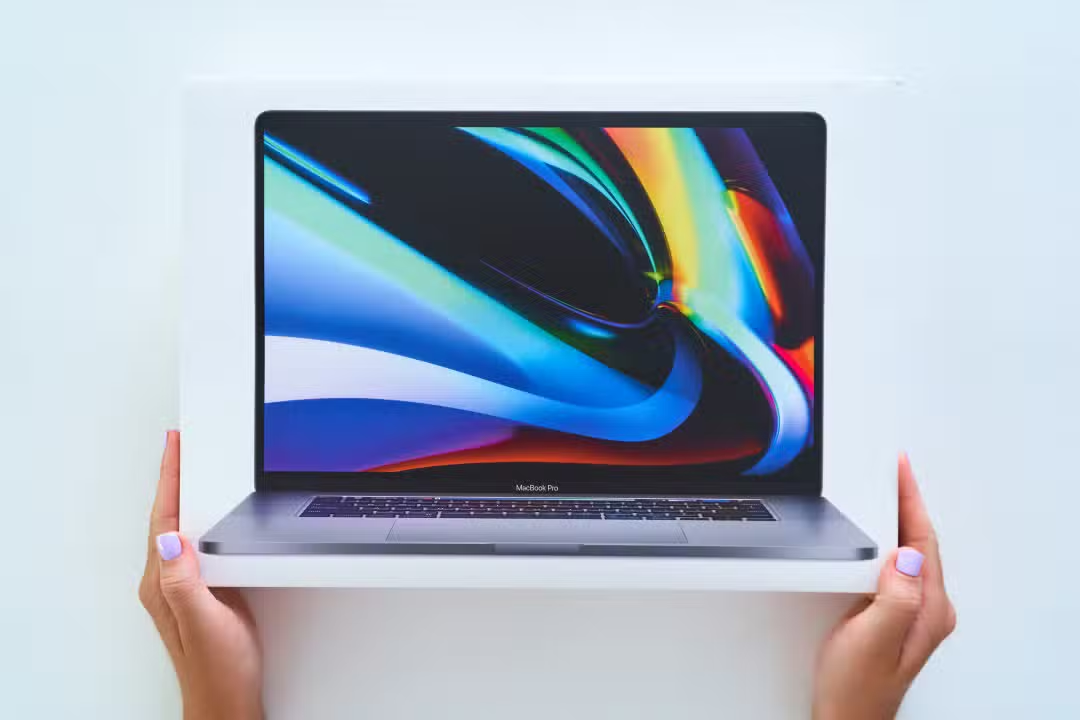
Apple confirmed that the macOS 27 operating system will work exclusively on computers equipped with M-line processors. The update scheduled for September marks the definitive end of support for Intel chips. Older Máquinas will not receive the new software version. The movement consolidates the ARM architecture as the single standard for the company’s entire line of computers.
The decision ends a transition cycle that began six years ago in the technology market. The end of compatibility directly affects users of equipment manufactured until 2020. Desenvolvedores applications will need to compile their programs natively for the new architecture. The corporate market was already awaiting this structural change.

The end of the transition and the exclusivity of ARM chips
The structural change in the operating system represents the final step of long-term strategic planning. The manufacturer began replacing the Intel components with its own processors known as Apple Silicon. The initial promise involved greater energy efficiency and superior performance. The practical results confirmed the expectations of the hardware market. Computadores portables gained unprecedented battery life.
macOS 27 will require the presence of an M-series chip to carry out the installation process. The list of compatible equipment includes everything from the first models with M1 to the most recent versions equipped with the M5 generation. The integration between hardware and software now reaches its maximum level of optimization. The company has full control over the ecosystem. Falhas compatibility tends to decrease drastically.
Especialistas in technology point out that maintaining two distinct architectures generated high development costs. The software engineering team needed to test each feature in two different environments. Unification simplifies the process of creating new tools. The company’s focus is entirely on extracting maximum power from ARM cores.
Remoção from Rosetta 2 and the impact for developers
The end of support for old processors brings another important technical consequence for the ecosystem. The code translation tool called Rosetta 2 will be completely removed from the operating system. The utility allowed applications created for the x86 architecture to run on new computers without prior modifications. The execution occurred invisibly to the end user. Performance showed minimal losses during daily use.
The absence of a translator requires updating legacy software. Programas that did not receive native ARM versions will no longer open on the new system. The software industry had enough time to make the necessary adaptations. Grandes technology producers already offer full support for M-series chips.
The current scenario of the professional applications market has the following characteristics:
- Softwares image editing suites run natively on ARM architecture.
- Productivity Pacote Microsoft features full optimization for the new processors.
- Ferramentas three-dimensional modeling of Autodesk eliminates the use of code translators.
- Aplicativos minors that have not received recent updates will lose functionality.
- Desenvolvedores independents need to recompile their projects to maintain the user base.
The transition went more smoothly than the previous switch from PowerPC to Intel architecture. The technical documentation provided by the manufacturer made the programmers’ work easier. Ending Rosetta 2 frees up storage space and kills background processes. The operating system gains in lightness and execution speed.
Affected Modelos and the life cycle of computers
The list of computers excluded from the update covers machines considered high performance at the time of their release. The MacBook Pro sold in early 2020 remains on the previous version of the system. The iMac with a 5K resolution screen launched in the same year also loses access to new features. The 2019 Mac Pro represents the most emblematic case of planned obsolescence. The equipment cost tens of thousands of dollars and now encounters software limitations.

Interrupting operating system updates does not mean the immediate end of the useful life of these devices. The company’s standard policy guarantees the provision of security fixes for an additional period of time. Critical Vulnerabilidades will continue to receive attention from the technical support team. Everyday use for basic tasks remains safe and functional.
The used computer market is expected to record a sharp drop in prices for models with Intel processors. Consumidores seek equipment with greater longevity of updates. The devaluation mainly affects professionals who invested in robust workstations shortly before the architectural transition. Changing machinery becomes an imminent necessity for those who depend on software in its latest versions.
Instituições education and companies with large machine parks face the challenge of inventory renewal. Financial planning needs to accommodate the gradual replacement of incompatible computers. Complete migration to the Apple Silicon line requires considerable investments in the short and medium term.
Conferência WWDC26 sets the stage for innovations in artificial intelligence
Full details about macOS 27 will be presented during the annual WWDC26 developer conference. The event is scheduled for June 8th. The main presentation will reveal the graphical interface and the software’s new features. The focus of this year’s edition falls heavily on the integration of artificial intelligence tools. The industry awaits responses to advances from competitors in the sector.
The Siri virtual assistant will receive its biggest redesign since its original release. The update was initially scheduled for 2024 and suffered delays in the development schedule. The new version promises improved context understanding and execution of complex tasks. Natural language processing will occur directly on computer hardware. User data privacy remains a central selling point.
System-native Aplicativos will gain machine learning-based features. Photo management software will include advanced automated editing options. The generation of text and document summaries will be part of the basic functions of the operating system. The neural processing power of M-series chips will be stretched to the maximum.
The impact on the corporate market and the adaptation of the technology sector
The definitive transition to the ARM architecture reverberates beyond the manufacturer’s closed ecosystem. Empresas competitors note the success of the hardware and software unification strategy. Fabricantes of Windows system computers have started similar moves recently. The search for greater energy efficiency dictates the direction of the global semiconductor industry. Traditional processors based on the x86 architecture face their greatest historical challenge.
Departamentos of information technology prepare migration protocols to deal with the obsolescence of old equipment. Corporate fleet management requires attention to the expiration dates of operational systems. Custom-developed internal Softwares must undergo code audits. Guaranteeing compatibility with new processors avoids interruptions in companies’ daily operations.
The end of support for Intel chips closes an important chapter in the history of personal computing. The partnership between the two technology giants lasted more than a decade and a half. The disruption drove significant innovations in the design of logic boards and cooling systems. The consumer market reaps the fruits of this evolution through quieter and more powerful machines. Computer architecture enters a phase dominated by total component integration.
See Also em Latest News (EN)

Nintendo confirms the launch of nine games for the Switch 2 console in May, with emphasis on simulators and RPGs
04/05/2026
PlayStation Plus catalog receives four new games for subscribers to definitively redeem
04/05/2026
Nintendo officially announces the arrival of nine diverse games for Switch and Switch 2 platforms in May 2026
04/05/2026
Apex Legends Overclocked Season introduces speedster Axel and revamps map in February
04/05/2026
Pokémon Pokopia scores 88 on Metacritic and leads franchise reviews on Switch 2
04/05/2026
Leak on the PlayStation digital platform confirms new Capcom game with Leon and Jill in February
04/05/2026
Coachella festival organization confirms dates for 2027 and releases advance tickets
04/05/2026
Star Fox franchise returns with new multiplayer-focused game for Nintendo’s next console
04/05/2026
Retailer Aldi Nord starts sales of the Samsung Galaxy A17 5G smartphone for 149 euros in Europe
04/05/2026
Nintendo launches Switch promotional package with remastered Mario games and film in digital format
04/05/2026
New expansion of the franchise focuses on Leon Kennedy with release scheduled for February
04/05/2026