
Eta Aquáridas meteor shower reaches peak in May with up to 50 stars per hour

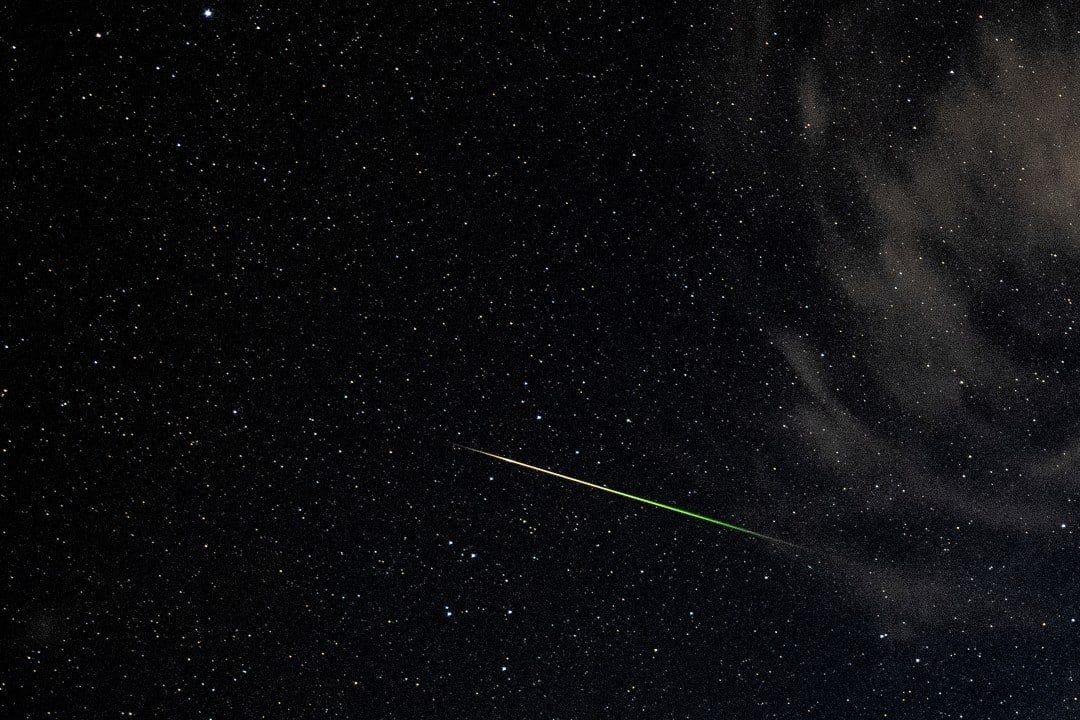
The Eta Aquáridas meteor shower will peak in the early hours of May 5-6, 2026, offering one of the best opportunities of the year to observe shooting stars. The phenomenon occurs when Terra crosses the trail of debris left by Cometa Halley, creating a celestial spectacle visible to the naked eye. The intensity varies depending on the observer’s geographic location, with the southern hemisphere presenting much more favorable conditions than the north.
The tropics of the southern hemisphere will record the best observation conditions, with the possibility of seeing up to 50 meteors per hour in ideal circumstances, according to Sociedade Americana of Meteoros. In the northern hemisphere, the rate drops significantly to 10 to 30 meteors per hour, a number that may be even lower in practice due to atmospheric conditions and lunar interference.
Período activity and best time to watch
The meteor shower will be active from April 19th to May 28th, but the peak intensity will occur specifically in the early hours of May 6th. The best time for observation will be during the early morning hours, when the shower’s radiant — the point in the sky from which the meteors appear to radiate — will reach its highest visible altitude above the horizon. Observadores patients can significantly increase their sighting chances by choosing this specific period.
The total duration of the rain over more than a month allows observers in different regions to take advantage of the opportunity on multiple nights. Ainda therefore, the dawn of the peak remains the ideal time to concentrate observation efforts.
Interferência of the waning Lua
An important limiting factor will affect northern hemisphere observers during the peak: the waning gibbous Lua will be visible in the sky with 84% of its surface illuminated. The satellite will appear on the southeast horizon shortly after midnight, flooding the sky with light that will hide the faintest meteors. Esse lunar glow will result in a potential rate of less than 10 sightings per hour for those in the Northern Hemisphere, drastically reducing the visual experience.
Observadores from the southern hemisphere will face less lunar interference, maintaining much more favorable conditions to capture the maximum number of shooting stars. Quem is in the north so be prepared for a more challenging and possibly less rewarding observation in terms of the number of meteors seen.
Como locate the radiant in the sky
Primeiro step: identify the constellation of Aquário, where the rain radiant is located. Para observers in Estados Unidos, this point will appear above the eastern horizon to the left of the waning Lua approximately three hours after midnight. Astronomy Aplicativos like Stellarium or SkySafari 7 Pro make it easy to precisely locate the radiant, especially when lunar glare complicates seeing the faintest stars.
Após encounter the radiant, direct your attention to an area of the sky located 40 degrees away from it — approximately equivalent to the width of four clenched fists with arms outstretched. The Eta Aquáridas meteors are famous for leaving persistent luminous trails, making this region particularly impressive for observation.
Características of meteors and ideal conditions
The meteors in this shower have extremely high speeds, leaving long, bright trails of light that remain visible for a few seconds after passing. Observation does not require any special equipment — the experience is completely magnificent with the naked eye. A location away from artificial light sources significantly increases the chances of seeing as many meteors as possible.
Recomendações practices include:
- Escolher location away from urban light pollution
- Dar eyes 20 to 30 minutes to adapt to darkness
- Deitar lie on the floor or use reclining chair for comfortable observation of the sky above
- Evitar looks at Lua directly to preserve nocturnal eye adaptation
- Paciência — between periods of intense activity there may be moments of calm
Meteor photography is also viable during this period, although it requires cameras with adequate sensitivity and objectives appropriate for astrophotography. Múltiplos exposures increase the odds of capturing at least one shooting star on digital film.
Astronomical Contexto and Upcoming Opportunities
The Eta Aquáridas shower occurs annually when Earth’s orbit crosses the dust trail left by Cometa Halley as it passes through the inner skies of the solar system. Esse the same comet also produces the Perseidas shower in the northern hemisphere during August, offering a new chance of observation a few months after Aquáridas.
Observadores that miss the peak in May will still have opportunities on adjacent nights, with gradually decreasing activity. The rain will remain active until May 28th with reduced rates after the peak, allowing additional observations for those who are unable to be available specifically in the early hours of the 5th to 6th.





