Engineers discover space radiation by chance in an antenna and prove the origin of the universe
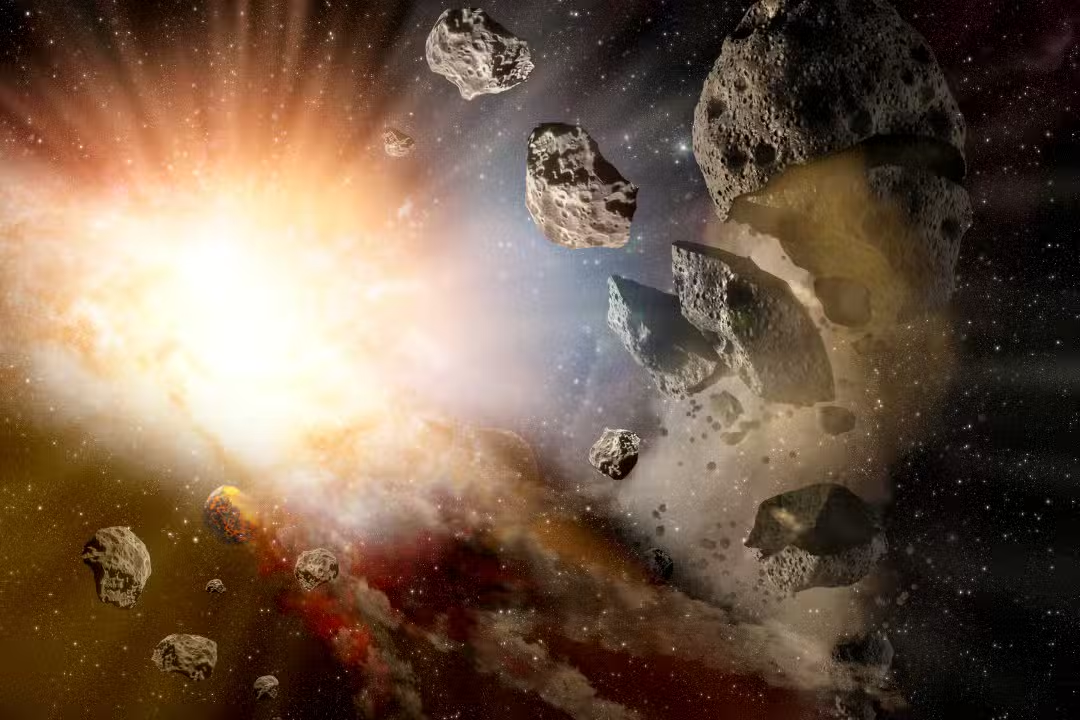
In 1964, two radio engineers detected persistent noise in a large communications antenna located in the state of Nova Jersey. The constant signal had no apparent terrestrial source and puzzled the technical team for months. Investigation of this unexplained sound resulted in the identification of cosmic microwave background radiation. The accidental find provided the most robust physical evidence to support the Big Bang theory and changed science.
Arno Penzias and Robert Wilson were working on telecommunications equipment when they noticed the sound anomaly that seemed to come from all parts of the sky. The pair tried to eliminate all possible local interference before considering a spatial origin for the phenomenon. Confirmation of the event transformed scientific understanding of the formation of the cosmos and the origin of matter. Meticulous work earned the two researchers Prêmio Nobel from Física in 1978.
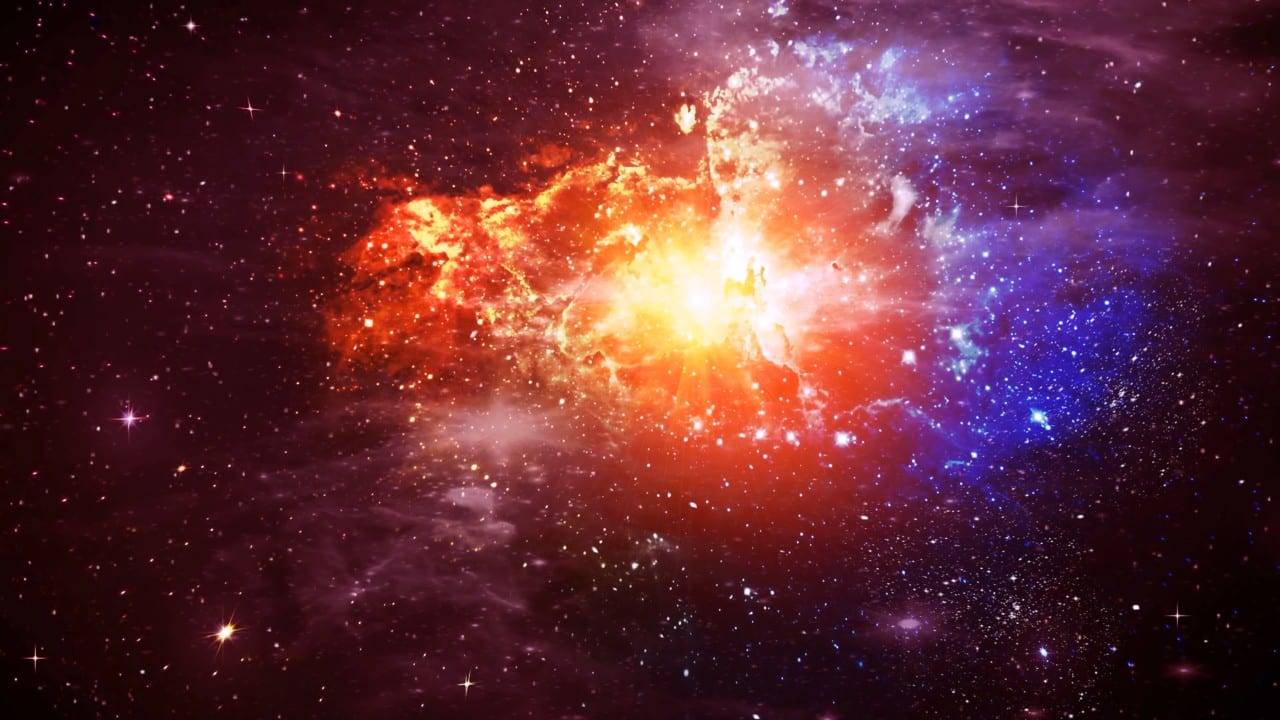
Investigação rigorously rules out technical faults and local interference
The horn antenna used by the scientists captured a continuous and uniform hum in all directions of the observed sky. The sound did not change with the rotation of the Terra or with the passing of the seasons, maintaining a stable frequency. Penzias and Wilson began a methodical and exhaustive process to isolate the problem to the hardware. Eles reviewed the electrical circuits, radio connections and metal structure of the equipment for faults.
One of the suspicions was the presence of pigeons that lived inside the antenna and caused dirt. The researchers removed the nests and cleaned the waste accumulated in the metal structure with extreme care. Thorough cleaning did not change the intensity of the signal captured by the measuring instruments. The engineers then began to rule out other sources of noise known at the time through practical tests.
- Emissões radio coming from nearby urban areas and radars.
- Interferências generated by military tests and commercial flights.
- Radiação emitted by Sol or by planets in the solar system.
- Efeitos atmospheric conditions and sudden changes in temperature in the environment.
The exhaustion of terrestrial possibilities forced researchers to look for answers in theoretical physics and astronomy. Eles contacted Universidade and Princeton scientists who were developing complex mathematical models about the early universe. The academic team was already looking for a thermal echo of the initial explosion to validate their equations. The union of practical data from the antenna with cosmological theory definitively solved the mystery.
The cooling of the universe and the release of first light
The cosmic microwave background represents the oldest trace of the expansion of the universe available for direct observation. The phenomenon occurred approximately three hundred and eighty thousand years after the event known as Big Bang. The early cosmos consisted of a dense, extremely hot soup of constantly colliding subatomic particles. Light could not travel freely through space due to the high density of the material that absorbed the photons.
The universe expanded rapidly and the overall temperature began to drop gradually over the millennia. Cooling allowed electrons and protons to come together to form the first hydrogen atoms in a stable manner. The change in the physical state of matter made outer space finally transparent. The primordial light managed to propagate in all directions without encountering massive obstacles in its path.
Essa first light emission traveled through space for billions of years until it reached the detectors on Terra. The continued expansion of the universe has stretched the wavelength of this original light drastically. The intense glow turned into microwaves invisible to the human eye and detectable only by sensitive equipment. The noise picked up by Nova Jersey’s antenna was exactly the sound of this ancient echo traveling through the vacuum.



Modern Satélites map the thermal structure of the cosmos
The initial discovery paved the way for space missions focused on mapping radiation with high precision from Earth’s orbit. The COBE satellite provided the first detailed images of temperature variations in deep space during the 1990s. The data showed minuscule fluctuations on the order of one part in a hundred thousand degrees. Essas small thermal differences indicated the exact locations where matter began to clump together at the beginning of time.
Areas with slightly higher density have attracted more material through gravitational force over millions of years. The continuous process of attraction formed the first stars and galaxies known to astronomers. The WMAP probe improved image resolution and helped define the age of the universe with a very small margin of error. Space equipment has set the thirteen billion and eight hundred million year mark with great reliability.
The Planck space telescope increased the level of detail of the cosmic map in later missions funded by international agencies. The observations refined mathematical calculations about the total composition of the observable universe. Scientists have determined the exact proportions of ordinary matter, dark matter and dark energy present in the cosmos. The Standard Model of cosmology has gained a solid and verifiable database through these advanced measurements.
Avanços technologies boost astronomy in the year 2026
The study of the cosmic microwave background remains a central pillar of astrophysics in the year 2026. Novos ground- and space-based observatories combine microwave data with the detection of gravitational waves from black holes. The integration of different observation methods makes it possible to test complex models about the accelerated expansion of the universe. Ia supernovae continue to serve as essential distance markers for calibrating modern telescopes.
The accuracy of current instruments far surpasses the capability of the original antenna operated by Penzias and Wilson in the past. Modern sensors operate at temperatures close to absolute zero to avoid any internal thermal noise that could harm the reading. Data analysis uses advanced algorithms to filter out magnetic interference from our own galaxy. The current goal of the scientific community is to find specific patterns in the polarization of primordial light.
The inflationary model of the universe undergoes rigorous testing based on these new measurements. The theory suggests an exponential expansion in the first moments after Big Bang. The original quantum fluctuations left subtle signatures in the background radiation. The search for these brands guides investments in space research and the development of new satellites.
The scientific journey started by an accidental noise demonstrates the importance of empirical observation. The signal that looked like an equipment malfunction revealed the thermal history of the entire cosmos. Collaboration between engineers and theoretical physicists established a new paradigm in modern science. The data collected continues to guide contemporary astronomical discoveries.
Veja Tambem em Latest News (EN)

Passenger tries to enter cockpit and forces diversion of United Airlines flight to Madison

Astronomer explains white light recorded after meteor falls near volcano in Philippines

Comedian Sakamoto-chan reveals type 2 diabetes remission after lifestyle changes

Avi Loeb says discovery of alien intelligence can unite humanity amid global crises

Police investigate death of Hilde Ann Lynn Helphenstein in room at Rosewood São Paulo
Avi Loeb suggests that dark comet 1998 KY26 could be Soviet probe Phobos 1

Typhoon Chan-mi approaches Okinawa and Amami with strong winds this Tuesday

Bad smell in children’s feet has specific causes and can be controlled by parents

Google releases Android 17 Beta 4.1 for Pixel devices

Avi Loeb explains meteor explosion that shook Massachusetts with 2% energy from the Hiroshima bomb

Courtney Clenney’s defense inspects murder knives at Florida hearing