
Eta Aquarids meteor shower: how to observe the peak of up to 50 per hour

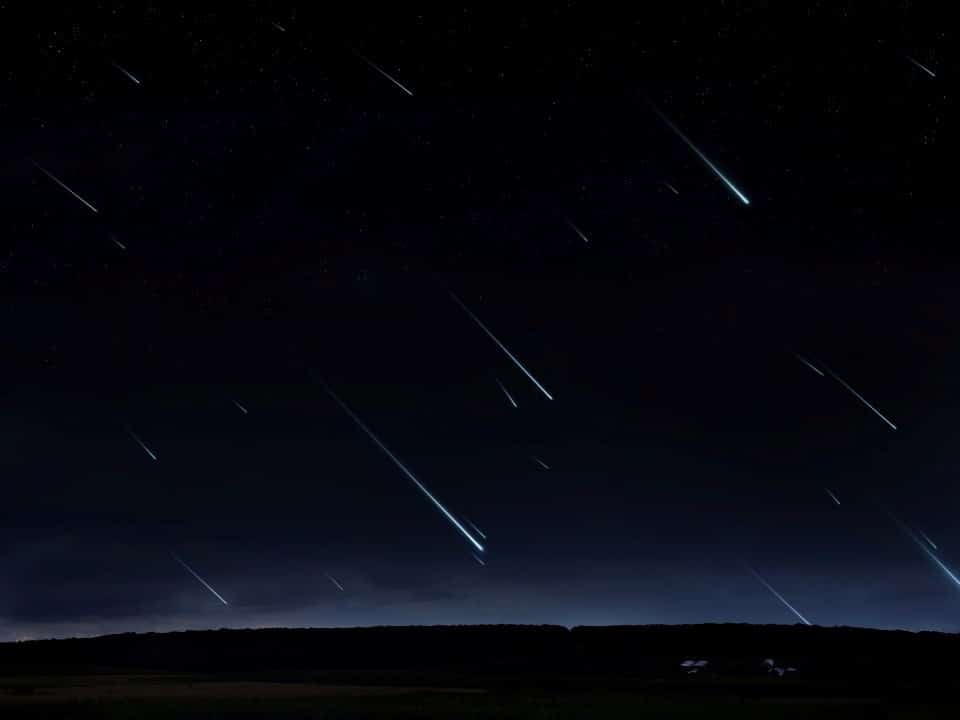
The Eta Aquáridas meteor shower reaches its maximum peak on Tuesday night into the early hours of Wednesday, bringing one of the most anticipated celestial spectacles of the year. The phenomenon, which has been active since April 19, continues until May 28, according to data from Sociedade Americana and Meteoros. Essa rain originates from debris left behind by comet Halley’s passage through the solar system, creating a trail of particles that Terra passes through each spring.
What sets Eta Aquáridas apart from other meteor showers is its impressive speed. Meteors travel at approximately 66 kilometers per second, leaving persistent trails that remain visible for several minutes in the night sky. Essa feature makes each meteor particularly spectacular for observers, even beginners. The extended duration of the trails also makes them easier to capture in long exposure photographs.
Cosmic Origem linked to Halley
Comet Halley is responsible for two distinct meteor showers during the year. Eta Aquáridas represents the first of these, while the second takes place in October under the name Orionídeas. Ambas arise when the Earth’s orbit intercepts the debris left by the comet’s passage through the inner region of the solar system. Esses rock fragments, dispersed over millions of kilometers, create the visual effect of a true rain of light.
The last major meteor shower that will peak by the end of July will be Eta Aquáridas. Outras smaller rains occur between June and July, but without the intensity and visual spectacle of this one. Therefore, astronomers recommend taking advantage of this period to observe the phenomenon before waiting for the next big opportunity.

Visibilidade varies by geographic location
Eta Aquáridas is visible in both hemispheres, but not with the same intensity. In the southern hemisphere, particularly in tropical regions, the meteor shower presents its best visual performance. Observers at these latitudes can witness dozens of meteors per hour during the peak.
In the northern hemisphere, the situation is different. Meteors appear close to the eastern horizon, significantly reducing the amount visible. The observation rate drops to only about ten risks per hour according to information from NASA. The meteors radiate from the constellation of Aquário, which remains low on the horizon during the hours before dawn. Essa position reduces detection probability for observers at northern latitudes.
Apesar Despite this limitation, observers from the northern hemisphere can still witness the phenomenon. The recommendation is to look east, especially in the two or three hours before dawn, when the constellation Aquário reaches its best position in the sky.
Desafios of lunar observation and practical tips
A complicating factor for this year’s observation is the lunar brightness. The moon will be 84% full during Eta Aquáridas’s peak, creating significant interference in the night sky. Lunar Luz intensifies the overall brightness of the sky, reducing the visibility of fainter meteors. Experienced Observadores recommend positioning yourself so that the moon is behind or slightly to one side of the field of view.
Para To maximize the chances of observation, consider the following points:
- Afastar away from artificial light sources such as cities and streetlights
- Deixar eyes get used to the darkness for at least twenty minutes
- Buscar locations with clear eastern horizon
- Usar mobile apps that show real-time constellation positions
- Observar between 2am and dawn, period of greatest activity
An online tool developed by the astronomers’ community offers real-time data on Rede Global and Meteoros. Essa platform displays fireball activity levels, allowing observers to better plan their observation sessions. The system works by collecting reports from globally distributed detector cameras, providing up-to-the-minute insight.
Atividade above normal in recent days
Relatos of sky observers indicate that the number of meteors seen in recent days is double that normally recorded during this time of year. Essa elevated activity suggests the spike could be particularly intense this year. Embora scientists are still studying the reasons for these variations, the non-uniform distribution of debris from Halley’s orbit may explain annual fluctuations.
Essa anomaly represents an excellent opportunity for observers of all experience levels. Mesmo those without telescopes or binoculars can enjoy the spectacle with the naked eye. The Eta Aquáridas does not require special equipment, just patience and an appropriate location away from light pollution.
Fenômeno integrated with the astronomical calendar
The Eta Aquáridas meteor shower is part of a predictable cosmic cycle that repeats every year. The astronomical calendar marks several meteor shower peaks throughout the months, offering multiple opportunities for observation. Alguns years show more intense activity than others, depending on factors such as lunar phases, position of the Earth’s orbit and distribution of debris.
The legacy of comet Halley, which returns to the vicinity of the solar system every 75 to 76 years, continues to provide celestial spectacles between its passages. The next approach will occur in 2061, but until then, these two annual meteor showers keep the fascination with Halley’s cosmic heritage alive. Observadores who take advantage of this week will be able to connect directly with the history of the universe, witnessing fragments that traveled through space for decades.





