
Moon reaches 99% visibility this Sunday and marks the beginning of the month with a rare astronomical phenomenon


The night sky this Sunday, May 3, 2026, presents an astronomical spectacle of great importance to observers. Terra’s natural satellite achieves an impressive 99% visibility at night. The current phase follows the peak of the full moon, which occurred last Friday. The intense glow still dominates the celestial vault. Especialistas indicate that the visual difference for the full phase is almost imperceptible to the naked eye.
Este event marks the beginning of an atypical month for global astronomy. The complete lunar cycle lasts approximately 29.5 days. Essa temporal feature will allow two full moons to occur within the same calendar month. The phenomenon attracts the attention of research institutes and space observation enthusiasts. The current orbital configuration favors detailed monitoring of lunar craters and plains.
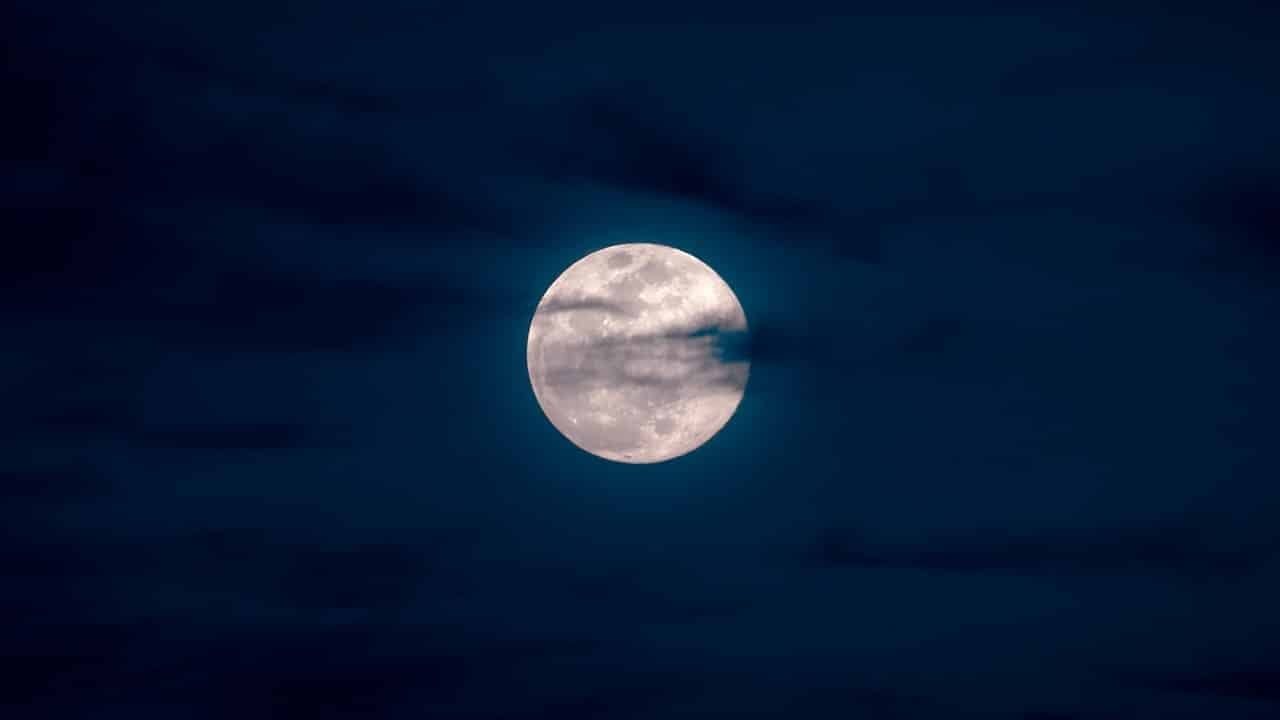
Dinâmica of the waning phase and the visual impact on the night sky
The current transition classifies the star in the waning gibbous phase. The technical term describes the exact period in which the illuminated portion begins to gradually decrease. The maximum peak of illumination occurred at 2:24 pm on May 1st. Desde then, the shadow advances slowly over the visible surface. The continuous process changes the perception of brightness with each new night.
Durante Sunday night, almost the entire lunar disk reflects sunlight towards our planet. Apenas a thin dark band begins to form on the eastern edge of the satellite. Attentive Observadores may notice this subtle asymmetry in the early hours of the morning. The absence of dense clouds in several regions makes it easier to contemplate the phenomenon. The contrast between the illuminated area and the dark background of the space creates an ideal setting for photographic recordings.
Lua’s elliptical orbit around Terra dictates the pace of these visual changes. The translational movement causes the angle of incidence of sunlight to constantly vary. Essa cosmic geometry is directly responsible for the different phases that we see. The mathematical predictability of these events allows astronomers to calculate the exact times of each transition decades in advance. Scientific rigor guarantees the accuracy of astronomical calendars used globally.
Calendário May 2026 reserves second full moon and transitions
The fifth month of the year reserves a mathematical peculiarity popularly known as the blue moon. The term has no relation to the color of the star. The nomenclature defines the occurrence of a second full moon within the same calendar month. The initial event in May opened the cycle. The closing will take place on May 31st, with the culmination scheduled for 5:46 am.
Antes before reaching this new peak, the satellite will go through all of its traditional intermediate phases. The last quarter is scheduled for May 9th. The exact transition will happen at 6:13 pm, when only half of the disk will be illuminated. The decline in reflected light will continue over subsequent days. The sky will become progressively darker during the night.
The complete renewal of the cycle occurs in the middle of the month. The new moon will dominate the sky on May 16th, at precisely 5:03 pm. Neste moment, the face facing Terra will not receive direct sunlight. The star will be invisible in the night sky. The crescent phase will resume its brightness from May 23rd, with the crescent phase scheduled for 8:12 am. The logical sequence sets the stage for the rare phenomenon at the end of the month.
Equipamentos and techniques to optimize space observation
The high luminosity of 99% offers exceptional conditions for visual exploration of the lunar surface. The use of basic optical instruments significantly extends the observer’s experience. Especialistas recommend using binoculars or small amateur telescopes. The approach reveals impressive geological details. Impact craters and vast basalt seas become clear in this near-frontal lighting.
Para ensure the best possible visualization, some simple practices must be adopted by those interested. Proper preparation of the environment makes all the difference in the final result. Planning the observation time and location maximizes light capture by the instruments. Light pollution from large cities represents the main obstacle to amateur astronomy.
- Busque locations away from urban centers to reduce interference from artificial lights.
- Utilize tripods or fixed supports to stabilize binoculars and avoid blurry images.
- Aguarde around twenty minutes in the dark so that the pupils adapt to the low light.
- Priorize observation at times when the star is higher on the horizon.
- Consulte weather applications to confirm the absence of cloud cover in your region.
The application of these techniques allows us to identify famous structures such as the Tycho crater and Mar from Tranquilidade. The intense brightness of this specific phase can slightly obscure vision through very powerful telescopes. The use of lunar filters attached to the lenses helps reduce visual discomfort. Adapting the equipment guarantees hours of safe and detailed observation. Prior knowledge of lunar geography enriches the practical activity.
Impactos of the lunar cycle in the environment and human activities
The presence of a nearly full moon exerts measurable physical influences on the planet Terra. The combined gravitational attraction between Sol and Lua directly affects the behavior of the oceans. Spring tides occur during these alignment periods. The volume of water moves with greater intensity in coastal areas. The phenomenon requires increased attention from navigators and coastal communities.
Além of oceanographic effects, prolonged nighttime light changes the dynamics of various ecosystems. Animais’s nocturnal habits adjust their hunting and reproduction patterns according to the availability of light. Predadores find it easier to locate prey on clear nights. Espécies minors tend to seek shelter to avoid excessive exposure. Biology follows the rhythm dictated by celestial mechanics.
The agricultural sector also monitors lunar phases for crop and harvest planning. Produtores Rural farmers base planting decisions on the astronomical calendar. Ancient tradition combines with modern scientific data to optimize production in the field. The 29.5 day cycle serves as a reliable natural clock. The predictability of the night sky continues to guide essential activities in contemporary society.




