Rare Wyoming Find Reveals Intact 16-Cimeter-Long Jurassic Reptile Skeleton

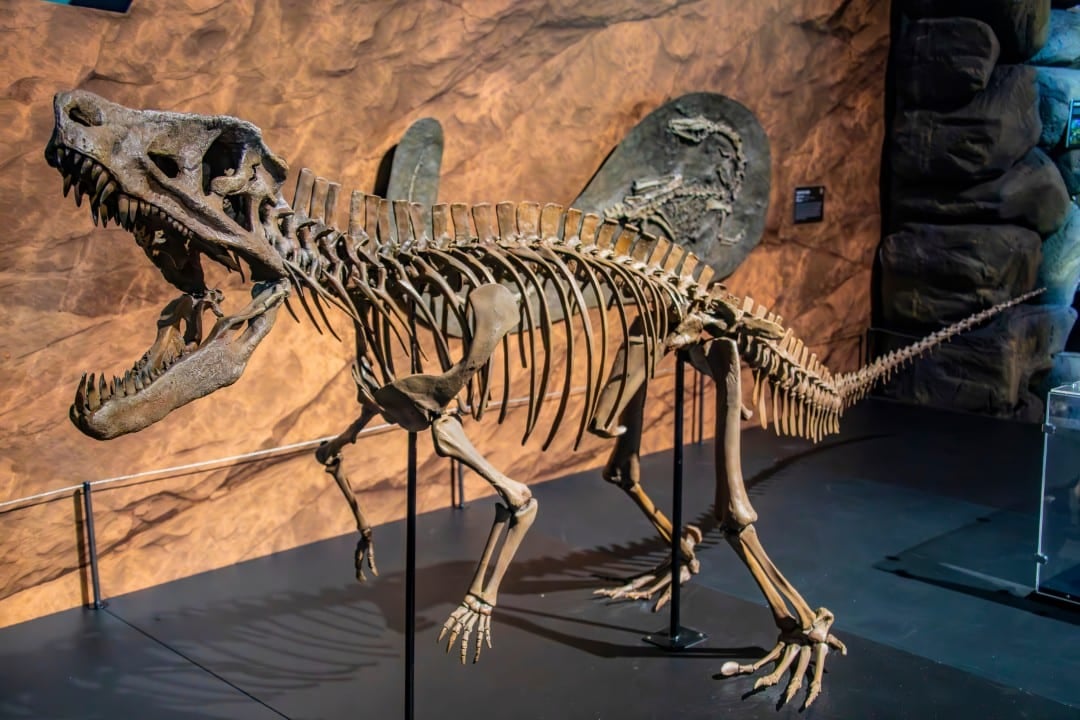
A team of researchers has identified a nearly complete skeleton of a small reptile that inhabited Terra during the Jurássico period. The specimen unearthed at Formação Morrison, located in the North American state of Wyoming, measures exactly 16 centimeters in length from the tip of the snout to the base of the tail. The creature was given the official scientific nomenclature of Opisthiamimus Gregory. The fossil material presents an unusual level of structural preservation for animals of this size in ancient geological sites. Faltam only isolated fragments of the hind legs and the final portion of the tail.
The find occurred in an excavation area located a few meters from a nest of Allosaurus, one of the largest predators of that geological era. The proximity to the remains of the giant dinosaur contrasts sharply with the small dimensions of the newly described reptile. The animal belongs to the rhynchocephalan lineage. Esse taxonomic group has a very fragmented history of fossil records, which makes the integrity of this skeleton a milestone for the anatomical understanding of the species. The discovery provides unprecedented data on the small fauna that shared the ecosystem with large terrestrial dinosaurs.
Reconstrução digital details anatomy of extinct creature
Analysis of the material required the use of advanced imaging technologies to avoid damage to the structure, weakened by time. Scientists subjected the bones to microfocus CT scans at three separate research laboratories. The procedure generated thousands of cross-sections in very high resolution. From these radiographic images, the team created accurate three-dimensional models of the creature’s entire skeleton. The completely non-invasive method guaranteed the physical integrity of the original piece extracted from the rock.
The skull and dental arch have maintained their morphological characteristics practically intact over millions of years underground. Researcher David DeMar Jr. reported that the exceptional quality of fossilization makes detailed biomechanical studies feasible. Algumas cranial sections suffered natural crushing by the heavy layers of sediment, but modeling software allowed the fragments to be virtually repositioned. Digital alignment restored the original shape of the animal’s head with minimal margin for error.
The complete digitization of Opisthiamimus Gregory establishes a new anatomical reference standard for modern paleontology. The virtual models generated by the research will be available to scientific institutions around the world. Access to this database will facilitate the identification of thousands of uncatalogued bone fragments that rest in museum drawers. Direct comparison with the full three-dimensional structure speeds up the process of taxonomic reclassification of ancient finds that lack context.
Mecanismo chewing machine worked like a natural saw
Cranial morphology revealed specific adaptations for a diet based on the capture of terrestrial insects. The pointed shape and the resistance of the bone structure indicate that the animal consumed prey with rigid shells, such as primitive beetles. Paleontologist Matthew Carrano, linked to Museu Nacional of História Natural of Smithsonian, noted that the ability to crush thick exoskeletons represented a competitive advantage in the Jurassic environment. The bite force surpassed that of other small vertebrates from the same region.
The feeding system of rhynchocephalans has an anatomical configuration distinct from that of most reptiles known to science. Teeth do not grow in isolated cavities in the gums. Eles form a unique structure, fused directly to the jaw bone. Essa fusion creates a continuous cutting edge that is extremely resistant to daily mechanical wear. The chewing movement occurs in an anteroposterior axis. The jaw slides back and forth rhythmically during feeding.
Jaw mechanics act identically to the movement of a saw cutting wood. Esse mechanism ensures efficient fragmentation of hard food before swallowing by the digestive system. The tuatara, a reptile endemic to Nova Zelândia, preserves exactly this same dental structure today. Observing the feeding behavior of the modern animal helped scientists validate hypotheses about the habits of the newly discovered North American fossil.
Evolutionary Trajetória contrasts with dominance of modern lizards
The fossil record indicates that rhynchocephalans experienced a period of great ecological diversification during Era Mesozoica. The evolutionary separation between this lineage and the ancestors of lizards and snakes occurred around 230 million years ago. Durante or Jurássico, the group occupied multiple environmental niches on different continents across the globe. Algumas species have developed adaptations for aquatic life and fish consumption, while others have specialized in strictly herbivorous diets.
The lineage’s initial success underwent a drastic reversal over the following millennia. The squamates began a process of global expansion and began to dominate terrestrial ecosystems. Rhynchocephalans entered an irreversible population decline, disappearing from almost all continental landmasses. The phenomenon intrigues the scientific community, as the group possessed biological traits that were highly advantageous for long-term survival. The main physiological characteristics of the lineage include:
- Flexible Metabolismo capable of withstanding extreme climate variations in the environment
- Physiological Tolerância to ecosystems with lower average temperatures
- Strategic reproductive Ciclo with prolonged incubation of eggs in soil
- Exceptional Longevidade that can exceed a century of life in the wild
The combination of these theoretical factors should guarantee the species’ resilience in the face of severe environmental changes. Nenhuma of the current hypotheses definitively explains why lizards and snakes won the competition for food resources. The tuatara survived only by inhabiting an isolated archipelago, free from mammalian predators until the arrival of human colonization. The New Zealand animal bears the title of the only living representative of a dynasty that once populated the entire planet.
Find Impacto for research into geological formations
The results of the anatomical investigation of Opisthiamimus Gregory are part of a recent publication by Journal of Systematic Palaeontology. The scientific journal validated the digital reconstruction methods and the taxonomic classification proposed by the team of experts. The article provides a morphological database that will serve as a parameter for future excavations at América and Norte paleontological sites. Rigorous documentation of the skeleton fills a historical gap in the study of Jurassic microvertebrates.
Formação Morrison consolidates its position as one of the most important fossil deposits in the world for paleontology. The region concentrates a massive amount of sauropod and large theropod skeletons. The discovery of the small insectivore demonstrates that the sediment layers also harbor delicate traces of local microfauna. Field work requires meticulous extraction techniques to identify bones that are often no larger than a grain of rice.
Instituições research maintains annual expeditions into the Wyoming sedimentary basin to expand the fossil collection. Continuous mapping of the terrain seeks to identify new rock outcrops with potential for systematic excavation. The exceptional preservation of the 16-centimeter reptile encourages the review of rock blocks already collected but not yet prepared in laboratories. Careful analysis of the raw material may reveal other specimens that are fundamental to understanding the region’s prehistoric biodiversity.