
Valve launches new Steam Controller with innovative trackpads and repairable components

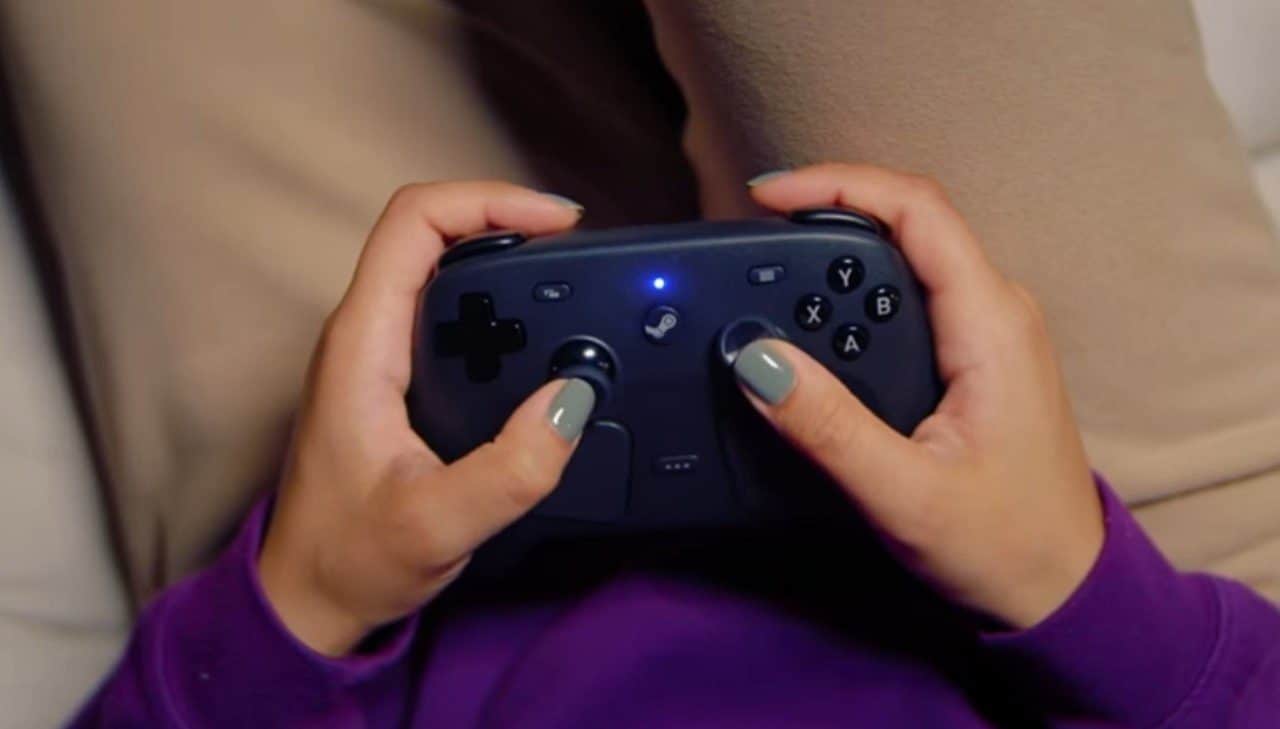
Valve presented the new Steam Controller, a redesigned controller for players who use personal computers connected to a television. The device costs US$100 and features innovations in capacitive trackpad technology, longer-lasting joysticks and a design that allows home repairs without specialized tools. The proposal revisits the original idea of the control launched in 2015, but this time with lessons learned from the success of the portable Steam Deck.
The relaunch takes place in a completely different context than the first Steam Controller. Enquanto the previous model remained an experiment for enthusiast users, the Steam Deck validated trackpad technology by incorporating it into a commercially successful laptop. Agora to Valve expands this experience to a dedicated controller for the living room, recognizing that millions of people have built gaming computers connected to their televisions, an environment where keyboard and mouse do not practically work.
It's here! Steam Controller has officially arrived. Made for you to play all your games on Steam, however you like to play them.
Buy now on @Steam. https://t.co/rRiQFxLKxA pic.twitter.com/KwBxu69AQU
— Valve (@valvesoftware) May 4, 2026
Capacitive Trackpads offer mouse-equivalent precision
The two trackpads on the new Steam Controller use capacitive technology developed in partnership between Valve and the company Cirque. The pads are larger than those of the Steam Deck and positioned with a slight inward tilt, offering satisfactory tactile response. Além navigation, display virtual keyboard for text entry, replicating common smartphone experience.
Para owners of living room computers, this feature solves a classic problem. Teclados and mice remain necessary for occasional desktop access, but during gaming sessions, the trackpads offer precise control equivalent to that of a traditional pointer. The Steam community has compiled thousands of custom control profiles, some mapping individual limbs to back pads in different games.
Valve has enabled the community to conduct research and development of configurations without hindrance. The result is a robust catalog of tweaks ready for any genre, from minimalist indie titles to AAA productions that were never originally intended for gamepads.
Joysticks TMR promises superior durability to conventional analogues
The Steam Controller is the first major manufacturer peripheral to adopt TMR joysticks (Magnetorresistência from Túnel), specifically K-Silver JS13 Pro+ modules. Essa technology offers similar benefits to the analog Hall effects present in the Dreamcast control, but with lower power consumption.
The choice responds to a market reality: conventional joysticks wear out with prolonged use and develop drift, a phenomenon widely documented in Joy-Cons, DualSense and Xbox Series The DualSense Edge and Xbox Elite, both costing US$200, have not yet incorporated this technology. A $100 controller arrives equipped with more robust components, suggesting superior longevity.
Modular Design allows disassembly and home repairs
The internal structure of the Steam Controller impresses with its constructive simplicity. Sete common Torx screws allow complete disassembly of the device. The battery is in an accessible position, without the need to manipulate complex cables or remove secondary components. The printed circuit board with the joystick module is exposed, without security screws or anti-repair mechanisms.
Essa approach contrasts radically with competing peripherals. Sony’s DualSense, for example, is described as a tangle of cables that requires careful disassembly. Most consumer electronics follow the opposite philosophy, deliberately designed never to be disassembled.
- Parceria with iFixit provides detailed repair guides.
- Arquivos available for 3D printing of customized accessories.
- Entusiastas are already experimenting with short-stroke rear buttons and custom mappings.
Esse transparent model recognizes which owners want to repair, modify, or replace components as needed. The approach contrasts with the traditional peripheral industry, which discourages any type of modification.
Magnetic Interface integrates charging and wireless connectivity
Valve developed three-pin plastic magnetic disk for charging and connectivity. The accessory attaches to the back of the Steam Controller with a satisfying click and connects to any available USB-C port. The control offers native Bluetooth, but the disc works as a 2.4 GHz wireless dongle, a superior technology in terms of latency and interference.
Valve claims that a single disk supports up to four controls simultaneously, an elegant solution for those with multiple peripherals. The control does not depend on the disk to work, but offers direct charging via USB-C when necessary. The battery promises 35 hours of continuous autonomy, reducing the need for frequent charging.
Symmetrical Ergonomia and gyroscope expand functionality
The Steam Controller adopts a symmetrical layout in the Sony style, not the asymmetrical layout of the Xbox. The symmetrically positioned lower analog sticks make a significant difference in comfort during extended sessions. The trackpad pads are slightly larger and angled inwards, optimizing access without excessive postural strain.
The device integrates an accelerometer with sensors that activate or deactivate the gyroscope based on natural inclination. The real usefulness emerges in Desktop mode, where it can be activated as a mouse pointer. Sensor infrared has been integrated for future use with Steam Frame, an accessory not yet publicly tested. Esse expandability-oriented design suggests well-defined roadmap for subsequent features.
$100 Preço reflects premium components and repairability
The price positioning puts the Steam Controller above the DualSense ($70) and on par with the Joy-Cons of the Switch. Para specialists, the value is justified by the ease of home repair, uniqueness of the trackpads, inclusion of TMR analogues and modular design. Controles competitors like the DualSense Edge and Xbox Elite, both costing $200, still lack TMR joysticks.
Essa pricing strategy recognizes that consumers will value longevity and repairability. In a context where replacing damaged analogs usually means purchasing an entire new peripheral, the possibility of direct access to components represents real savings throughout the product’s life cycle. The Steam Controller represents completion of a journey that began with the noble failure of the original model, incorporating lessons from the Steam Deck and applying repairable design philosophy to offer a genuine solution to gamers who keep computers in their living room.





