
August 2027 solar eclipse will have record duration of more than six minutes


One of the greatest astronomical spectacles of the 21st century is approaching. On August 2, 2027, Lua will completely cover Sol for approximately six minutes and 23 seconds in specific regions of the planet. Essa’s exceptional duration makes it the longest total solar eclipse of the 21st century and one of the most notable recorded in more than 150 years. Expectations among scientists and enthusiasts grow every day, with preparations already underway in several countries.
A rare milestone in the history of astronomy
The 2027 eclipse represents an extraordinary event that transcends simple scientific observation. Presenciar the day turns into night for several minutes, with the possibility of seeing stars and planets in broad daylight, is an experience that mobilizes human curiosity about the universe. Esse phenomenon not only offers unique research opportunity but also catalyzes interest in space sciences on a global scale.
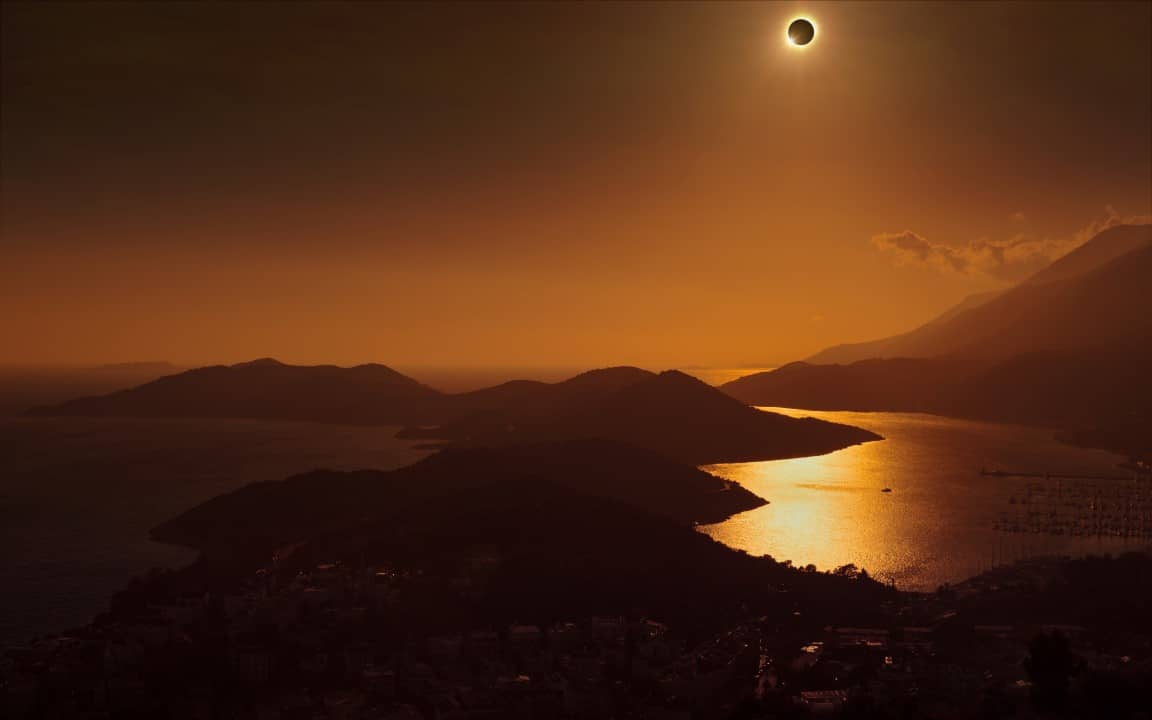
The rarity of this event amplifies its value. Especialistas point out that an alignment of comparable magnitude and duration is not expected to occur again for more than 157 years. Tal combination depends on multiple complex celestial cycles, where Terra, Lua and Sol need to be in almost perfect alignment. Under Nessas conditions, Lua is positioned relatively close to Terra, making its apparent diameter in the sky large enough to completely cover the solar disk. Organizações astronomical and tourist companies are already planning expeditions and events to guarantee the best observation experience for the millions of interested parties.
Fenômenos visuals that mark the entirety
The phase of totality is a spectacle of light and shadow punctuated by unique visual phenomena. Quando to Lua begins to cover Sol, the ambient light gradually decreases and the temperature may drop significantly. Nos final seconds before totality, the famous “Pearls of Baily” appear, bright points of sunlight that “leak” through the valleys and craters of Lua’s irregular surface, creating an image similar to a string of sparkling pearls.
Logo after Pérolas of Baily, the “Ring of Diamante” manifests, when only a small portion of Sol is still visible, shining like a diamond in a dark ring. Durante the minutes of totality, the solar corona, the outer atmosphere of Sol, reveals itself in all its splendor, with rays and plumes stretching across the dark sky. The corona, normally overshadowed by the brightness of the solar disk, offers crucial information about solar activity and is one of the most anticipated moments in the scientific community.
Regiões privileged for observation
The range of totality is geographically restricted, but covers areas of great cultural and tourist interest. The most privileged observers will be in regions that lie directly in the path of Lua’s shadow. Espanha, particularly País Basco and the province of Álava, is considered one of the most favorable places for observation in European territory.
- Norte from África: Egito, Líbia and Argélia will have complete visibility of the phenomenon.
- Oriente Médio: Arábia Saudita, Iêmen and Omã will be on the path to totality.
- Europa: Espanha, Marrocos and Tunísia will provide ideal observation conditions.
- Outras regions: Groenlândia and Islândia will have visibility with a shorter duration of totality.
Esses locals are already predicting a significant increase in tourism, with travelers and researchers planning stays in advance. Local infrastructure is gearing up to meet demand, with special packages and observation guides being developed to ensure safe and informative experiences.
Importância scientific and essential care
Detailed study of these alignments allows astronomers to improve prediction models and better understand the dynamics of the Sol-Earth-Moon system. The solar corona, revealed during totality, provides essential data for heliophysics research and contributes significantly to advancing understanding of our star.
Apesar of the beauty of the eclipse, observation requires strict precautions to avoid permanent damage to vision. Especialistas emphasize the need to use specific eclipse glasses, certified with appropriate solar filters. Estes goggles must be worn during all phases of the event, except for the brief period of totality, when the Lua completely covers the Sol. Direct exposure, even for a few seconds outside this period, can cause retinal burns. Observation with homemade equipment or ordinary sunglasses is extremely dangerous and should be absolutely avoided.
Legado and cultural impact of the phenomenon
The 2027 eclipse will serve as a reminder of the magnificence of the cosmos and the importance of science education. The event inspires new generations to astronomy and encourages research in various areas. Embora astronomical calendar predicts other events, such as a partial eclipse in 2028, the combination of duration and visibility of the 2027 phenomenon solidifies it as one of the most important records of the century for the scientific community and global popular culture. The shared experience of witnessing this extraordinary celestial alignment connects observers from different continents in a moment of common wonder at the universe.





