

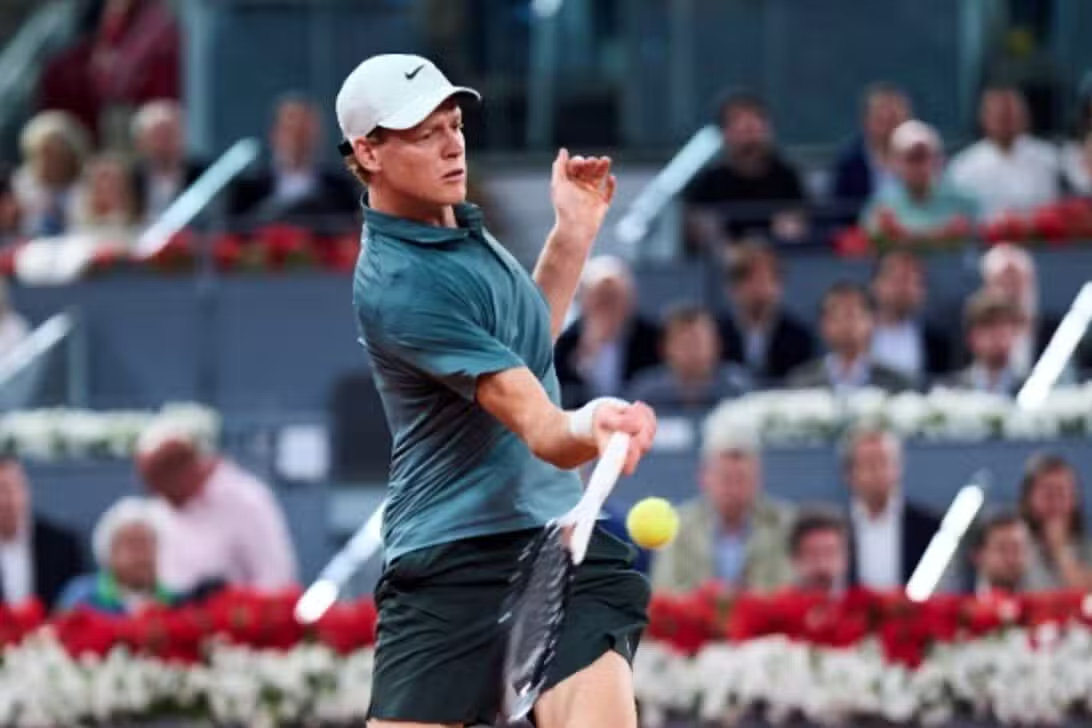
Jannik Sinner, number one in the world rankings, intensified criticism against Roland Garros due to the prize money for 2026. The Italian tennis player publicly expressed his discontent during a press conference before his debut at Masters 1000 by Roma. Segundo Sinner, the feeling is unanimous among elite competitors: there is a lack of consideration on the part of major tournaments regarding the athletes who generate the spectacle.
The movement gained strength with the support of all members of the top ATP and WTA groups. The players signed a joint statement expressing dissatisfaction with the figures announced for Aberto and França. Sinner highlighted that the class sought silent dialogue for a long period before making the complaint public and official.
Proporção between revenue and transfer to athletes generates conflict
The core of the discussion involves the imbalance between Roland Garros’s total revenue and the amount passed on to tennis players. Para 2026, the tournament announced 61.7 million euros, approximately R$360 million, in prizes. Embora represents an adjustment of 9.5% compared to the previous year, the athletes argue that the amount is disproportionate to the profit generated by the event.
The tennis elite claims that the current transfer is equivalent to less than 15% of the gross revenue from the Paris tournament. Esse index is lower than that practiced in other events on the professional calendar combined. Sinner reinforced that players are not looking for half the revenue, but rather appreciation that matches the spectacle delivered on the courts.
- Current Participação: less than 15% of gross revenue
- Meta claimed by athletes: 22% of total revenue
- Premiação announced for 2026: 61.7 million euros
- Nominal Aumento offered by the organization: 9.5%
- Principais requirements: social assistance fund and retirement benefits
Boicote gains space in discussions among tennis players
The tension between athletes and organizers has reached a level that is already raising discussions about drastic measures in the professional circuit. Aryna Sabalenka recently mentioned the possibility of boycotting the main tournaments, a scenario that Sinner preferred not to completely rule out. The leader of the male ranking emphasized that the issue goes beyond financial barriers, being a search for professional dignity and respect.
The discomfort was amplified by the absence of official returns to the letters sent by the athletes’ representatives. Last year, two letters were delivered to the organizers of the four Grand Slams listing specific demands. Além of money on the court, the group demands structural improvements in well-being and greater weight in political decisions that govern the sport.
Assistência social and social security make up the agenda of demands
The tennis players’ demands include the creation of protection mechanisms that guarantee stability after the end of their professional career. Entre the central points on the agenda are the contribution to a robust social assistance fund. Esse fund would have as its main objective the support for retirement and implementation of assistance for maternity leave, historic agendas of the WTA.
- Fundo assistance for retired athletes
- Implementação paid maternity leave
- Representação nominal in deliberative councils
- Transparência in the release of Slams’s financial statements
The movement led by Sinner seeks to establish a new standard of negotiation between event promoters and game protagonists. With the start of Roland Garros approaching, the pressure on Federação Francesa from Tênis increases significantly. The outcome of this crisis could redefine how revenues from the biggest stages in world tennis will be distributed in the coming decades, impacting future generations of athletes.