Giant squid detected in deep waters off Australia by environmental DNA analysis
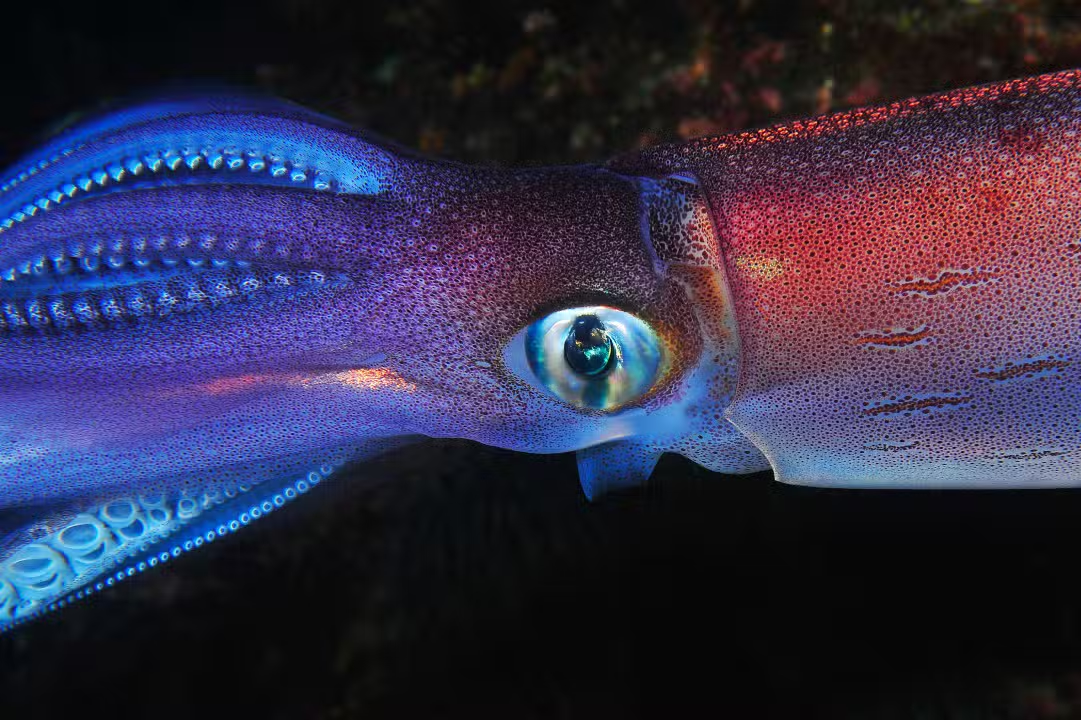
Cientistas of Universidade Curtin identified giant squid genetic material in water samples collected from underwater canyons off the Australian west coast. The find marks the first record of the species in the region using environmental DNA, a technique that detects genetic traces of organisms without the need for direct observation. The samples were taken from depths greater than 4,500 meters, in the Cape Range and Cloates canyons, located off Ningaloo, in Austrália Ocidental.
The genetic material of the giant squid, known scientifically as Architeuthis dux, appeared in six separate samples collected in two specific locations. The research was published in the journal Environmental DNA and represents the first confirmed record of the species in the region after more than 25 years. The find is also the northernmost record of Architeuthis dux in the entire eastern portion of Oceano Índico, expanding knowledge about the geographic distribution of this rare creature.

Environmental DNA’s Técnica reveals hidden marine life
The environmental DNA method allows species to be detected through biological particles suspended in water, such as skin, mucus and feces released by organisms. Researchers have collected seawater at extreme depths where direct visual observations are virtually impossible. Análises laboratories identified traces of 226 different species distributed across 11 large groups of marine animals.
Além of the giant squid, the survey revealed other deep-diving species, including the pygmy sperm whale and Cuvier’s beaked whale. The results indicate that submarine canyons are home to much more diverse ecosystems than previously imagined. The consistent presence of giant squid DNA in multiple samples suggests recent or recurring occupation of the area.
- Amostras collected from Cape Range and Cloates canyons
- Seis samples contained giant squid DNA
- Profundidade maximum exceeded 4,500 meters
- 226 different species identified in total
- Registro northernmost of the species in Oceano Índico Oriental
Retorno of the species after a 25-year interval
The last documented confirmation of the giant squid’s presence in the region was more than 25 years ago. At the time, the genetic methods that allowed this new detection did not yet exist. Lisa Kirkendale, from Western Australian Museum, participated in the research and highlighted the importance of the finding for understanding the geographic distribution of Architeuthis dux.
The giant squid can exceed 13 meters in length and inhabits difficult-to-access environments in the ocean depths. The researchers did not see the animal during the expeditions. The detection occurred exclusively through molecular analysis of water samples, demonstrating how genetic technology opens up new possibilities for monitoring elusive creatures living in extreme conditions.


Cânions of Ningaloo as rare biodiversity habitat
The Ningaloo region is known for its coastal biological richness, but the deep areas remained little explored until this study. Cape Range and Cloates canyons descend steeply into the abyss, creating unique environments where currents and upwelling bring nutrients from the upper layers. Essas conditions favor the concentration of specialized marine life in extreme pressure environments.
The study identified range extensions for species other than the giant squid, including the sleeper shark. Alguns detected organisms may represent new additions to the Australian fauna list. Samples were collected during expeditions dedicated to mapping these habitats, using equipment capable of operating under high pressures and low temperatures.
Methodological Avanço in deep ocean research
Environmental DNA has established itself as an essential tool in contemporary marine studies. A single water sample can reveal dozens of species that passed through the site, offering a comprehensive view of biodiversity without the need for invasive captures. The process involves water filtration, extraction of genetic material and sequencing in the laboratory.
The technique significantly reduces the need for direct visual observations or captures of animals, minimizing environmental impact. Especialistas consider the method promising for continuous monitoring of rare and sensitive species. Futuros surveys plan to repeat the protocol in other deep regions of Oceano Índico to expand knowledge about global marine biodiversity.
Veja Tambem em Latest News (EN)

King Charles III’s cancer progression accelerates transition of power to Prince William and Kate

Samsung changes Galaxy S26 Ultra design and restricts fast charging for thermal safety

Steam platform releases four independent games for free for permanent redemption on computers

PlayStation 5 users redeem Ark and 2XKO for free without PlayStation Plus plan

Rockstar Games changes Grand Theft Auto VI release date to second half of 2025

Chinese probe Tianwen-1 records interstellar comet 3I/ATLAS from Mars orbit

Samsung confirms Galaxy devices that will receive update to One UI 7 with Android 15 this year

National Toyota Yaris Cross hits stores for R$130,000 with 30 km/l flex hybrid engine

Capcom plans unprecedented expansion for the Resident Evil franchise and new remakes by 2028

Yuliia Starodubtseva eliminates Elena Rybakina as Novak Djokovic advances at Roland Garros 2026

Galaxy S23 users are left without AirDrop support in Samsung’s new One UI 8.5 update