

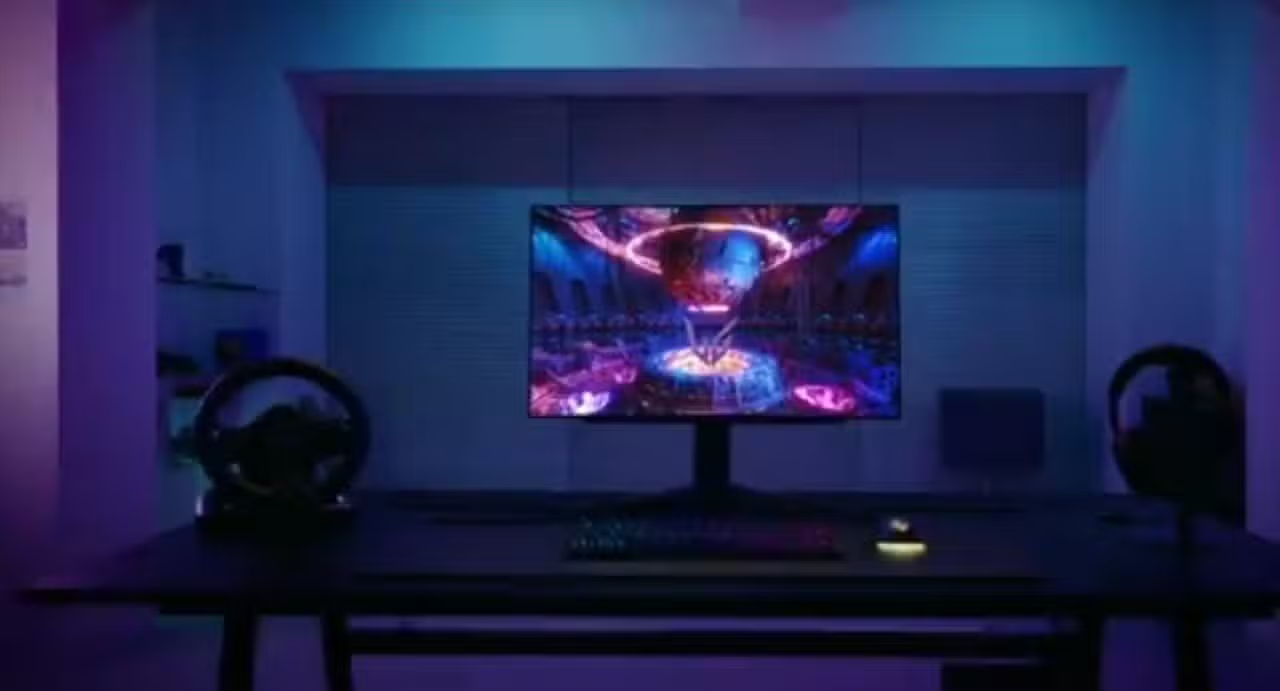
LG Electronics Brasil presented two new monitors from the UltraGear line aimed at gamers. The 31.5-inch model 32GX850A-B and the 27-inch 27GX790B-B integrate Dual-Mode technology, which allows you to switch between maximum resolution with standard refresh rate or reduce the definition to release much higher frequencies. Suggested prices reach R$5,799 for each piece of equipment. Pre-sales began on the brand’s official website, with a deadline of May 4th.
LG’s strategy targets different audiences within the gamer universe. The 32-inch model prioritizes an immersive 4K visual experience, while the 27-inch model follows the competitive line aimed at esports. Leonardo Almeida, senior monitor manager at LG Electronics Brasil, explains the proposal: “Our idea with these launches is to deliver the right monitor for every style of use.” The Dual-Mode solution represents a response to the fragmentation of preferences among players who seek both graphical quality and extreme performance.
32-inch Monitor balances visual quality and fluidity
The LG UltraGear 32GX850A-B features a 31.5-inch OLED panel with Micro Lens Array+ (MLA+) technology, a system of millions of microscopic lenses that directs light from the panel. The glossy finish promises high contrast, vibrant colors and the absence of grain typical of matte screens. The response time reaches 0.03 ms (GtG), a metric that measures the speed of transition between colors.
No Modo from Precisão, the monitor delivers 4K UHD resolution of 3840 x 2160 pixels at 165 Hz, prioritizing visual quality and graphic immersion. Já or Modo of Alta Velocidade reduces the definition to Full HD 1920 x 1080 pixels and increases the refresh rate to 330 Hz, ideal for online competitions. Segundo to LG, this combination allows the player to adapt the screen according to the situation without changing equipment. A title that demands maximum graphic quality runs in 4K; a competitive game runs on Full HD with stratospheric frequency.
27-inch Modelo aims for extreme performance
The LG UltraGear 27GX790B-B uses the 4th generation WLED architecture with Tandem multilayer structure, which combines light emission efficiency with thermal control. The 27-inch panel promises peak brightness of up to 1,500 nits and VESA DisplayHDR True Black 500 certification, covering 99.5% of the DCI-P3 color gamut. The response time is even faster: 0.02 ms (GtG).
Dual-Mode works differently on this model. The Quad HD resolution of 2560 x 1440 pixels reaches a rate of 540 Hz for those looking for higher image quality. HD definition of 1280 x 720 pixels rises to 720 Hz with full focus on performance. The monitor also features technologies such as NVIDIA G-SYNC Compatible, AMD FreeSync Premium Pro and DisplayPort 2.1 connector. Para For those who prefer immediate reactions in shooting games or competitive strategy, the specifications indicate an optimized machine. Frequencies above 500 Hz reduce lag between control input and on-screen action to a minimum.
Especificações techniques and differentials
- 32″ Monitor: OLED panel with Micro Lens Array+ (MLA+) and Dual-Mode between 4K 165Hz and Full HD 330Hz
- 27″ Monitor: 4th generation WLED technology with Dual-Mode between Quad HD 540Hz and HD 720Hz
- Tempos response less than 0.03 ms in both versions
- Suporte synchronization of NVIDIA G-SYNC and AMD FreeSync Premium Pro
- Brilho max 1,500 nits on VESA DisplayHDR certified 27-inch model True Black 500
Contexto from the Brazilian gamer market
LG’s launches reflect continued demand for monitors specialized in the Brasil. The Brazilian gamer market has grown significantly in recent years, with interest in both high-quality visual experiences and competitive hardware. The Dual-Mode solution represents a response to the fragmentation of preferences: the same player may want 4K for single-player campaigns and 720p at 720 Hz for ranked online on the same day.
Outros Manufacturers such as ASUS, MSI and BenQ offer high-performance monitors, but LG’s approach with two distinct models and Dual-Mode technology in both suggests a strong commitment to flexibility. Assim, the consumer doesn’t need to choose between graphic beauty and speed — they can have both, depending on what they’re playing. The dual positioning strategy in the Brazilian gamer market places LG in a relevant competitive position to capture different segments of players.