
Curiosity frees 13-kilogram rock trapped in drill after unprecedented maneuver on Mars

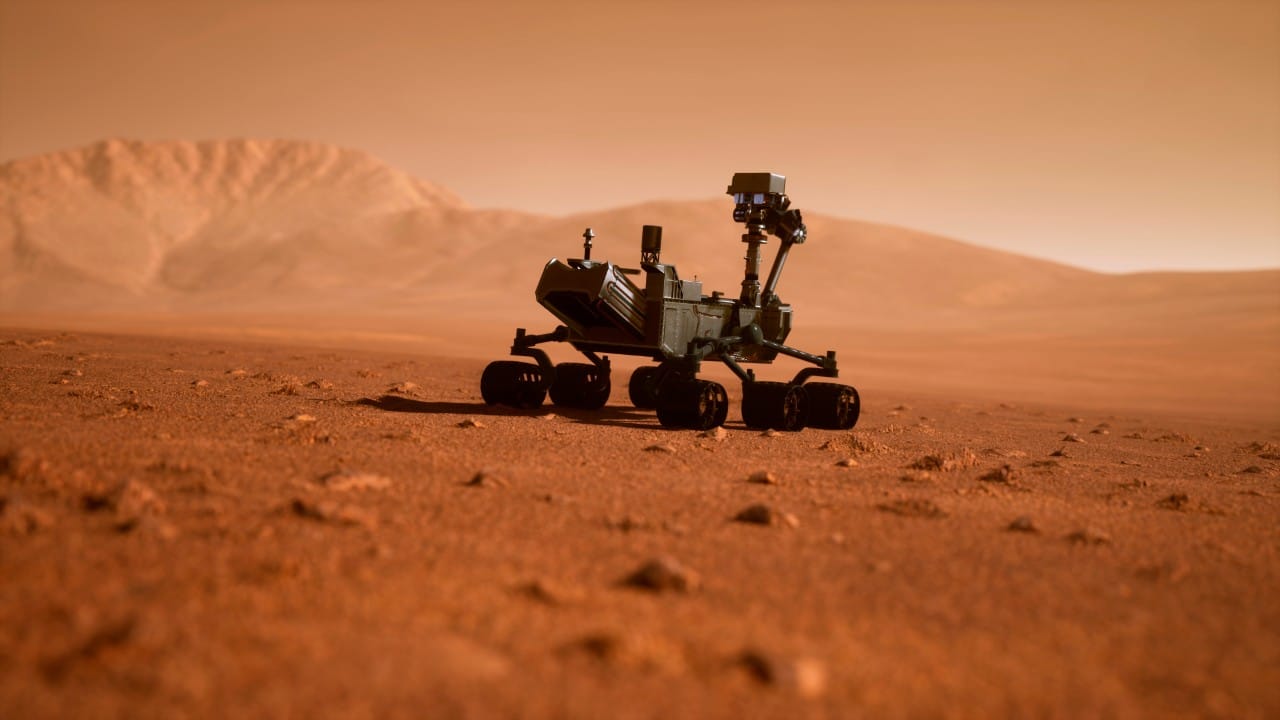
The Curiosity rover has faced an unprecedented challenge in its 14 years of continuous operation on the planet Marte. Durante drilling in the Atacama region on April 25, 2026, Nasa’s exploration vehicle trapped an entire 30-pound rock slab in the rotary-percussive drill. The material did not fragment as expected and remained attached to the critical equipment. Engenheiros of Laboratório of Jato Propulsão, in Califórnia, monitored the situation for days to define a safe removal procedure without damaging the rover’s essential mechanism.
The incident during drilling at Cratera Gale
Curiosity’s drilling system normally grinds the Martian surface to obtain fine powder destined for internal chemical analysis instruments. Desta time, the resistance of the mineral block exceeded the torque of the tool, resulting in the total displacement of the plate. The vehicle attempted to retract the robotic arm, but the extra weight of the rock attached to the drill jacket required an immediate review of safety protocols. The North American space agency classified the episode as something that had never occurred in almost 14 years of continuous mission on the red planet.

Marte’s reduced gravity was not enough for the stone to fall on its own after the rotation ended. The control team at Terra initiated a sequence of technical commands to try to detach the object without damaging the mechanical arm motors. The challenge required careful planning, as any error could permanently compromise the rover’s sample collection ability.
Cronograma of cleaning and removal operations
- April 25: Incidente occurs during drilling in rock Atacama at Cratera Gale.
- April 29: Primeira attempted high-frequency vibration to loosen material.
- May 1: Successful tilt Manobra results in rock slab falling.
- Equipamento involved: Broca rotary-percussive with 1.6 centimeters in diameter.
- Resultado: Bloco fractured when it hit the Martian soil, drill completely preserved.
On April 29, operators ran a high-frequency vibration program on the impact mechanism. The attempt resulted only in the fall of small sediments and accumulated sand, keeping the main block firmly in the drill. The success of the cleaning operation occurred on May 1, when a new tilt maneuver was applied. The rock broke loose during the first movement planned for that day. Upon reaching the Martian soil, the 13-kilogram block fractured into several smaller pieces. The technical team confirmed that the integrity of the drill was completely preserved.
Drilling System Challenges Histórico
The drilling mechanism is considered one of the most sensitive components of the Curiosity. In 2015, intermittent short circuits in the percussion motor forced the suspension of scientific activities for weeks. The following year, a problem with the drill brake prevented the arm from extending, requiring a creative solution from Nasa engineers that took two years to be implemented safely. The definitive resumption of drilling only occurred in 2018, using an adapted technique that does not require the use of lateral stabilizers.
Mesmo with the natural wear of the aluminum wheels and the electronic faults corrected via software, the rover continues to send fundamental data to the scientific community. Previous Descobertas at the site have included complex organic molecules such as long-chain alkanes. Esses elements are essential to understand whether Marte has already met the conditions to harbor microbial life forms in its humid and hot period.
Próximas stages of Martian exploration
Após the incident with the Atacama rock, the Nasa must adjust the pressure parameters exerted by the drill in similar sedimentary formations. Soil density in this range of Cratera Gale has been variable, alternating between loose dust and massive sheets of shale. The current goal is to collect samples from upper layers that may hold clues about Marte’s climate transition and how the planet lost its thick atmosphere and surface oceans.
Operations continue at normal pace after complete check of the robotic arm motors. Curiosity remains the agency’s main mobile chemical laboratory in Marte, sharing land with the Perseverance rover. Novas images sent by navigation cameras confirmed that the area around the hole is clear for future maneuvers. The team now selects a new mineral target to attempt to correctly pulverize the material for in-depth study.





