
Researchers map unprecedented genetic trail of giant squid in abyssal canyons off the west coast of Australia

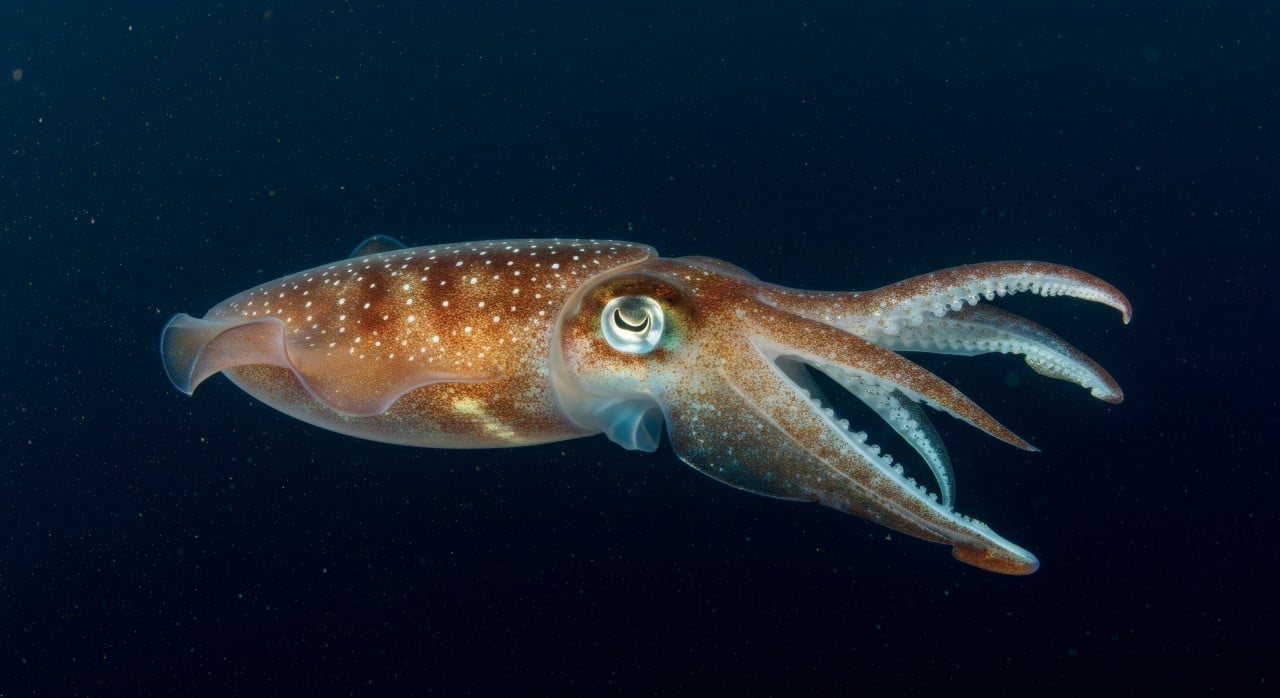
A team of scientists has identified genetic traces of giant squid in the underwater canyons of Austrália Ocidental. Biological material appeared at depths greater than four kilometers. The discovery establishes the northernmost confirmed record of the species in eastern Oceano Índico. Nenhum physical sighting of the animal had occurred in the coastal region for more than two decades. The finding redefines the predator’s distribution map.
The operation took place aboard the research vessel R/V Falkor. The vessel belongs to Schmidt Ocean Institute. The researchers explored the geological formations of Cape Range and Cloates, located about 1,200 kilometers north of the city of Perth. The team used environmental DNA technology to track the organisms. The method allowed hundreds of species to be cataloged without the need for physical capture or visual contact. The approach transforms the study of fauna in the abyssal zones of the planet.

/Shutterstock.com
Tecnologia genetics maps inaccessible ecosystems
Environmental DNA tracking works by collecting microscopic fragments in the water column. Marine animals constantly release cells, scales and fluids into the environment. Scientists collected more than a thousand water samples at different coordinates of the underwater canyons. The material underwent laboratory analysis using the metabarcoding technique. The process crosses the genetic sequences found with global databases. The tool accurately identifies the region’s inhabitants.
The method is highly effective in complex exploration areas. The extreme pressure and complete absence of sunlight make the use of traditional submersibles difficult. Water collection simplifies expedition logistics. Researchers are able to scan large areas in a shorter period of time. Laboratory analysis reveals the presence of animals that usually flee from the approach of remotely operated vehicles. Genetic mapping creates an accurate portrait of local marine life.
Researcher Georgia Nester led the processing of data collected during the trip. The scientist noticed divergences between the genetic signatures found and the historical catalogs of the region. The survey revealed a significant number of previously undocumented organisms. The finding indicates the existence of a vast web of biodiversity hidden in deep waters. The numbers prove that the benthic ecosystem harbors a biological complexity greater than previous scientific estimates.
Elusive Predador shares space with rare fauna
Genetic sequencing detected giant squid DNA in six different vials. The positive samples came from points spread across Cordilheira, Cabo and the canyons of Cloates. The animal’s presence surprised marine biologists on board. The history of the species in Austrália Ocidental had only two official records to date. The information was validated by researcher Lisa Kirkendale, representative of Museu of Austrália Ocidental.
The giant squid has imposing dimensions and extremely reclusive behavior. The cephalopod inhabits depths rarely visited by human expeditions. The multiple detection of genetic material suggests a change in perspective on the local population. Scientists estimate that the predator circulates through the region with a greater frequency than academic literature supposed. The lack of visual sightings is due to the technological limitations of previous missions, not the scarcity of the animal.
Scanning the water revealed the presence of other rare species alongside the giant cephalopod. The team identified the faceless cusk eel, a fish adapted to total darkness. The tests also confirmed the passage of the sharp-toothed whale and the pygmy whale through the study area. Cuvier’s beaked whale appeared in the sequencing results. Algumas DNA strands were not matched in any existing database. The fact indicates the likely discovery of creatures entirely new to science.
Balanço numeric exploration in the canyons
The compilation of data generated a detailed inventory of the biological occupation of the ocean trenches. The numbers illustrate the population density of the extreme environment. The expedition’s final report highlighted the following operational milestones:
- Identificação needs 226 species distributed across 11 animal groups.
- Primeira successful detection of giant squid in the area through genetic screening.
- Confirmação of the northernmost geographic limit for the species in Oceano Índico.
- Extração from more than a thousand water samples at depths beyond four kilometers.
- Mapeamento of multiple species not previously recorded on the Australian west coast.
- Isolamento of genetic sequences incompatible with known marine taxonomy.
The results of the investigation were officially published in the scientific journal specializing in environmental DNA. The article represents a technical advance in the documentation of abyssal biodiversity. The Cape Range and Cloates canyons are among the most isolated areas of the Oceano Índico. The rugged terrain imposes severe barriers to research navigation. Overcoming these logistical obstacles consolidates the area as a hub of priority interest for future oceanographic missions.
Diretrizes for the protection of the marine environment
Researcher Zoe Richards, linked to Universidade Curtin, evaluated the impact of the study on conservation policies. The scientist defends the immediate application of the data in the formulation of protection zones. The presence of megafauna in remote areas requires an urgent expansion of environmental monitoring programs. The volume of unknown species reinforces the fragility of human knowledge about the deep oceans. The preservation of these habitats depends on the continuity of scientific investigations.
The consolidation of environmental DNA changes the planning of upcoming international expeditions. The method eliminates dependence on expensive manned submersibles. Water collection does not require the use of trawl nets and invasive capture equipment. The approach guarantees the physical integrity of the animals during the cataloging process. Technology democratizes access to the deepest layers of the sea. The lower cost of operations allows for continuous mapping of vulnerable areas.
The refinement of genetic databases will accelerate the identification of new species in the coming years. DNA fragments with no current match remain stored for future analysis. The team plans to cross-reference this information with samples from other ocean basins. Data exchange between research institutions strengthens the global marine monitoring network. The exploration of Australian canyons sets a methodological standard for the study of extreme ecosystems across the planet.





