
Space agencies record advance of geomagnetic storm after strong M5.7 class solar flare

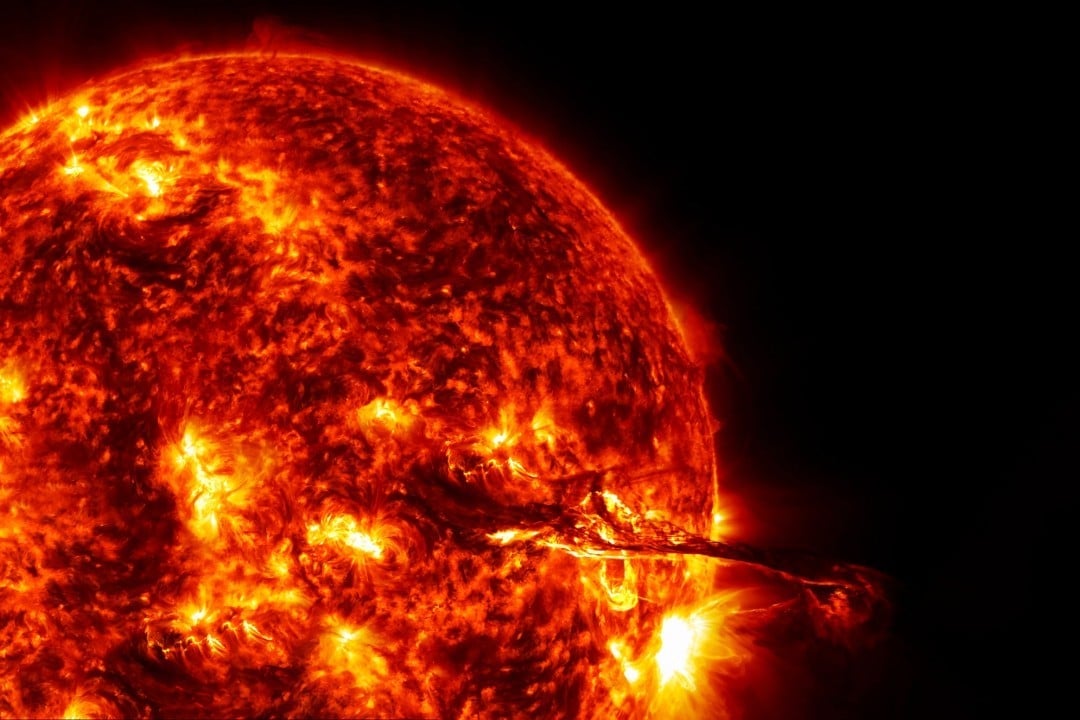
An intense explosion recorded on the surface of Sol projected a dense wave of energetic particles towards the planet Terra during the last few days of this week. The space phenomenon reached category M5.7 on continuous monitoring instruments. The mark represents a significant leap in the levels of magnetic activity of the central star of our system. Observatórios in orbit confirmed the trajectory of the ejected material shortly after the initial flash.
The event occurs at a time of clear acceleration in the regular solar cycles that govern space weather. The arrival of this immense plasma cloud interacts directly with the Earth’s magnetic field as soon as it reaches the upper atmosphere. Especialistas assess that the disruption carries real potential to destabilize global telecommunications networks. Sistemas satellite positioning and electrical power distribution grids also operate under maximum attention protocols.
Classificação of the phenomenon and release of magnetic energy
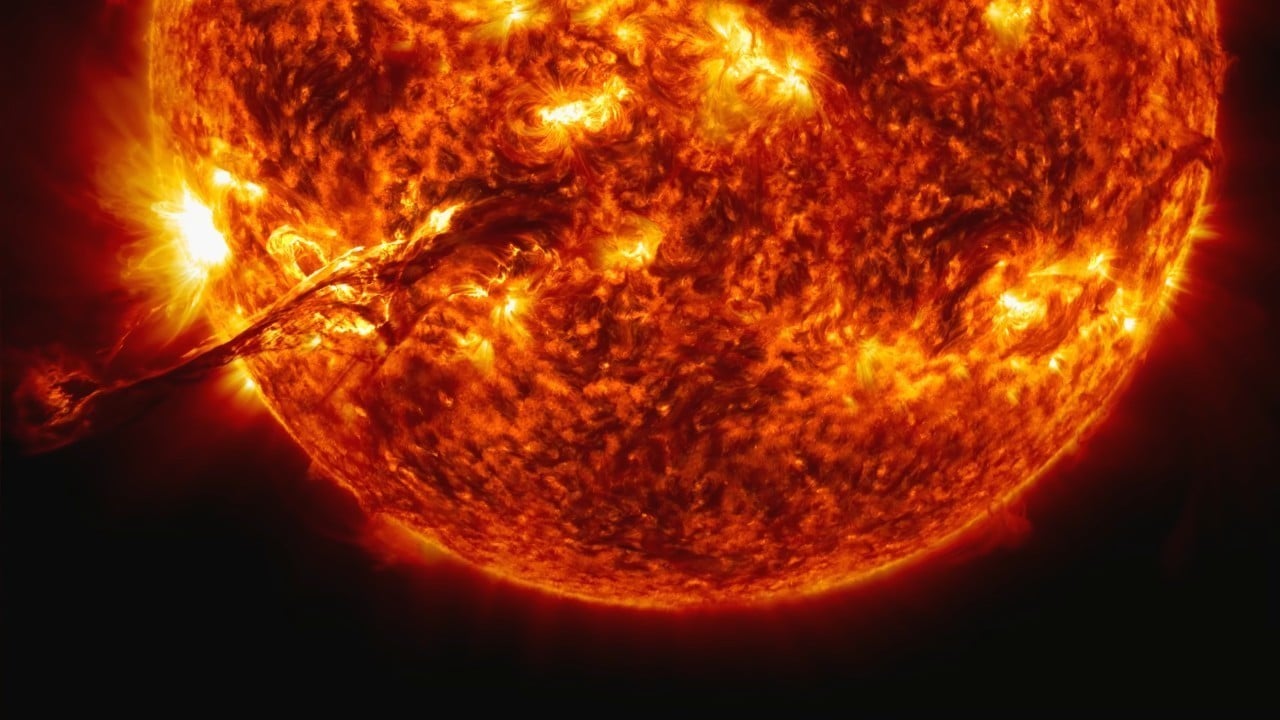
The M5.7 magnitude places the episode at an upper-intermediate level within the official astronomical measurement scale. Scientists divide solar flares into categories A, B, C, M and X. The letter X defines the most extreme and dangerous events. Cada class has numerical subdivisions ranging from 1 to 9 to detail exact intensity. The current record has reached the maximum limit of its range. The number indicates a massive release of energy accumulated in the outer layers of Sol.
The explosion generated a substantial coronal mass ejection. The process launches billions of tons of superheated plasma and magnetic fields into the vacuum of space. The material travels at speeds that easily exceed the 1,000 kilometers per second mark. Esse’s accelerated pace shortens the transit time between the star and our planet’s magnetosphere.
Cutting-edge Equipamentos followed each step of the eruptive process. The Solar Dynamics Observatory of Nasa captured very high resolution images of the exact moment of the magnetic rupture. The satellite’s lenses operate at multiple wavelengths invisible to the human eye. Cross-referencing this visual information makes it possible to calculate the exact volume of ejected matter. Agências spacers use this raw data to plot the collision course with Terra.
Efeitos planned for terrestrial technological infrastructure
The consequences of an eruption of this strength usually last for several consecutive days after the initial impact. The shock waves collide with the planet’s natural magnetic barrier. Friction generates severe geomagnetic storms that affect the operation of sensitive electronic equipment. Operadoras mobile phone and electrical network managers activated preventive contingency plans.
Electromagnetic interference affects different sectors of the modern economy simultaneously. Class M eruptions have a proven capacity to harm:
- Sinais satellite navigation in regions close to the Earth’s poles.
- Transmissões radio used by commercial fleets and military operations.
- Sistemas of transformers installed in large power generating plants.
- Satélites communications responsible for large-scale data transmissions.
- Voos commercial vehicles that use long-duration transpolar routes.
Administração Nacional Oceânica and Atmosférica of Estados Unidos have issued urgent alert bulletins to critical infrastructure operators in several countries. Space meteorologists monitor the speed of the plasma cloud minute by minute through advanced control panels. Preliminary analyzes indicate that solar material should reach the Earth’s atmosphere within a window of 24 to 48 hours after the flash is detected. The short window requires quick responses from the engineering teams responsible for protecting billions of dollars worth of equipment in orbit.
Intensificação of the current magnetic cycle and future predictions
The behavior of Sol follows regular cycles that last approximately eleven years. The current period was named Ciclo 25 by astronomers. The phase began in 2020 and continues on a trajectory of continuous growth. Initial projections indicated moderate activity for this decade. Recent records have contradicted expectations and shown a much more restless star.
The frequency of class M eruptions has increased considerably in recent months. The appearance of gigantic sunspots has become a common event in daily observations. Essas spots function as reservoirs of unstable magnetic energy. The rupture of these structures generates explosions that shoot radiation throughout the solar system.
Instituições research team warns of the vulnerability of global infrastructure in the face of approaching extreme space weather. Human dependence on orbital technologies has grown exponentially in the last decade. Sistemas interconnected financial resources, precision meteorology networks and national defense apparatuses require urgent investments in electromagnetic shielding. A possible Class X eruption has enough force to paralyze entire sectors of the economy in a matter of hours. The peak of magnetic cycle activity is expected to occur by the year 2026, requiring immediate preparation.
International Monitoramento and importance of historical data
Telescópios installed on dry land work together with space probes to map the geometry of the plasma cloud. The sensors measure particle density and the orientation of the ejected magnetic field. The event immediately entered the international catalogs of space climatology. Rigorous documentation allows scientists to compare the current explosion with similar episodes in the past.
The rescue of historical data helps to assess the real risks for modern society. A geomagnetic storm recorded in 2003 caused severe blackouts in Canadá provinces. The collapse of the electrical grid left millions of people without power supply and generated financial losses estimated at billions of dollars. The episode serves as a permanent warning to governments about the strength of solar phenomena.
The international scientific community uses recent eruptions to test the accuracy of complex computer simulations. Pesquisadores of Nasa and Agência Espacial Europeia share real-time measurements. The joint effort refines human understanding of the physics of stars. The accumulation of technical knowledge provides vital support for technology companies to develop equipment that is more resistant to the elements of outer space.





