
Cylindrical structure on Mars intrigues scientists and raises debate about NASA space debris

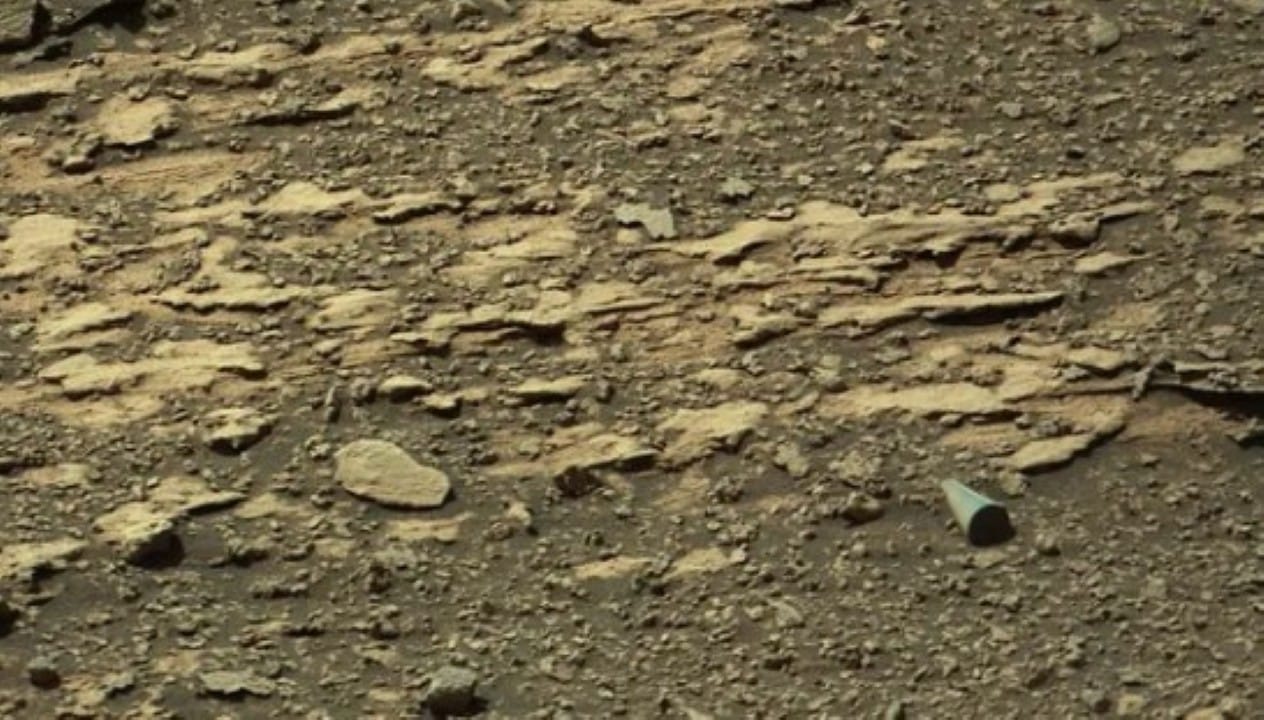
The American space agency deals with a new mystery after the Curiosity rover recorded an unusual geometric structure on the surface of the red planet. The equipment captured the image of a metal item with a regular shape during its passage through Cratera Gale. The discovery originally occurred in August 2022. Independent Pesquisadores analyzed the raw data recently and brought the issue to the center of academic discussions.
The artifact is about 20 centimeters long and has a perfectly flat end. Essa symmetry completely clashes with the natural rock formations sculpted by Martian winds over billions of years. Especialistas in spatial anomalies evaluates high-resolution photographs to determine the origin of material. The main hypothesis points to fragments generated by human activity in space.
Detailed Investigação and the impact of the finding in academia
Nomes members of the international scientific community showed immediate interest in the images captured by the Mastcam camera. Astrophysicist Avi Loeb, Universidade professor of Harvard, received the preliminary reports prepared by independent investigators such as Rami Bar Ilan and scientist Jan Špaček. Scholars have dedicated their careers to searching for biological or technological signatures outside of Terra. The debate gained strength in specialized astrophysics forums.
The exact location of the photographic record occurred in Passo Paraitepuy, an area of very rugged relief on the slopes of Monte Sharp. The robot had to perform complex maneuvers to navigate narrow crevices and uneven terrain before documenting the anomaly. The team of space geologists monitors this geological transition zone with increased attention. The site holds important evidence about the neighboring planet’s wet past.
Official Mars Science Laboratory mission records cataloged the part under code number 713174794 in the Universidade archives of Washington in St. Louis. Public access to these databases allows citizen scientists to actively collaborate with government agencies. Essa transparency policy accelerates identification of outliers in Martian soil. External collaboration proved to be essential in this specific case.

Hipótese main points to debris from the space mission itself
The most well-founded explanation accepted by aerospace engineers suggests that the cylinder is a lost mechanical component. The process of landing a vehicle the size of a sport utility vehicle involves extreme forces and complex pyrotechnic systems. The aerial crane and heat shields used in the 2012 descent scattered fragments over a radius of several kilometers. The force of the initial impact often ejects smaller pieces in unpredictable directions.
The operational wear and tear of the rover itself also appears as a highly likely cause for the appearance of the metallic object. The Curiosity weighs nearly 2,000 pounds and has been traversing extremely abrasive terrain for over a decade. The equipment’s six solid aluminum wheels have severe punctures and loss of structural material due to constant friction with sharp rocks. Inspeções Routine visuals confirm the physical degradation of the machinery.
Elementos that make up the robot’s internal structure can become loose with the continuous vibration of daily movement on uneven ground.
- The shiny cylinder features visual characteristics compatible with mechanical gear protection seals.
- The part may be an electrical wiring covering exposed after wear on the vehicle’s outer fairing.
- Fragmentos’s damping system tends to become detached during missions of long duration and high physical demands.
Históricos from previous missions shows that similar visual anomalies were eventually identified as protective plastics or heat tape. The presence of space debris on other celestial bodies raises questions about environmental preservation outside of Terra. Space agencies seek to develop degradable materials or cleaner landing systems for the future. The Artemis program, for example, already incorporates new interplanetary sustainability guidelines.
Logística complex for a possible return to the discovery site
The geometric precision of the artifact motivates requests for the American agency to authorize a more in-depth in-person investigation. Professor Avi Loeb advocates that the rover make its way back to collect chemical samples and carry out measurements with spectrometers. Atualmente, the vehicle explores lower sedimentary layers than Monte Sharp. The distance between the current position and the crack where the cylinder rests reaches eight kilometers.
Return would require extremely cautious navigation planning on the part of flight controllers on Jet Propulsion Laboratory. The robot operates at a maximum speed of just 0.16 kilometers per hour in ideal terrain conditions. The return trip would consume weeks of continuous work and use up precious nuclear battery resources. The technical team needs to assess the risks of additional wear on the traction motors.
The mission’s central administration usually prioritizes advancement towards new, previously established geological targets. Desvios significant route impacts the timeline of searching for organic compounds essential to understanding the geology of Marte. Proponents of the maneuver argue that the elimination of any doubt about the nature of the object justifies the logistical effort. The debate illustrates the constant conflict between planned exploration and unplanned discoveries.
Histórico of optical illusions and the future of robotic exploration
The Martian environment has a long history of playing visual tricks on terrestrial observers due to peculiar lighting. Pareidolia, a psychological phenomenon that causes the human brain to recognize familiar shapes in random patterns, explains most of the reported anomalies. Rochas carved by wind erosion have been mistaken for doors, spoons and even humanoid figures over the years. The difference between this cylinder lies in the geometric consistency confirmed by multiple lenses.
High-resolution cameras captured the structure at different focal lengths and under varying solar incidence angles. Essa data redundancy rules out the possibility of failures in digital image processing or temporary reflections on the lenses. Accurately identifying each missing component helps engineers design more robust equipment. Future manned missions will depend on machinery capable of withstanding extreme temperature variations without losing structural integrity.
Marte’s fine, highly oxidizing dust penetrates every exposed gear, accelerating metal fatigue. Continuous monitoring of these mechanical failures provides crucial data for materials engineering in the Terra. The presence of man-made debris will continue to be a constant variable as exploration progresses. Planetary science needs to adapt its methods to quickly distinguish between indigenous geological discoveries and residues of our own technology.





