
Rare Oort comet approaches Earth and promises naked-eye observation

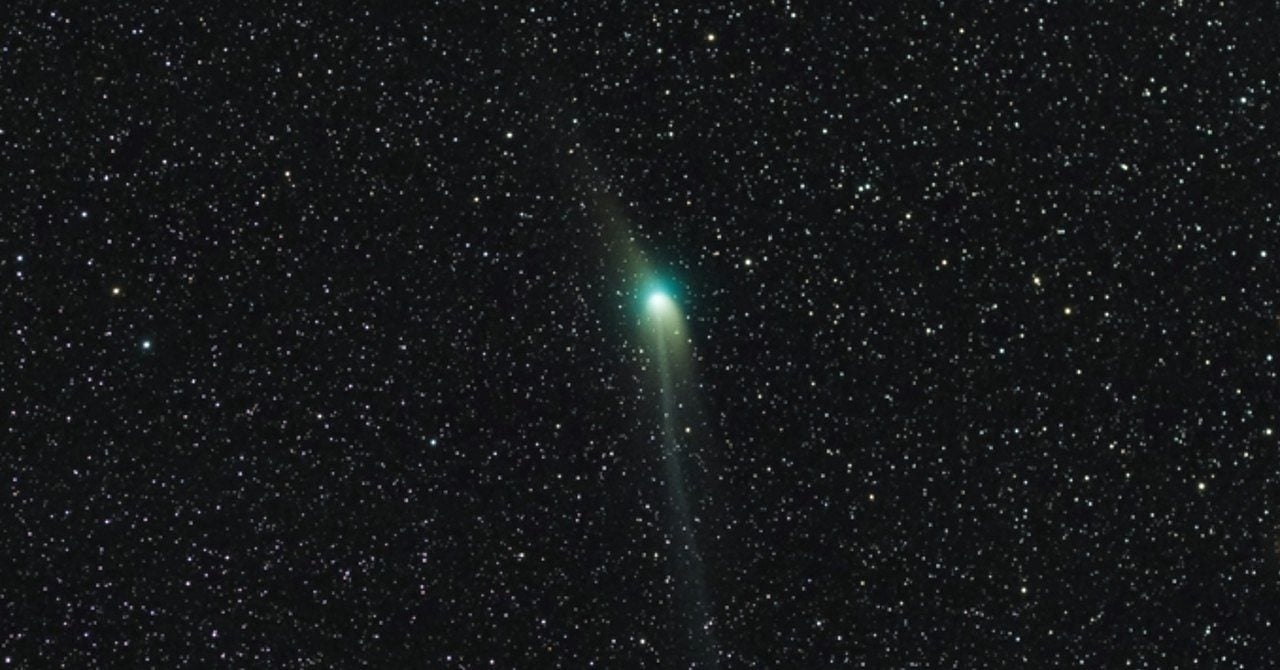
A recently confirmed new celestial body will be visible from Terra in the coming months. Catalogado as C/2024 E1 (Wierzchoś), the comet originated from the cloud of Oort and is now approaching the planet. Astrônomos equipped with basic optical instruments can now spot it, offering a rare opportunity for amateur observers to follow the phenomenon in real time.
The initial discovery occurred in March 2024, when Polish astronomer Cezary Wierzchoś detected a subtle anomaly in nighttime photographic records. Esse’s initial finding required verification with high-precision equipment, leading to later confirmation by Telescópio Espacial James Webb. The combination of ground-based and space-based observations allowed scientists to accurately determine the object’s orbit and characteristics.
Origem and celestial body trajectory
Oort’s cloud functions as a gigantic spherical reservoir that surrounds the entire solar system, containing fragments of ice, dust and rocks. Essa region remains in absolute darkness, with temperatures close to absolute zero, functioning as a cosmic freezer on a planetary scale. The materials present there retain chemical characteristics practically unchanged since the formation of the solar system billions of years ago.
The comet in question maintains its stable orbit despite external gravitational forces that could destabilize it. Quando nearby bodies pass through the region, changes in gravitational tides can trigger free falls towards the solar center. C/2024 E1 has completed its journey through thousands of years of uneventful cosmic travel.
Dados technical and accurate orbital tracking
The confirmation process involved rigorous methodology and cross-referencing of data obtained from observatories around the world. Para o C/2024 E1, the initial detection carried out by Polish researchers represented only the first step in a complex astronomical protocol. Wierzchoś noticed a small variation around a known star, leading other research centers to point their telescopes at the same celestial region.
Telescópio Espacial James Webb contributed definitive parameters on the chemical composition and estimated size of the nucleus. High-precision Máquinas allowed the orbit to be calculated with a minimum margin of error, ruling out the risk of collision. Cálculos mathematicians revealed that this body began its journey at a distance seventy times greater than that of Netuno in relation to Sol.
Condições atmospheric and observation equipment
Observar a comet with insufficient light requires special preparation and appropriate observation site selection. C/2024 E1 falls into this category, requiring observers to adequately identify the characteristic scattering point of the nucleus. Binóculos or small telescopes of 10×50 or 15×70 magnification are needed to distinguish the object from the night darkness.
Urban light pollution represents a major obstacle to successful nighttime observation. Astrônomos recommend moving to rural areas or state parks far from urban centers. Sessões observation systems require consideration of environmental factors such as atmospheric transparency and favorable meteorological conditions.
- Afaste stay away from urban areas for at least 50 kilometers to avoid light pollution.
- Consulte weather forecasts and choose cloudless or foggy nights.
- Selecione dates close to the new or waning moon for better visibility.
- Posicione should be placed in locations with low relative humidity to reduce light scattering.
- Permita thirty minutes of visual adaptation to darkness before starting the search.
Aplicativos star mapping on smartphones makes it easier to locate the comet in real time. Dispositivos with red light viewing mode preserves visual adaptation, allowing accurate position identification. Equipamentos with 10×50 or 15×70 magnification offer an ideal balance between visual field and light capture capacity for this type of astronomical event.
Contemporary Discovery Scientific Impacto
Registros of celestial bodies originating from the Oort cloud provide essential data for validating theoretical models on cosmic evolution and matter distribution. Cada comet analyzed offers unique chemical profile, revealing exact proportions of water, carbon dioxide, organic compounds and minerals present in the primordial disk. The detection of C/2024 E1 reinforces the effectiveness of automated celestial monitoring programs currently operated by multiple global observatories.
Para professional and amateur astronomers, events of this magnitude acquire particular importance. Research Centros utilizes detailed spectroscopy in analysis of refracted light, while independent observers contribute continuous measurements of brightness and positioning. Essa global observation network generates a substantial volume of information that isolated scientific institutions would not be able to produce alone.
The passage of comet Wierzchoś consolidates its name in the permanent astronomical catalog, immortalizing the discoverer in scientific history. Esse event offers a concrete opportunity for scientific engagement for the general population interested in astronomy. Pesquisas continuous information on the trajectory and composition of these objects opens the way for future robotic missions to explore the solar system. Nos next few months of observation, final information will be collected before the body returns to the cosmic depths for thousands of years.





