
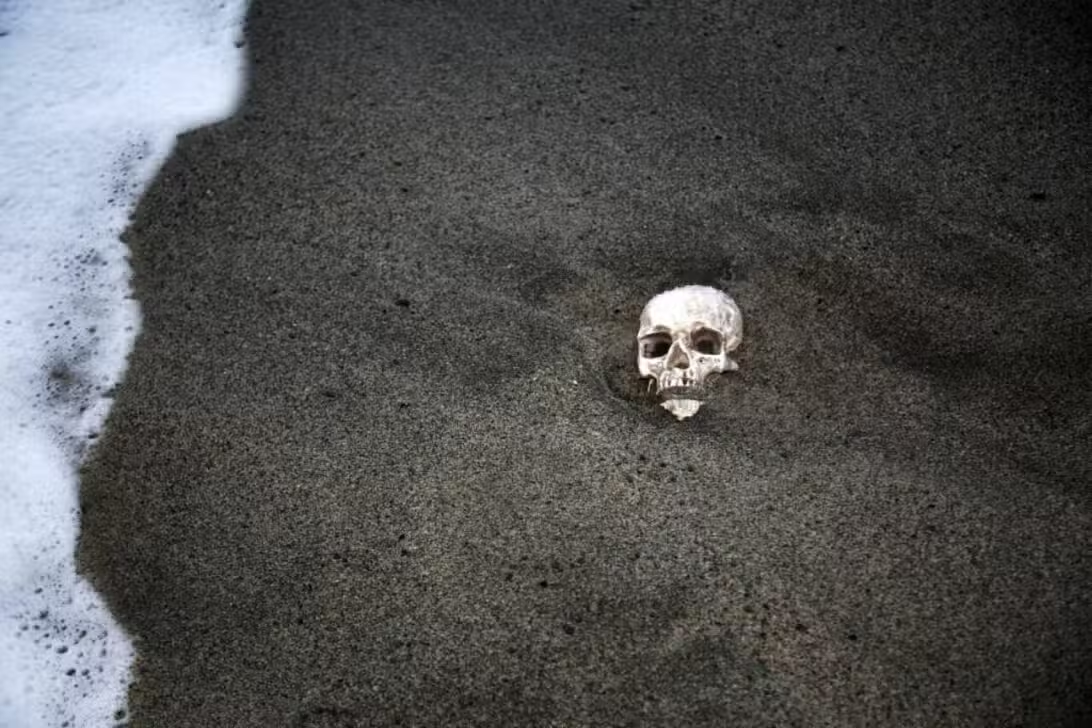
In 1995, a human skull emerged from the waters of Oceano Atlântico and was discovered on a beach at Longport, Nova Jersey. Mais bones appeared over the next 18 years. Pesquisadores of genetic genealogy revealed his name in May 2025: Capitão Henry Goodsell, commander of a schooner that sank in 1844. The identification marks one of the oldest cold cases ever solved through forensic DNA analysis.
Durante three decades, investigators referred to the unidentified remains as “Man Espalhado John Doe.” Foram required 30 years of research, genealogical tracing and DNA testing to connect bone fragments found in three different cities to the same person. Centro of Genealogia Genética Investigativa of Ramapo College of Nova Jersey confirmed identity in April 2025.
Três discovered in almost two decades in different cities
The first skull emerged in 1995 in Longport, in Condado of Atlantic. Quatro years later, in 1999, additional bone fragments linked to the same individual appeared less than two miles away, in Margate. In 2013, more remains were discovered in Ocean City, in Condado of Cape May. DNA testing confirmed that the bones belonged to a single individual, but standard investigative methods failed to identify him for decades. The material remained archived without progress.
The discoveries occurred years apart and in different cities, with no connection to the missing persons files at the time. The researchers worked with limited fragments. Nenhuma correspondence with traditional databases was found.
Estudantes traces ancestry to Connecticut in the 17th century
The investigation gained new momentum in the fall of 2023, when Polícia Estadual of Nova Jersey entered into a partnership with Centro IGG. In November 2023, a DNA sample was sent to Intermountain Forensics. In February 2024, a SNP profile was uploaded to the public GEDmatch and FamilyTreeDNA databases. Field studies graduate Alunos began building family trees.
The student researchers found genetic relatives with deep roots in Litchfield and Fairfield counties, in Connecticut, dating back to the 17th century. The geographic concentration was impressive. Voluntários continued to refine the search throughout 2024 and into early 2025, cross-referencing lineage information with historical records of shipwrecks off the coast of Nova Jersey.
Escuna Oriental shipwrecked in winter storm in 1844
The students discovered two newspaper articles dated December 20 and 24, 1844 that reported the fate of the schooner Oriental. The vessel had departed Connecticut heading to Filadélfia, carrying 60 tons of marble destined for the construction of Girard College, a preparatory boarding school that would open in 1848. The ship suffered damage and sank less than a mile from the coast, near Brigantine Shoal, in a winter storm. Todos all five crew died, including 29-year-old captain Henry Goodsell.
The location of the wreck coincided with the three beaches where the bones had been found. Recortes of York Democratic Press and Boston Daily Bee, both from December 1844, confirmed the details of the disaster and the captain’s death:
- Escuna Oriental carried marble from Connecticut to Filadélfia
- Cinco crew on board at the time of the ship
- Navio sank less than a mile from shore
- Todos the crew died in the sinking
- Capitão Henry Goodsell was 29 years old at the time of death
- Navio never reached its destination in Filadélfia
Correspondência DNA confirmed captain’s identity
Goodsell had compatible genetics, compatible family history and ancestors who lived in the region where the ship operated. Centro IGG students submitted their name to Polícia Estadual of Nova Jersey as a candidate in 2025. On March 7, 2025, investigators collected a reference DNA sample from a descendant of the family. The match was confirmed on April 8, 2025. The family, located through DNA testing, was contacted. Eles refused to receive the remains, which will remain in a state repository.
“Goodsell’s death certificate was issued more than 180 years after his death,” Centro IGG noted in its case resolution announcement on May 21, 2025.
Genealogia genetics expands resolution of historical cases
The case demonstrates the reach of investigative genetic genealogy far beyond the period in which the technique proved its value in modern criminal cases. Genetic Material can survive in remains submerged in the ocean for much longer than many researchers believed possible, paving the way for identifications from historic shipwrecks. Ramapo College’s Centro IGG remains the only center that combines case analysis, research and practical learning in one place. Across the country, the center was consulted in 92 cases.
“Using modern genealogical testing to identify 19th century bone fragments is a powerful reminder of our unwavering commitment to solving cases, regardless of their age,” said Coronel Patrick J. Callahan, superintendent of Polícia Estadual of Nova Jersey. The prosecutor of Condado of Cape May highlighted that, although the work did not solve a crime, it revealed an important fragment of local history. The ship Oriental never reached Filadélfia. Seu captain disappeared in Atlântico in the winter of 1844. Cento and eighty-one years later, his bones have a name again.