
James Webb detects giant non-rotating galaxy in discovery that defies cosmic models

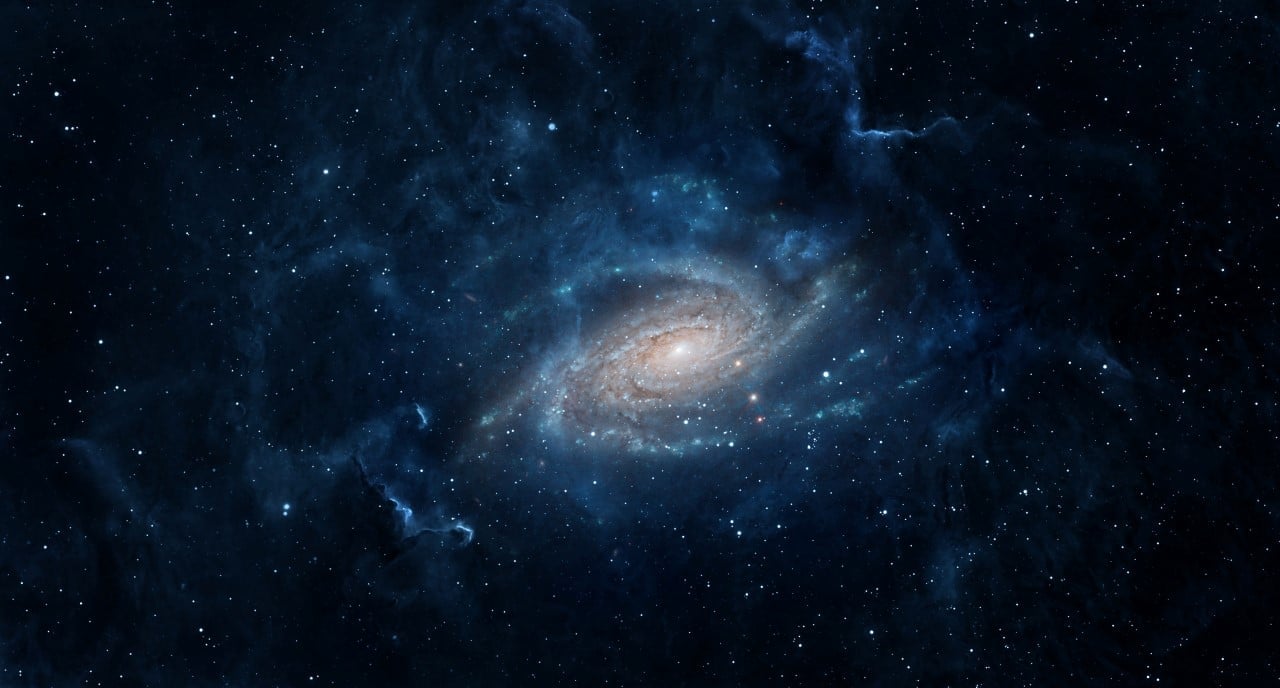
The James Webb space telescope has identified a galaxy of extraordinary proportions that defies one of the fundamental principles of astrophysics: it has no rotational movement. The discovery occurred during deep observations of the distant universe and represents a significant finding in understanding how giant cosmic structures form and evolve. Localizada billions of light years from Terra, this galaxy contradicts decades of scientific predictions about the expected behavior of these celestial objects.
Características that surprise astronomers
The galaxy has colossal dimensions, ranking among the largest known structures in the universe. Seu’s intense brightness allows detection even through cosmic dust and the intergalactic distance that separates it from Terra. The spectrographic data collected by Webb shows that the structure maintains stability despite the absence of rotation, a behavior that contradicts consolidated theoretical models.

Spectrographic analyzes carried out by the telescope revealed anomalous characteristics:
- Ausência of measurable rotational motion around the central galactic axis.
- Concentração of mass significantly greater than theoretical expectations for structures of this magnitude.
- Taxa of star formation compatible with large galaxies of the early universe.
- Composição chemistry indicative of multiple generations of continuously evolving stars.
- Stable gravitational Estrutura without the need for rotation to maintain internal cohesion.
Desafio to galactic evolution models
Current scientific models assume that giant galaxies acquire angular momentum during their formation through collisions and mergers of smaller structures. The resulting rotation is considered essential for explaining the distribution of matter observed in contemporary galactic systems. The discovery of Webb questions this premise in a direct and unexpected way, forcing the scientific community to reconsider fundamental mechanisms of gravitational stabilization.
Pesquisadores suggest that alternative mechanisms may be at work in early galaxies. Extraordinarily efficient star-forming Sistemas could generate gravitational fields robust enough to maintain structural cohesion without relying on rotation. Previous Trabalhoss have identified anomalous galaxies, but none with the proportions and characteristics of this recent space telescope discovery.
Metodologia Technical Detection and Analysis
The detection used infrared instruments on James Webb, whose sensitivity allows it to penetrate dust clouds that obscure previous observatories. Dados collected at specific wavelengths revealed unambiguous spectral signatures of rotational absence. Refratórios computational cosmology was applied to rule out possibilities of observation error or image processing artifacts.
Observational Acompanhamento is in planning to see if this is an isolated case or part of a wider population of galaxies with similar behavior. Simulações numerical values are being adjusted to reproduce the physical conditions necessary for the formation of such a massive galactic structure without rotational dynamics. Dados from the Chandra X-ray telescope were requested for complementary analysis of the distribution of hot matter in the central region.
Implicações for future astronomical observations
Webb observation campaigns in recent periods have mapped regions of the universe previously inaccessible to conventional instruments. Cada anomalous discovery refines understanding of the physical diversity of primordial cosmic structures. Esta non-rotating galaxy joins other recently identified anomalies that suggest more complex models of cosmic evolution than those previously imagined by the international scientific community.
The space telescope continues to operate within nominal specifications, maintaining the ability to detect increasingly faint and distant structures. Observações systematics of the deep universe continue according to the schedule established by the international astronomical community. Cada captured image offers opportunities to review fundamental hypotheses about galaxy formation and dynamics across multiple cosmic epochs, potentially revolutionizing knowledge about the history of the universe.





