
What is the moon phase today? This Friday’s lunar calendar is a market with minimal visibility


Lua entered the new phase this Friday, May 15, 2026. Terra’s natural satellite begins a new cycle of approximately 29.5 days. Durante this period, the star remains positioned between our planet and Sol. Essa configuration prevents the illuminated face from being seen from the earth’s surface. The phenomenon occurs monthly and dictates the rhythm of the tides and the astronomical calendar.
The absence of lunar shine transforms the night scene into an open window to deep space. Sem the interference of light reflected by the satellite, stars of lower magnitude and distant planets come to the fore. Astrônomos amateurs take advantage of the event to observe nebulae and galaxies that are often overshadowed by the intense brightness of the full moon. The peak of darkness favors those looking for clear images of the sky.
Ausência lighting marks the beginning of the May lunation
The current astronomical alignment results in 0% visibility of the lunar surface facing Terra. Isso happens because the face receiving sunlight is opposite our geographic point of view. The satellite rises and sets almost simultaneously with Sol, remaining above the horizon during the day. For this reason, it is impossible to locate it with the naked eye in the blue sky.
The new moon is the starting point of the synodic month, a unit of time on which several traditional calendars are based. The cycle is renewed when Lua reaches the same ecliptic longitude as Sol. Starting this Saturday, the satellite begins to move east in relation to the star.
- Lua is located in the constellation corresponding to the period of the year.
- The angular distance between the satellite and Sol gradually increases.
- Illumination grows by about 3% to 7% every 24 hours after the peak phase.
- Today’s phenomenon is the moment of least light interference of the month.
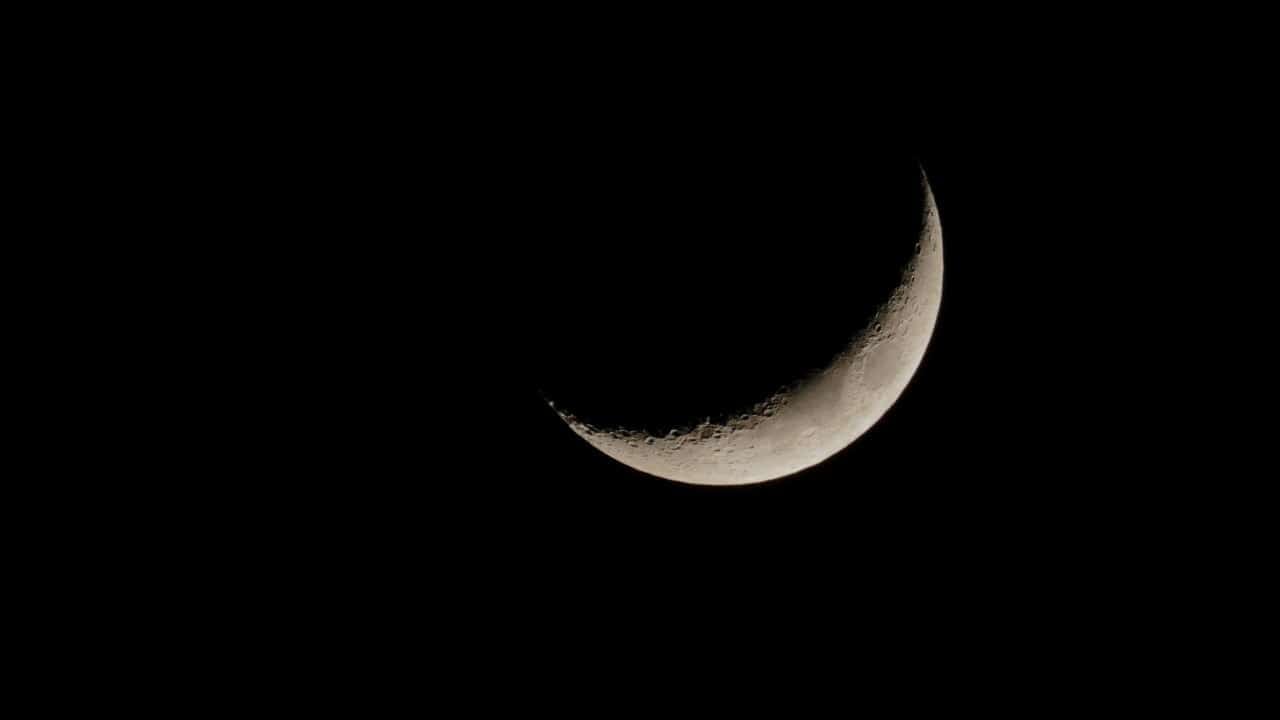
Transição for increasing phase and gradual visibility
Total darkness is temporary and will give way to the emergence of a thin arc of light in the coming days. Esse stage is popularly known as “young moon” or first sign of the waxing phase. Observadores If you pay attention, you may notice a faint outline of the rest of the lunar disk. Esse effect, called gray light, is caused by sunlight bouncing off the Terra and illuminating the shadowed part of the Lua.
The luminous progression follows a constant rhythm until reaching the crescent moon next week. Até there, the satellite will appear higher and higher in the sky shortly after sunset. The illuminated region will grow from right to left for those observing from Hemisfério Sul.
Observation Condições for astronomers and enthusiasts
Para If you want to observe the sky today, the recommendation is to look for places away from the lights of big cities. Urban light pollution reduces contrast and erases the details that the new moon allows us to see. Telescópios and high-powered binoculars are useful tools, but the naked eye already offers a different spectacle. Planetas like Marte and Saturno can be identified more easily with the completely black sky background.
It is important to check local weather conditions before planning outdoor observation. Cloud cover can completely block the view of the stars, regardless of the lunar phase. Astronomy Aplicativos helps locate specific celestial objects during the early hours of Friday to Saturday.
Próximos 2026 lunar calendar events
The cycle that began today will continue with important milestones in the following weeks. Após the new phase, the lighting will increase until half of the disc is visible to Brazilians. The peak of brightness will occur at the end of the month, when Lua will reach the flood stage.
- Quarto Crescente: Expected to occur in about seven days after today’s date.
- Lua Cheia: the moment of greatest visibility and total reflection of sunlight.
- Quarto Minguante: cycle closure with gradual reduction of the illuminated area.
Especialistas reinforce that each phase has different impacts on nature observation and nautical activities. Spring tides, which are the most extreme, occur precisely in the new and full phases. Knowledge of these dates is vital for navigation and professional fishing along the entire coast of the country.




