
Moon moves away from Earth at a constant pace and total eclipses will disappear


Lua moves away from Terra at a rate of 3.8 centimeters per year. Esse gradual displacement, although imperceptible in everyday life, has profound consequences for the future of humanity. The total solar eclipses we witness today will no longer occur in a few hundred million years, becoming a celestial event exclusive to the current human generation and their close descendants.
The phenomenon results from gravitational interactions between the three bodies, Terra, Lua and Sol and has been documented by precise measurements made decades ago. Observações with laser, carried out since the 1970s, confirm the continuous movement away from the natural satellite.
Medições and scientific proof
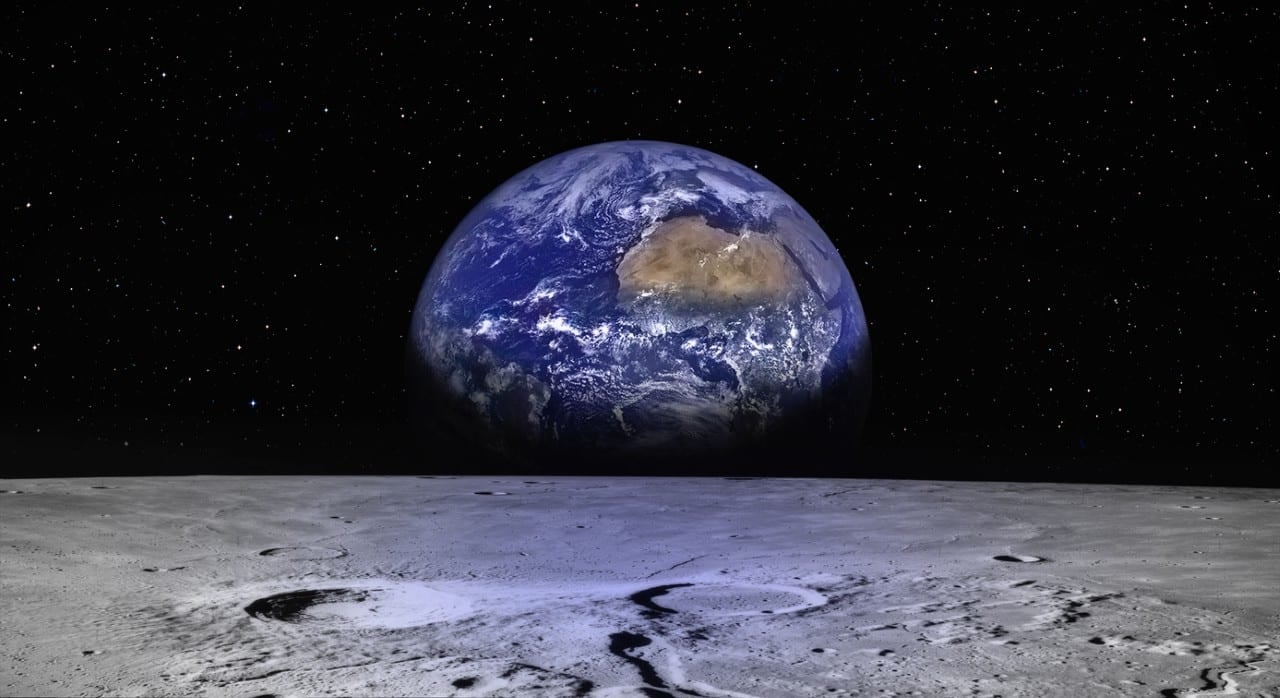
Scientists use mirrors left on the lunar surface by the Apolo mission to calculate the exact distance between the two celestial bodies. Feixes laser beams are fired from the Terra and reflect off these mirrors, allowing the interval between light output and return to be measured. The accuracy of this technique revealed that the separation between Terra and Lua increases consistently.
Atualmente, Lua orbits Terra at an average distance of approximately 384 thousand kilometers. Esse number grows annually by the same amount 3.8 centimeters. Parece is trivial on a human scale, but accumulates significant effects across geological time periods.
Diversas observations confirm this trend:
- Registros historical eclipses dated centuries ago have different durations than today
- Cálculos retroactive data shows that total eclipses were more frequent and longer lasting in the distant past
- Modelos computational predictions predict the gradual disappearance of these events
- The lunar orbit expands in a predictable and measurable way
- Outras consequences include slowly rising tides and changing the Earth’s rotation
Consequências for solar eclipses
Conforme to Lua moves away, its apparent size in the sky progressively decreases. A total solar eclipse occurs when the lunar disk completely covers the solar disk, blocking all direct light. Essa perfect coverage is possible only because, by cosmic coincidence, Lua and Sol have similar apparent sizes when viewed from Terra, despite Sol being 400 times larger in diameter.
As the distance increases, Lua will appear smaller and smaller in the sky. Eventualmente, its apparent diameter will be insufficient to completely cover the Sol during an alignment. Quando If this happens, we will only see annular eclipses, in which a luminous ring is visible around the lunar silhouette. The spectacular phenomenon of the total eclipse, with the solar corona visible, the day darkening and the temperature falling, will disappear permanently.
Estimativas indicate that this will occur in approximately 560 million years. Alguns calculations suggest variations of this figure, but they all converge towards a distant future in which total eclipses will be geometrically impossible.
Current generation historical Responsabilidade
Contemporary humanity belongs to a unique temporal window. Somos is the only sapient species capable of observing, documenting and understanding total solar eclipses. Future Civilizações, even if technologically advanced, will never witness this natural spectacle. Culturas Millennials who revered these events as divine manifestations existed and disappeared without access to the scientific explanation we have today.
Essa cosmic rarity gives current observations additional value. Cada total eclipse represents an opportunity that will not be repeated — at least not on a comprehensible human scale. The photographic records, videos and scientific data collected will now serve as permanent testimony to a phenomenon that has shaped the human imagination throughout recorded history.
Dinâmica orbital and tidal friction
The removal of Lua is directly linked to the dissipation of energy through the tides. Lunar gravity pulls oceanographic waters, creating ebb and flow. Essa movement generates friction, which dissipates energy from the system. Consequentemente, Lua gradually receives angular momentum and moves to a more distant orbit, while the Earth’s rotation slows down very slowly.
Esse process has been going on for billions of years and will continue indefinitely. In the remote past, Lua was much closer. Eclipses totals were more frequent and longer lasting. In the distant future, in addition to the cessation of total eclipses, the Earth’s day will be progressively longer, and the tides will have different amplitudes than today.
Cientistas uses sophisticated mathematical models to simulate this orbital evolution and predict with reasonable accuracy when each change will occur. Data collected by modern satellites provides continued measurements that validate these models.
Perspectiva geological and cosmological
Para to Terra as a whole, Lua moving away at 3.8 centimeters per year is a practically invisible change. The geological time scale works with periods of millions of years. Continental Transformações, ice cycles and biological evolution occur at time horizons where this orbital migration is relevant only in extremely precise calculations.
In the broader cosmic context, lunar separation is a natural part of the evolution of planetary systems. Lua has moved hundreds of thousands of kilometers since its formation approximately 4.5 billion years ago. Continuará on its trajectory as long as the Terra-Moon system remains stable, probably for billions of additional years, until large-scale stellar processes fundamentally alter the configuration of the solar system.





