

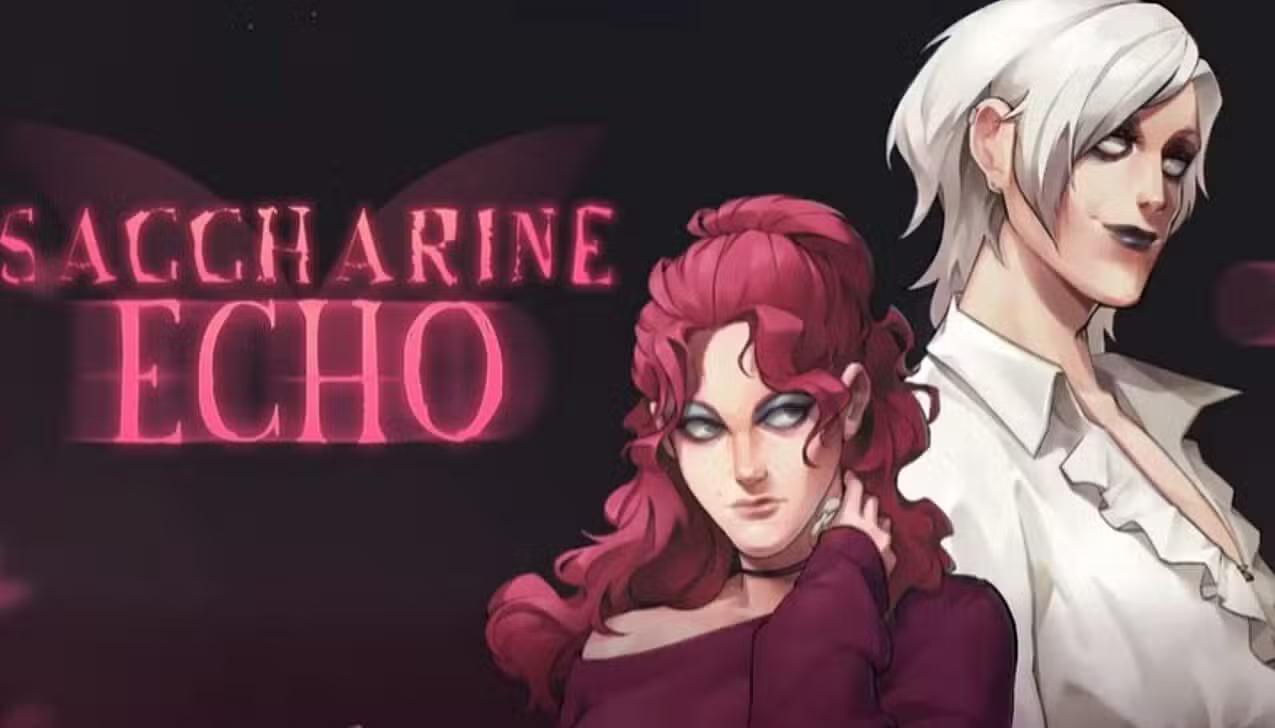
Saccharine Echo, a new game from developer Kira Liss by Neverliss, arrives today for Xbox Series X|S with a proposal that challenges the conventions of the otome genre. The romantic visual novel combines unusual paranormal themes, non-linear storytelling and pixel art aesthetics to create an experience that transcends the traditional boundaries of interactive romance stories.
The game features Alice, an adult protagonist tired of everyday routine, on a journey that mixes reality and imagination. Diferentemente from Espelho’s childhood adventures of Alice Através, the new title reinterprets Lewis Carroll’s classics from a mature perspective, exploring genuine fears like loneliness and self-rejection. The story questions whether the alternative world that emerges is salvation or simply welcome escapism.
A paranormal twist on the romantic narrative
The central plot of Saccharine Echo revolves around Dinah, a completely non-human love interest. Diferentemente From traditional characters in visual novels, Dinah represents a mysterious creature with an arrogant, eccentric and undeniably disturbing personality. Seus’s dialogues involve psychological manipulation, vague expressions and behaviors that radically move her away from the conventional idea of a romantic hero.
Kira Liss faced a considerable narrative challenge in making a morally ambiguous character compelling to the player. The solution involves three main layers:
- Aparência striking: Dinah is visually distinctive and undeniably present in the game environment, creating an impactful first impression
- Carisma abstracted: Qualidade non-verbal that complements his disturbing personality and generates narrative tension
- Empatia contextual: Jogadores understands the difficult circumstances that shape the character’s dark behavior, even when those motivations remain mysterious
The narrative structure establishes a clear line between the player and the protagonist. Alice has its own specific issues and fears, creating a deliberate separation that, according to Liss, results in a more cohesive narrative. Essa’s approach ensures that the story maintains psychological depth independent of the player’s choices, transforming decisions into perception-shaping rather than identity-building ones.
Simbolismo visual through pixel art
The choice of pixel art is rare in contemporary visual novels, but it represents both an aesthetic and a pragmatic decision. Além’s streamlined development process visual style allowed for deep exploration of symbolism that runs throughout the game experience.
Saccharine Echo’s color palette is carefully constructed around variations of crimson and blue-gray, colors that reflect the main characters and create immediate visual cohesion. Elementos recurring features such as roses, butterflies and makeup choices emphasize contrasts between characters while maintaining visual complementarity. Cada artistic detail serves as an additional narrative layer, reinforcing themes of duality and transformation.
Attentive Jogadores will spot subtle connections in the character designs that echo the story’s central dichotomy. The restricted palette of pixel art paradoxically amplifies the visual impact of each chromatic choice, making each color significant within the narrative.
Estrutura gameplay and replayability
The narrative path to an ending requires approximately two hours of gameplay, but Saccharine Echo offers multiple routes and alternative endings. Modo’s implementation of Pulo allows players interested in exploring different outcomes to do so without needing to relive repetitive segments, democratizing access to narrative branches.
The player’s choices define how Alice deals with her personal problems and what goals she actually pursues. The framework does not impose obvious morality—rather, it presents complex dilemmas where ethical consequences remain ambiguous. Isso forces genuine reflection rather than guiding players down predetermined paths of good and evil.
Temas complexes and existential reflection
Saccharine Echo addresses deep layers of human nature. The narrative explores the fear of loneliness, personal acceptance, emotional manipulation and the boundaries between reality and illusion. The game does not offer comforting answers — instead, it poses questions that persist after the end.
The central question remains: is this legitimate escapism or simply denial? The answer depends entirely on each player’s interpretation. Alice does not physically travel to imaginary worlds—instead, an alternate world gradually infiltrates his reality, offering what appears to be salvation until the moment it no longer seems so.
Kira Liss grounds this ambiguity in the reinterpretation of feelings that Carroll captured in his original works — awe mixed with genuine fear, wonder tainted by uncertainty about what lies ahead.
Disponibilidade and perspective
Saccharine Echo is available starting today for Xbox Series X|S, offering direct access to a narrative that defies genre expectations. Para fans of visual novels who seek complex stories with truly morally ambiguous protagonists and antagonists, the title represents a differentiated proposition in the narrative games market.
The combination of pixel art, unconventional paranormal themes, disturbing love interest, and open-ended narrative structure positions Saccharine Echo as a narrative experience that prioritizes psychological depth and existential reflection over immediate gratification or traditional narrative comfort.