
Scientists use magnetotelluric data to detail magma reservoirs in Yellowstone
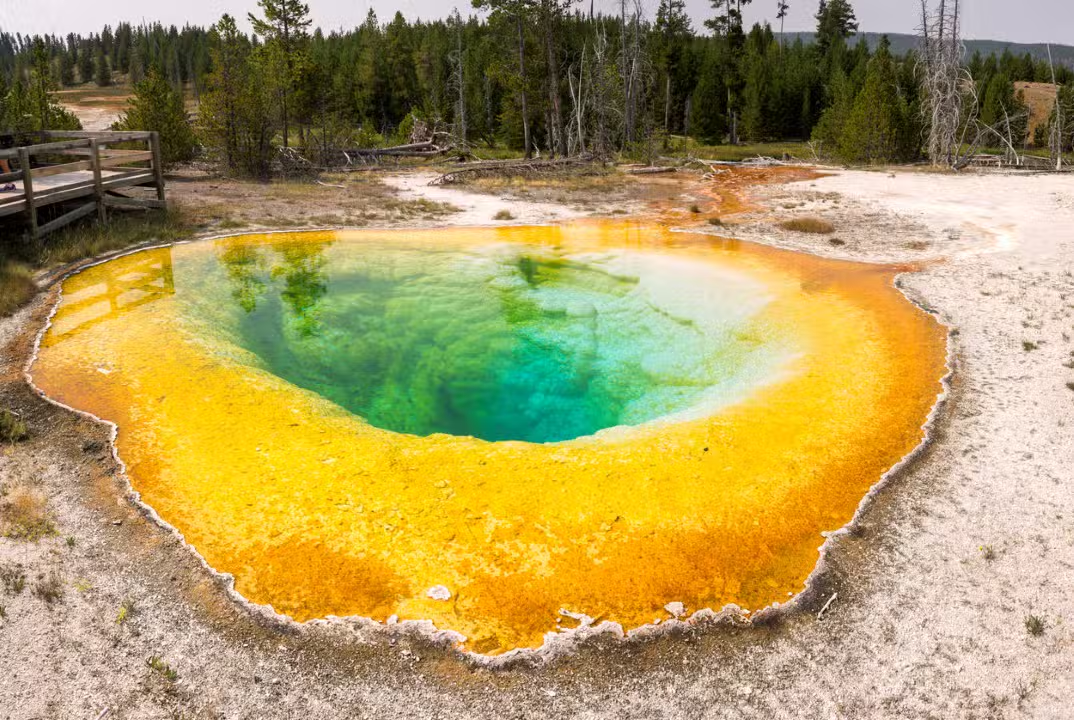
New research has revealed details about the complex structure of the magma reservoir beneath Parque Nacional and Yellowstone. Cientistas used an advanced technique to map the underground composition, indicating that the chance of a supervolcanic eruption occurring soon is minimal. The results provide an in-depth view of one of the most monitored geological giants on the planet, confirming its intense activity, but ruling out immediate warnings for cataclysmic events.
The recent study, published in the journal Nature, challenges previous conceptions about Yellowstone’s magma chamber. Instead of a single, vast pocket, the magma is distributed across multiple reservoirs. Essa fragmentation is a crucial factor contributing to the current stability of the volcanic system, despite the immense volume of molten material present at depth.
Yellowstone: a supervolcano of intense geological activity
Yellowstone is globally recognized as a supervolcano, a category reserved for volcanoes with the potential for eruptions of colossal proportions. The last major explosion occurred around 70,000 years ago, an event that significantly shaped the region’s landscape. Contudo, the volcanic activity there remains vibrant, far from extinct.
Sinais of geological life are abundant throughout the park. Fumarolas continually spew steam, geysers erupt at regular intervals, and hydrothermal vents bubble, demonstrating an active and dynamic volcanic system. The occurrence of frequent seismic activity also highlights the latent geothermal energy that characterizes the region. Todos these phenomena are indicative of the vast complexity and impressive natural force operating beneath the surface of Yellowstone, keeping geologists and seismologists on constant vigilance to better understand its internal mechanisms.
Understanding Yellowstone’s eruptive history is critical to interpreting its current and future behaviors. Cada’s previous eruption left deep scars in the Earth’s crust, offering valuable clues about the frequency and intensity of events. The caldera, formed by the collapse of a magma chamber after large eruptions, is a visible testimony to the destructive power that this supervolcano is capable of exerting, making it an object of continuous and intense study for science.
Yellowstone: Entendendo o Gigante Adormecido
— Viagem ao Passado (@viagempassado) May 21, 2024
O supervulcão de Yellowstone, localizado no Parque Nacional de Yellowstone, EUA, é um dos vulcões mais fascinantes e monitorados do mundo.
Este supervulcão é alimentado por uma vasta câmara de magma situada sob a superfície do… pic.twitter.com/hfKH20HCed
Nova technique maps underground magma reservoirs
Para To obtain more accurate data on the underground configuration, the researchers turned to an innovative methodology. Instead of relying exclusively on classical seismology, which measures shock waves through the earth, they employed magnetotelluric data. Essa revolutionary approach analyzes the electrical conductivity of rocks underground, allowing a clearer “view” of hidden magma masses.
Magma, in its liquid, superheated state, conducts electricity much more efficiently than the surrounding solid rocks. Essa difference in conductivity provides a sharp contrast, enabling scientists to discern the location and extent of reserves of melted material. The application of this technique brought surprising revelations, significantly altering the park’s underground conceptual model.



The findings indicate that between 4 and 15 kilometers deep, beneath the surface of the caldera, there is a substantial amount of magma. Estima total volume is expected to be up to four times greater than that released during the largest eruption ever recorded at Yellowstone. Contudo, this colossal mass is not contained in a single monolithic chamber.
- Divisão in four reservoirs:The magma is distributed in four separate chambers spread beneath the volcanic basin.
- Baixa liquid magma fraction:The proportion of liquid magma within each reservoir is relatively low, a critical factor for stability.
- Advanced Metodologia:The use of magnetotelluric data allowed a detailed three-dimensional visualization of the structures.
- Maior reservoir in the northeast:One of the chambers, located in the northeastern section of the caldera, is the largest and has the capacity to store a volume of magma comparable to that of one of the smallest caldera-forming eruptions.
Fragmented Magma reduces risk of catastrophic eruption
The discovery that Yellowstone’s magma is distributed across multiple reservoirs, and with a relatively low liquid fraction in each, has significant implications for eruption risk assessment. The absence of a single magma chamber completely filled with sufficient liquid material is a mitigating factor, which minimizes the likelihood of an imminent explosive eruption. Essa complex structure prevents large volumes of magma from rising to the surface quickly and uncontrolled.
Atualmente, there is no evidence whatsoever to suggest a large-scale eruption is in the works. Essa’s conclusion is a relief for the scientific community and the general population, especially for those who closely follow the supervolcano’s activity. The data collected confirms that, although the system is active and has an impressive amount of magma, the conditions necessary for a cataclysmic event are not currently present.
Apesar of the magnitude of the magma volume, which could cause a devastating eruption if it were in ideal conditions, its current distribution and composition provide a kind of “natural buffer”. The research reiterates the importance of continuous monitoring, but without generating unnecessary alarms. The geology of Yellowstone is a reminder that large-scale natural phenomena operate on timescales far greater than human perception, and patience in observation is essential.
Nordeste of the caldera concentrates greater eruptive potential
Apesar the absence of an imminent risk, the research pointed to a specific area that deserves increased attention: the northeast section of the caldera. Essa region is home to the largest of the identified reservoirs, with a capacity that could equal the volume of magma expelled during the smallest of Yellowstone’s caldera-forming eruptions. However, researchers emphasize that this reservoir is not currently full.
Ainda, hot magmatic rocks were detected at great depths in this area, which act to keep magma trapped in the Earth’s crust. Essas conditions suggest that if a new eruption were to occur at some point in the future, this would be the most likely location for the event. Scientists, however, are clear that such a scenario will not materialize soon.
Surveillance over this specific area will be intensified, allowing any changes in reservoir conditions to be detected early. Understanding the dynamics of these hotspots is vital for refining forecast models and ensuring monitoring is as effective as possible. Embora geological “soon” may be a matter of millennia, science is committed to deciphering the secrets of this giant.
Veja Tambem em Latest News (EN)

Gabriel Jesus refuses European giants and decides to stay at Arsenal to seek historic record

Cristiano Ronaldo and Lionel Messi’s fortunes go beyond the pitch with billion-dollar investments

Green Bay Packers running back Josh Jacobs faces arrest following five felony charges in Wisconsin

Arsenal star Bukayo Saka challenges Paris Saint-Germain in the Champions League final

Brazilian striker details alliance with French star at Real Madrid and praises fight against racism

Defender Ona Batlle ends winning streak at Barcelona and moves to Arsenal

Besiktas prepares offer of seven million euros to take goalkeeper Rossi from Flamengo in the next window

Paris St-Germain reaches the Champions League final with a brutal physical advantage over Arsenal

Former midfielder Guti questions the management of Real Madrid’s academy and points to the mystery of Xabi Alonso’s departure

England and Saudi Arabia compete to hire coach Pep Guardiola for national team football

Striker Cristiano Ronaldo secures an unprecedented trophy for Al-Nassr and raises alarm in the Portugal team
