Italian commander Salvatore Todaro rescues enemies in a sea of war, defying military conventions of the time

The story of Salvatore Todaro, an Italian submarine commander during Segunda Guerra Mundial who defied military norms by rescuing shipwrecked enemies, gains new prominence through a film and a book. Suas actions, considered unique in the brutal context of the conflict, evoke an ongoing debate about humanity and ethics in times of war, with particular resonance in the events unfolding on contemporary seas. Todaro’s narrative, which prioritized the law of the sea over combat conventions, emerges as an example of altruism in extreme circumstances.
Este’s legacy of compassion was the starting point for director Edoardo De Angelis and writer Sandro Veronesi, who together developed the book “Il Comandante” and the film of the same name, starring Pierfrancesco Favino. The work not only rescues a notable chapter in Italian naval history, but also establishes a direct bridge with the humanitarian challenges faced on the Mar Mediterrâneo in 2026, where the issue of welcoming shipwrecked migrants remains a pressing and divisive issue. The connection between Todaro’s acts and current discussions about xenophobia and solidarity offers a timeless perspective on fundamental human values.
Origens and uniqueness of an Marinha Real Italiana officer
Salvatore Todaro was born into Messina, into Sicília, on March 16, 1908. Sua’s trajectory into Marinha Real Britânica, although initial, quickly led him to command of submarines, one of the most strategic and dangerous positions during the second world conflict. Todaro, however, was no ordinary military man. Anos before the war, he had suffered a serious injury that forced him to wear an uncomfortable and painful iron orthopedic brace to remain standing. Mesmo with this physical limitation, he persisted in his underwater missions, demonstrating uncommon resilience and determination.
Apesar from his debilitating wound, Commander Todaro stood out for his remarkable culture and a deep interest in Eastern and esoteric disciplines, an unconventional trait for a military officer of his time. Essa intellectual curiosity and open-mindedness likely influenced his worldview and decisions on the battlefield, leading him to a more humanistic approach to adversaries. Tais characteristics paint a portrait of a man who operated in a dimension that transcended the strict expectations of military service and prevailing nationalist fervor.
The Cappellini incident and the universal law of the sea
The most emblematic episode of Todaro’s conduct occurred on October 15, 1940, while commanding the submarine Cappellini in Oceano Atlântico. Após sinks a Belgian ship, he comes across survivors adrift at sea. Military instructions at the time, both from its German allies and from Marinha Inglesa itself, generally dictated that shipwrecked enemy ships be left to fend for themselves, a common and brutal practice in submarine warfare tactics.
Todaro, however, made a decision that openly defied these guidelines. Ele invoked the law of the sea, an ancient principle that requires aid to any shipwrecked person, regardless of their nationality or combat status. With an act of extraordinary audacity and compassion, the commander ordered the Belgian survivors to be taken aboard his own submarine, an already cramped space vital to the survival of his crew. Este rescue was not just an act of kindness, but a powerful statement that humanity could prevail over the hostility of war. The remaining enemies on board represented a logistical and security risk, but Todaro maintained his conviction.
Shakespeare’s rescue and enemy gratitude
Salvatore Todaro’s exceptional conduct was not an isolated event. Apenas a few months later, on January 5, 1941, the commander found himself again in a similar situation, confirming his deep belief in the universality of humanity. Desta again, after sinking the English steamship Shakespeare in Atlântico, between Ilhas Canárias and the African coast, he rescued the nineteen British survivors, repeating his gesture of bravery and compassion.
Nessa’s second occasion, Todaro’s act was even more remarkable: enemy sailors were invited aboard the same ship that had attacked them, a scene that defied the logic of war. Após the rescue, Todaro ensured that these men were transported safely to a nearby island, fulfilling what he considered a moral and human duty, above any military order or enmity. The repercussions of these actions spread, and the saved men would never forget the gesture of the Italian commander.
Legado in book and cinema: “Commander” connects past and present
Salvatore Todaro’s story resonated with Edoardo De Angelis and Sandro Veronesi in a profound way. Director De Angelis reports that when he came across this remarkable narrative, he immediately shared it with Veronesi, who was already involved with the “Corpi” movement. Este movement brought together diverse cultural figures with the aim of combating the growing wave of xenophobia directed at migrants arriving by boat, a sadly familiar theme in 2026 on the seas of Mediterrâneo. The connection between Todaro’s attitude and the contemporary migration crisis was undeniable for the two creators.
De Angelis’s initial idea was to produce a film on the subject, but he soon realized the importance of also turning it into a book. By an “extraordinary coincidence”, they discovered that Jasmin Bahrabadi, Livorno’s friend and Todaro’s niece, was part of the “Corpi” movement. Graças to her, the team had access to unpublished family documents, enriching the research and deepening the understanding of the character. Essa collaboration allowed the book to be written with a wealth of detail and an authenticity that only privileged access to familiar sources could provide. The book served as the basis for the film “Commander”, directed by Edoardo De Angelis and starring Pierfrancesco Favino, who plays the role of the humanitarian commander. The film production seeks to bring Todaro’s story to a wider audience, reinforcing the message of compassion and the timeless values he personified.
- Principais themes covered in “Commander”:
- * Humanidade in times of war: The priority of human life above enmity.
* The law of the sea: The defense of a universal principle of assistance to shipwrecked people.
* Defiança of orders: Todaro’s courage in contradicting military guidelines.
* Conexão with current affairs: The parallel with the migrant crisis in Mediterrâneo.
* The profile of a complex hero: The union of military bravery, culture and esotericism.
The last mission and posthumous recognition
Apesar of his acts of humanity, Salvatore Todaro’s life in the theater of war continued until a tragic end. In November 1942, he was assigned to the base of La Galite, in Tunísia. Lá, in command of the armed trawler Cefalo, Todaro began a series of strategic attacks on Bona’s port, an important enemy base. Suas actions were risky and required great courage and tactical precision.
Após returning from a night mission on 13 December 1942, Cefalo was the target of an air attack by a British Spitfire. Durante the offensive, Comandante Todaro was hit by shrapnel in the temple, dying instantly, at 34 years of age. Sua’s untimely death ended a remarkable career and a life dedicated to Marinha, but his legacy of heroism transcended the circumstances of his end.
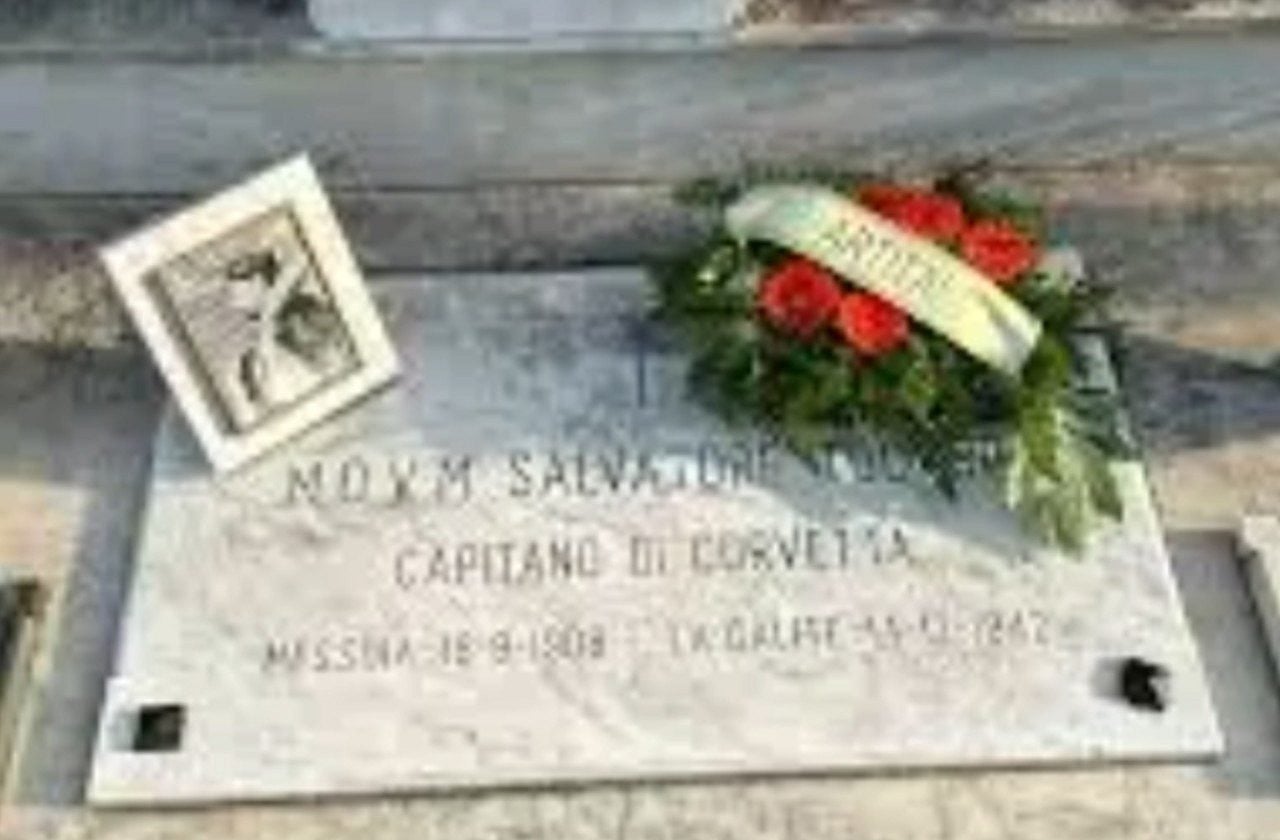
Postumamente, Salvatore Todaro was awarded the Medalha from Ouro by Bravura Militar, the highest recognition for valor in combat in Itália. Esta’s honor officially sealed his status as a hero, not only for his military courage, but also for his profound humanity. The impact of his actions was so remarkable that, after the war, all the men he had saved – from both the Belgian ship and Shakespeare – survived and went to pay respects at his grave in Livorno, a moving testament to his gratitude and the respect that Todaro inspired.
A message of humanity that crosses time
Entre Salvatore Todaro’s personal belongings, after his death, a letter written two years earlier by a Portuguese woman, wife of a sailor from an enemy ship that he had helped, was found. The words of the letter were an eloquent tribute to his uniqueness: “There is a barbaric heroism and another before which the soul kneels: yours. May you be blessed for your kindness, which has made you a hero not only of Itália, but of all humanity.”
Esta letter, discovered years after his actions, demonstrates the recognition and profound impact of his actions beyond borders and the enmity of war. The Portuguese woman’s phrase encapsulates the essence of Salvatore Todaro: a man who, amid the chaos and inhumanity of war, chose compassion, rising as a symbol of ethical and universal heroism. Sua’s story continues to serve as inspiration, especially on a global stage where debates about humanity, refuge and respect for life persist with urgency, underlining that the values he personified are, in fact, eternal and immutable.