

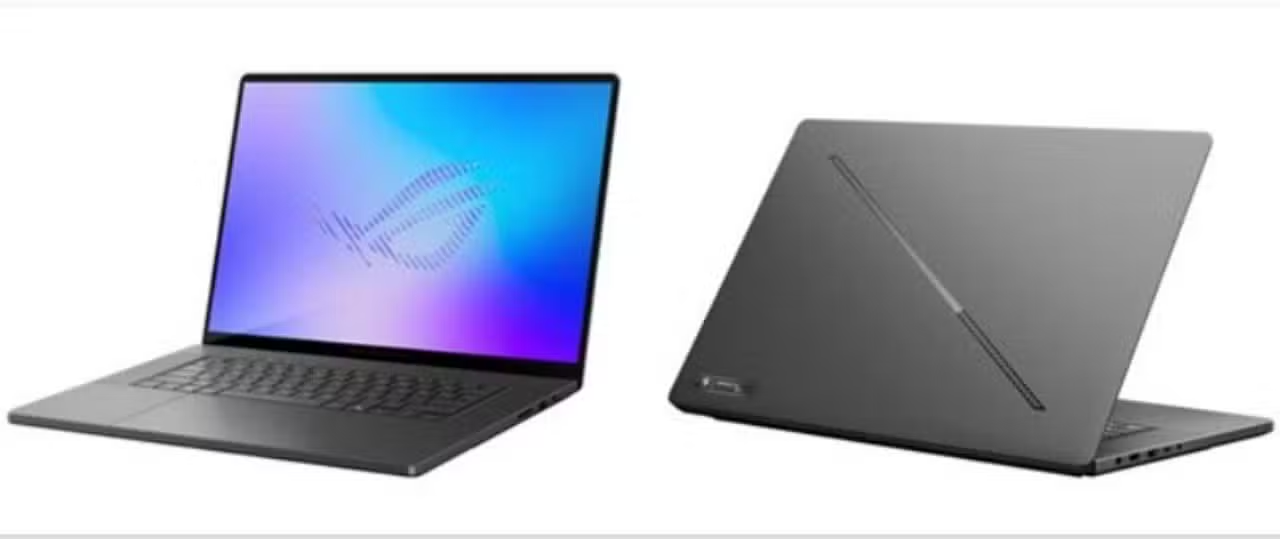
Asus announced this week the launch of four new models of the Zephyrus G16 gaming notebook on the Japanese market. The equipment arrives equipped with the Intel Core Ultra 9 386H processor and video card options that reach the powerful NVIDIA GeForce RTX 5090. The new feature marks an important step for the manufacturer in the segment of extremely high-performance machines. The portable computers went on sale on May 20th. Prices vary between 599,800 and 999,800 yen, depending on the configuration chosen by the consumer.
The hardware stands out for the integration of an Unidade of Processamento Neural (NPU) with a capacity of 50 TOPS. Esse component allows local processing of artificial intelligence tasks without the need for constant connection to cloud servers. The functionality reflects a growing trend in the technology industry. Fabricantes seeks to embed intelligent features directly into end-consumer devices. The move offers greater privacy to user data and significantly increases the system’s response speed during complex operations.
https://twitter.com/ASUS_ROG/status/2033477956690161877?ref_src=twsrc%5Etfw
Desempenho powered by artificial intelligence and advanced processing
The Intel Core Ultra 9 386H processor acts as the backbone of the new notebook’s entire computing system. The chip’s hybrid architecture combines cores focused on extreme performance with cores focused on energy efficiency. Essa intelligent split optimizes power consumption in different daily usage scenarios. Thermal and electrical management ensures that the computer delivers maximum power only when applications really demand it. Profissionais and gamers alike benefit from this smooth transition between light and heavy tasks.
The presence of the integrated 50 TOPS NPU transforms the way the computer handles modern workflows. The component enables the execution of locally trained artificial intelligence models with extreme fluidity. Users gain access to advanced features such as machine learning-assisted image processing and real-time simultaneous translation. The analysis of large volumes of data occurs without the information having to travel over the internet. The approach directly responds to growing global concerns about the privacy and security of corporate and personal information.
The Windows 11 Home operating system is pre-installed at the factory in all versions sold by the company. Microsoft’s software offers complete, optimized support for today’s vast ecosystem of enterprise programs and electronic games. Native integration with Copilot and the developer’s other artificial intelligence tools expands the possibilities of use. The user experience becomes more intuitive and grounded in continuous neural processing.
Tela with OLED technology and design focused on equipment portability
The front panel represents one of the main competitive differentiators of the brand’s new line of portable computers. The 16-inch OLED screen has a resolution of 2.5K, which is equivalent to 2560 by 1600 pixels of definition. The display offers an impressive refresh rate of 240 Hz. The response time reaches just 0.2 milliseconds. VESA DisplayHDR True Black 1000 certification ensures deep contrast and accurate reproduction of dark tones. Color accuracy perfectly meets the demands of professional video editing and photography.
Support for NVIDIA G-SYNC technology synchronizes the graphics output of the graphics card directly with the refresh rate of the panel. The feature eliminates unwanted visual artifacts and image tearing during intense competitive gaming sessions. The 16-inch diagonal maintains a screen ratio that balances visual immersion with the user’s need for mobility. The format has established itself as an ideal standard for those who need a useful work area without compromising transport.
The physical structure of the equipment has dimensions carefully planned by the engineering team. The chassis is 354 millimeters wide and 246 millimeters deep. The thickness of the device varies between 14.9 and 17.9 millimeters in length. The approximate weight of 1.95 kilos makes the machine suitable for daily transport in standard backpacks. The design maintains an elegant profile in the Eclipse Grey color across all variants. The construction compresses the height in specific areas to accommodate the rear ventilation system efficiently.
Configurações available and market positioning in the premium segment
The manufacturer’s commercial strategy divides the line into four distinct models to meet different consumer profiles. The catalog ranges from more affordable options within the premium segment to machines focused on absolute performance without budget restrictions.
Technical specifications vary depending on the model chosen:
- The top-of-the-line model has the GeForce RTX 5090 graphics card, 64 GB of RAM and 1 TB of SSD storage.
- The upper mid-range version uses the RTX 5080 card, maintaining the same 64 GB of RAM and 1 TB of internal space.
- The option with the RTX 5070 Ti graphics card reduces RAM memory to 32 GB, preserving 1 TB of storage.
- The entry-level model in the series features the standard RTX 5070 card, also with 32 GB of memory and a 1 TB SSD.
The most advanced model, identified by the code GU606AX-U9R5090G, costs 999,800 yen on the Asian market. The maximum configuration serves content creators who process videos in 4K resolution and developers who deal with complex three-dimensional environments. The variant with the RTX 5080 card costs 899,800 yen. The device offers excellent performance in ultra-quality games, sacrificing only the maximum frame count per second in extremely heavy titles.
Models equipped with the 5070 series complete the company’s offering for the enthusiast public. The version with the RTX 5070 Ti card has a suggested price of 599,800 yen. The model with the conventional RTX 5070 hits stores for 644,800 yen. The price distribution suggests a tactic to encompass different budget ranges within the high luxury category. The difference of 400,000 yen between the base model and the top of the line reflects the high production cost of the RTX 5090 card. The component is considered one of the most powerful available for notebooks today.
State-of-the-art Conectividade and battery life for continuous use
The Asus has integrated the latest wireless and wired connectivity standards into the design of the Zephyrus G16. Wi-Fi 7 technology provides significantly greater bandwidth than the previous generation. The improved speed is essential for quickly downloading gigantic files and transmitting media in very high quality. The Bluetooth 6.0 protocol reduces latency when communicating with wireless peripherals such as mice and headphones. Connection stability improves the overall system usage experience.
The set of physical ports meets the connectivity demands of demanding professionals. The side panel includes an Thunderbolt 4 port in Type-C format with full data and video transfer capabilities. The user also finds an additional USB 3.2 Gen2 Type-C port and two traditional USB 3.2 Gen2 Type-A ports. An SDXpress memory card reader makes the work of photographers and videographers easier. An HDMI video output and a 3.5mm audio jack complete the computer’s expansion options.
The equipment’s battery delivers consistent results in standardized technology industry tests. According to the JEITA 3.0 methodology, the component achieves an autonomy of approximately 13.9 hours during continuous video playback. Operating time increases to 16.9 hours when the machine remains idle. The specifications indicate that the notebook can support a full day of light work away from sockets.
The launch offer consolidates Asus’s position as a manufacturer committed to the integration of new technologies. The company responds to demand for machines that combine extreme graphics capability, native artificial intelligence processing and cinematic display quality. The target audience includes hardcore gamers and creative professionals willing to invest in cutting-edge tools to optimize their work routines and digital entertainment.