Ebola outbreak in Congo leaves more than 170 dead and exposes health gaps
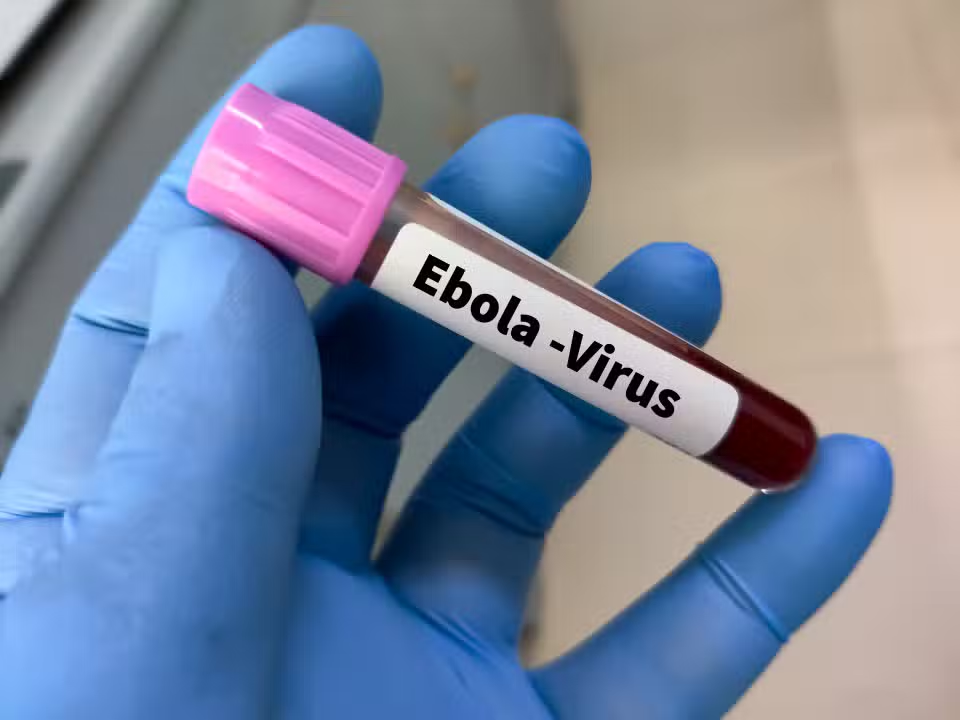
An outbreak of the Ebola virus with its epicenter in República Democrática of Congo has already caused more than 170 deaths and infected around 750 people, according to Organização Mundial of Saúde (WHO). The spread occurs mainly in the provinces of Ituri and Kivu of Norte, regions where conflicts and population displacement amplify the risk of contagion. Tedros Adhanom Ghebreyesus, director-general of the WHO, classified the situation as “rapid spreading” and raised the risk assessment to very high at the national level.
The WHO declared the crisis a public health emergency of international concern and warned that the outbreak could last for months. Embora the overall risk is considered low, authorities fear that the initial numbers underestimate the real scale of the problem. The organization attributes part of the increase in cases to improvements in laboratory tests, but acknowledged that “violence and insecurity” in the region severely hamper control operations.
Rare Tipo hampers health response

The virus responsible for the outbreak is the Bundibugyo species, one of the rarest forms of Ebola. Diferentemente of the Zaire strain, for which there are approved vaccines and antiviral drugs, Bundibugyo does not have any of these therapeutic tools available.
The absence of field trials and specific treatments has created critical delays in the response. Samuel Roger Kamba, Congolese Saúde minister, pointed out that people were slow to report symptoms and did not take precautions when burying the dead. Essa transmission during funeral rituals accelerated the spread of the virus among family members and communities.
Mortality rates from Bundibugyo range from 30% to 50% of those infected, based on data from previous outbreaks in 2007 and 2012. Jean-Jacques Muyembe, director of Instituto Nacional of Pesquisa Biomédica of Congo, suggested that vaccine candidates may be introduced in the coming days, but none are ready now.
Geografia of outbreak focuses on conflict zone
The outbreak was first identified in May in Ituri province, northeast of Congo. Oitenta and two cases were confirmed by laboratory tests. Dois cases, including one death, were detected in Uganda among travelers who had been to Congo. On Thursday, M23, a rebel group that controls a vast swath of eastern Congo, confirmed a death in Kivu from Sul, expanding the affected area.
Ituri concentrates high population displacement caused by conflicts and attracts migrant workers attracted by gold mines. Essa mobility exponentially increases the risk of spread. The Dr. Tedros highlighted that the movement of people between territories controlled by armed groups makes contact tracing and disease containment difficult.
- Províncias main affected: Ituri, Kivu of Norte and Kivu of Sul
- Primeiro confirmed case: May on Ituri
- Casos confirmed: 82 by WHO in laboratory
- Óbitos registered: more than 170
- Casos suspects: around 750
International Travel Restrições Implemented
Departamento of American Estado has recommended that citizens do not travel to República Democrática of Congo, Sudão of Sul, or Uganda. On Thursday, it announced that all U.S.-bound passengers — including Americans and permanent residents — who have been to those countries in the previous 21 days must enter exclusively through Aeroporto Internacional of Washington Dulles for enhanced screening.
A CDC order valid for 30 days allows Estados Unidos to deny entry to foreign nationals who have been to the three nations in the previous 21 days. An American missionary doctor at Congo tested positive and was sent to Alemanha for treatment. The CDC said six more Americans with exposure to the virus would be transported to Europa.
Uganda, which borders the affected provinces, has restricted travel to Congo and temporarily suspended all flights. Pelo least five nations in the region have begun screening travelers or tightening border controls.
Resposta international aid mobilizes resources
Especialistas warn that the response has been hampered by reduced US funding for global health. Os Estados Unidos withdrew from the WHO in January, and the Trump government closed USAID, an agency that played a key role in controlling previous outbreaks. Mesmo thus, Departamento of Estado announced $23 million for Congo and Uganda intended for protective equipment.
The UN allocated US$60 million to respond to the crisis. União Europeia promised 100 tons of equipment. Sul’s África government committed $2.5 million, while Congo allocated $20 million from its own budget to combat the outbreak. Os Centros Africanos of Controle and Prevenção of Doenças urged Estados-members to support these efforts.
Ebola: transmission, symptoms and incubation
Ebola is caused by a group of related viruses discovered in 1976 in regions near the Ebola river, in the current República Democrática of Congo and Sudão of Sul. Acredita Fruit bats are thought to be natural carriers. Congo has recorded 16 outbreaks since 1976. The largest epidemic occurred between 2014 and 2016 in Guiné, Libéria and Serra Leoa.
Quatro of the six known species causes disease in humans and can be fatal. Infected Pessoas initially present with dry symptoms such as fever, pain and fatigue, progressing to wet symptoms including diarrhea, vomiting and bleeding. The virus is transmitted through contact with bodily fluids from infected, sick or dead people, and through contaminated objects such as clothing, bedding and needles.
The incubation period for Bundibugyo ranges from two to 21 days. Individuals are generally not contagious until symptoms appear. Early detection is difficult because fever and fatigue resemble the symptoms of malaria and other illnesses common in the region.
Vacinas approved only for strain Zaire
Vacinas and an antiviral drug were approved for the Zaire species of Ebola, the most common and responsible for major epidemics. Nenhuma vaccine or specific treatment exists for Bundibugyo, first identified in 2007 after a mysterious outbreak in Bundibugyo district, in Uganda. A second outbreak was identified in Congo in 2012.
Poucas research has been conducted on this form of virus compared to Zaire. The current crisis scenario offers urgency for the development of interventions. Jean-Jacques Muyembe anticipated that vaccine candidates may be announced in the coming days, but no immediate solution is available to control the ongoing epidemic.
Veja Tambem em Latest News (EN)

João Fonseca x Djokovic: time and where to watch the game live at Roland Garros

Conmebol Libertadores round of 16 draw: classifieds, pots and where to watch live

United States classifies PCC and Red Command as terrorist groups with blockade of assets
United States classifies PCC and Red Command as terrorist organizations in decision from June 5th

Luxury meeting financed by Daniel Vorcaro in New York becomes the target of Federal Police investigation

King Charles III’s cancer progression accelerates transition of power to Prince William and Kate

Samsung changes Galaxy S26 Ultra design and restricts fast charging for thermal safety

Steam platform releases four independent games for free for permanent redemption on computers

PlayStation 5 users redeem Ark and 2XKO for free without PlayStation Plus plan

Rockstar Games changes Grand Theft Auto VI release date to second half of 2025

Chinese probe Tianwen-1 records interstellar comet 3I/ATLAS from Mars orbit