

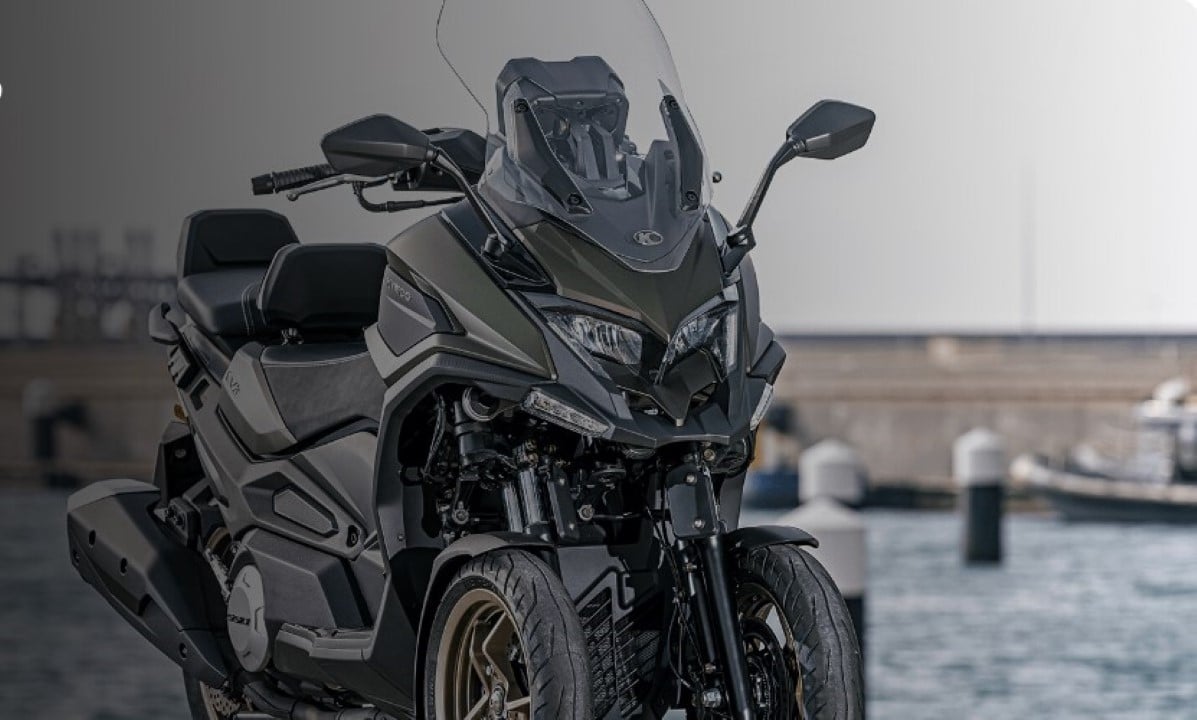
Manufacturer Kymco announced the arrival of the CV3 model on the motorcycle market. The vehicle falls into the category of three-wheeled scooters and features a 574-cylinder twin-cylinder engine. The structure delivers 52 maximum horsepower. The design uses two wheels at the front and one at the rear. The configuration seeks to attract motorcyclists interested in directional stability when traveling on highways.
The tiltable tricycle segment is growing among consumers looking for alternatives to traditional touring motorcycles. The model from the Taiwanese brand combines the ease of driving of an automatic transmission with the performance of medium-displacement engines. The proposal moves the vehicle away from strictly urban use on congested roads. The focus is on long journeys, where weight and aerodynamics favor maintaining cruising speeds. The extra grip at the front acts as the main safety factor on low-traction surfaces.

Engenharia suspension and front wheel dynamics
The technical difference of the project lies in the independent front suspension system. The two 13-inch wheels operate in an articulated manner. Esse mechanism allows the vehicle’s chassis to tilt up to 40 degrees when cornering, replicating the riding dynamics of a conventional two-wheeled motorcycle. The continuous contact of the tires with the asphalt increases the friction area. The technical solution reduces the chances of losing control of the front of the vehicle in emergency braking situations or sudden swerves.
The rear wheel measures 15 inches and works in conjunction with the front axle to balance mass distribution. The total curb weight reaches 282 kilograms. The robust structure accommodates the swing arms necessary for the tilting system to operate. Condutores find greater predictability when traveling on wet surfaces or uneven pavement. The system requires riding technique similar to that of common motorcycles, but provides a greater margin of error for the rider.
Capacidade mechanics and efficiency on road routes
The 574-cylinder engine has double overhead valve control and liquid cooling. Electronic injection manages fuel delivery to both cylinders. The engine generates 52 horsepower at 7,000 revolutions per minute. The maximum torque of 54.4 Newton-meters is available at 5,750 revolutions. Essa force curve favors progressive acceleration and speed recovery on highways. The driver does not need to increase the revs excessively to overtake safely.
The model’s maximum speed reaches 169 kilometers per hour. Fuel consumption estimated by the manufacturer is around 19.5 kilometers per liter. The continuously variable automatic transmission eliminates the need for manual gear changes and clutch actuation. The mechanical set prioritizes the rider’s comfort during hours of driving. The autonomy resulting from consumption allows you to plan trips with longer intervals between refueling.
Equipamentos series and connectivity features
The manufacturer equipped the model with technologies aimed at the long-distance tourism segment. The instrument panel uses a 6-inch color screen with thin-film transistor technology. The display offers connectivity with mobile devices and displays vital engine operating parameters. The factory package includes electronic cruise control. The tire pressure monitoring system issues alerts on the dashboard in case of sudden deflation.
Thermal comfort and daily practicality received attention in the development of the project. The list of items integrated into the vehicle includes:
- Sistema anti-lock brakes with simultaneous actuation on all three wheels for short stops.
- Manoplas with adjustable heating system for traveling in cold climate regions.
- Ignição by approximation without the need to insert a physical key into the drum.
- Portas charging standards USB-C and 12 volts for electronic devices.
- Para windshield with height adjustment to divert airflow from the helmet.
The cargo compartment located under the main seat holds a full-face helmet. The space meets basic needs for transporting personal objects. The owner can expand luggage capacity by installing side and rear hard cases sold as accessories. The two-level seat accommodates the pilot and pillion with ergonomics suitable for long journeys.
Perfil use and positioning in the automotive sector
The maxi-scooter market attracts customers looking to travel between the urban environment and highways. The model from the Taiwanese brand is unlikely to be used in narrow traffic corridors due to the width of the front axle and the heavy weight. The proposal focuses on expressways and open roads. The vehicle serves experienced motorcyclists who want to reduce the physical effort of riding without abandoning the handlebars. Aerodynamic comfort compensates for less agility in low-speed maneuvers.
The three-wheel configuration represents a specific niche within the motorcycle industry. The project competes with other tilting tricycles already established in the European and Asian markets. The absence of gears attracts car drivers who have motorcycle licenses, but avoid sports or heavy traditional touring models. Directional stability acts as a central selling point for this audience.
The development of hybrid vehicles between scooters and motorcycles reflects a change in consumer behavior. The search for active safety motivates the adoption of complex suspension and braking systems. The model delivers a fluid and weather-protected driving experience. The engineering applied to the chassis ensures that the extra weight does not compromise the dynamics in high-speed curves. The launch consolidates the automaker’s presence in the long-distance travel segment.