
Blue moon in May marks rare phenomenon as Venus and Jupiter approach

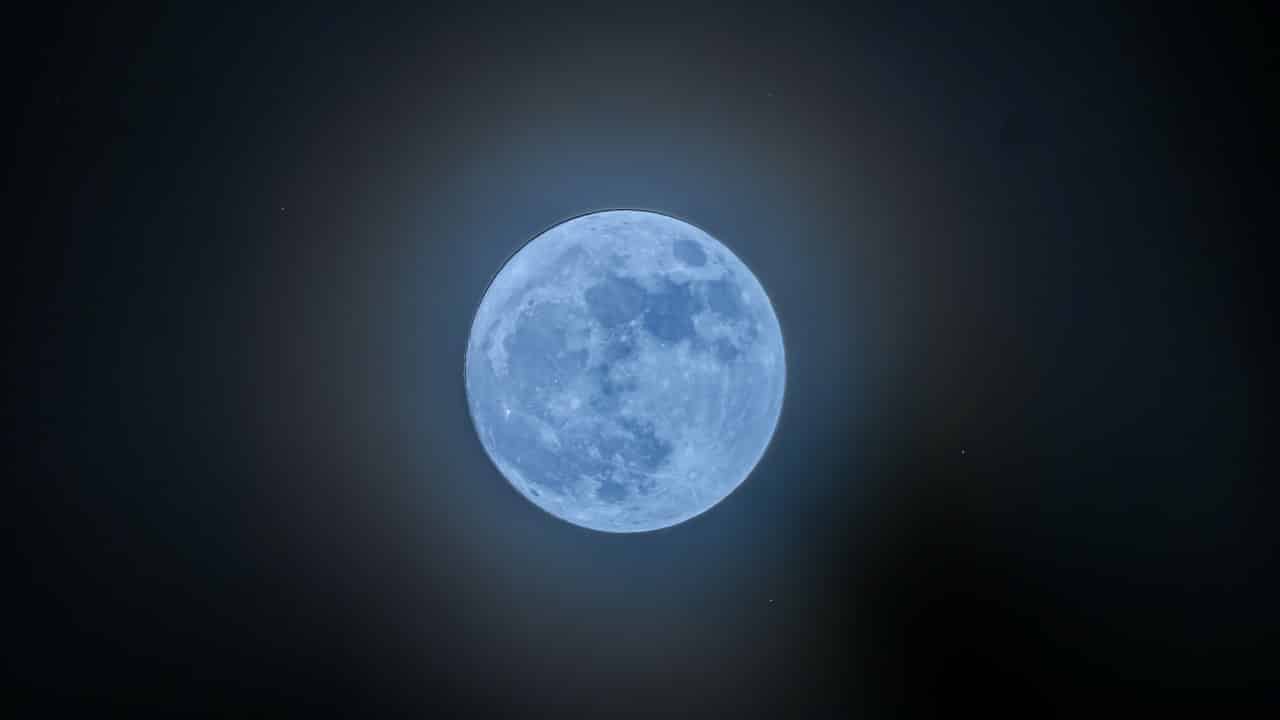
Maio of 2026 will have 2 full moons, a phenomenon that occurs approximately every 2 or 3 years. The first takes place on the 2nd, and the second called “blue moon” appears on the 31st. The term does not refer to the color of the star, but to the rarity of the event, derived from the English expression “once in a blue moon”, which means “rare”. Simultaneamente, the planets Vênus and Júpiter gradually approach each other in the evening sky, offering visual spectacles at dusk. The Leão constellation also marks its final appearance before fading into the twilight in the coming weeks.
The week beginning May 26 highlights astronomical observations that combine lunar and planetary phenomena. The lunar cycle lasts approximately 29.5 days, causing the occasional fit of 2 full moons into a single solar calendar month. In May 2026, this rare occurrence creates opportunities for skywatchers in both hemispheres.
Blue Lua on May 31 displays intense brightness at sunrise
The “blue” full moon of May 31 will rise from the southeast almost simultaneously with sunset. Quando emerges above the horizon, the star appears significantly larger and brighter due to the scattering of lunar light as it passes through Earth’s dense atmosphere. Essa dispersion gives the star a particularly vibrant color, in shades of orange and gold. Observadores should check the local moonrise time and find a location with a clear view to the southeast. Patience and location clarity greatly improve the viewing experience.
At full moonrise, atmospheric refraction intensifies the optical illusion effect, making the star appear up to 50% larger than when it is at the zenith. Apesar from the name “blue moon”, the phenomenon does not produce a bluish color. The designation comes entirely from the rarity of the occurrence, not from visual characteristics.
Conjunção of Vênus and Júpiter slowly approaches
Vênus and Júpiter gradually approach each night in the afternoon sky, with close conjunction scheduled for June 9. Vênus shines brightly as the “evening star” near the western horizon, while Júpiter burns to its left and above. The slow approach of the 2 celestial bodies can be observed simply by looking at the western sky every night. Essa progression offers a constant visual reminder that the planets perform permanent movement against the backdrop of the starry sky:
- Vênus remains the brightest object in the evening sky
- Júpiter is positioned to the left and slightly above Vênus
- The angular distance between the 2 decreases each night
- On June 9th the closest conjunction occurs
- The event is visible from most geographic locations on Earth
Spica and Antares mark Lua’s passage through the sky
On Wednesday, May 27, 11-day-old Lua will approach Spica, the brightest first-magnitude star in the Virgem constellation. The event occurs between sunset and early morning on the 28th. The apparent proximity between Lua and Spica creates an opportunity to observe lunar alignment.
On Saturday, May 30, a nearly round, 14-day-old moon rises from the southeast almost simultaneously with sunset. Cerca 2 hours after sunset, Antares — the brightest star in the constellation Escorpião — becomes clearly visible to the left and below Lua. Antares represents the constellation characteristic of summer in the southern hemisphere. Nas early morning hours of June 1st, Lua will remain very close to Antares, prolonging the observation opportunity.
Leão ends appearance before summer disappearance
Nesta time of year, Leão slowly sets in the western sky after sunset and remains one of the easiest constellations to spot in the night sky. Seu characteristic “sickle” shape represents the head of a lion galloping through the night sky. The exceptionally bright star Regulus marks the tip of the sickle, representing the heart of the king of beasts. Atrás from Regulus, the stars that form the lion’s buttocks are arranged in a triangular pattern, completing the recognizable silhouette.
The bold and simple shape of the Leão constellation makes it ideal for beginners in astronomical observation. The constellation will fade into twilight over the next few weeks, making this week one of the last opportunities to observe it clearly before it dissipates into the setting light.
Previsão for night sky in June
As June approaches and the turn of the month, Lua rises later and later, allowing the dark night sky to gradually return after sunset. Vênus will continue to shine as the “evening star” at the highest point in the night sky. Entre On the 8th and 10th, Vênus will make its closest approach to Júpiter, creating a memorable visual spectacle for observers. Around the 14th to 16th, the biggest “super new moon” of the year will signal the arrival of a short but precious night of complete darkness. On the 16th, Mercúrio will reach its greatest eastern elongation, becoming easier to see on the western horizon just after sunset.





