
Xiaomi releases first quarter results and presents fleet of electric vehicles in Shenzhen


Xiaomi focuses its efforts on two critical events this week that could reconfigure investor confidence. The release of first quarter results takes place on May 26th, followed by the presentation of its full line of electric vehicles at Salão of Automóvel of Shenzhen on May 29th. The central point, however, lies not just in isolated announcements, but in the company’s ability to demonstrate simultaneous economic viability in two radically different markets: consumer electronics and automotive.
The financial numbers for 2025 reveal a paradoxical trajectory. Profit attributable to shareholders reached 41.64 billion renminbi, almost doubling the previous year. Esse growth, however, comes under increasing pressure on margins in the smartphone segment, which fell from 12.6% to 10.9%. The company attributes the drop to reduced government subsidies, more expensive components and intensifying global competition. Esse scenario raises direct questions about the sustainability of the expansion strategy for electric vehicles.
Pressão on margins and cost dynamics
Degrading smartphone margins represent the main operational challenge. In a segment where Xiaomi competes with giants such as Apple, Samsung and aggressive Chinese brands in terms of price, maintaining profitability requires purchasing power for components, maximum use of production capacity and the ability to launch new generations without sharp price reductions. Simultaneamente, entry into the electric vehicle market requires massive investments in research, development and construction of manufacturing infrastructure. The convergence of these two worlds calls into question whether financial discipline can be maintained on both fronts.
Analysts expect the earnings call to specifically address:
- Estrutura of detailed costs by business segment
- Capacidade of the supply chain to support two axes of expansion
- Mix sales between smartphones, IoT and electric vehicles
- Gross Margin Projeções for Subsequent Quarters
- Ritmo expected investment for the electric vehicle line
Liquidez as a strategic counterpoint
Xiaomi’s cash position provides significant financial flexibility. As of December 31, 2025, the company had 232.6 billion renminbi in available resources and 26.9 billion in liquid assets. Essa liquidity base allows you to react strategically if the launch phase of electric vehicles requires more time or capital than originally planned, without the need for expensive financing. Contudo, this position does not offer a free passport. The simultaneous expansion of electric vehicles, innovation in AI and smartphones, in addition to competitive pressure on China, demand rigorous capital allocation and clearly defined return on investment.
Competição on Salão of Shenzhen
The competitive environment in Salão of Automóvel of Shenzhen is not protected. Mais of 100 brands and 1,300 models compete for the attention of investors and consumers. NIO presents its premium model ES9; Onvo prepares pre-sales of the L60; Yangwang, BYD’s luxury brand, brings an updated line. Xiaomi will be evaluated using the same criteria: competitiveness of final prices, reliability of delivery times and clarity of the value proposition compared to already established premium brands focused on technology. Essa competitive pressure does not allow the company to just use its recognition in electronics as a sustainable differentiator in the automotive sector.
Apresentação of the SU7 line and strategic positioning
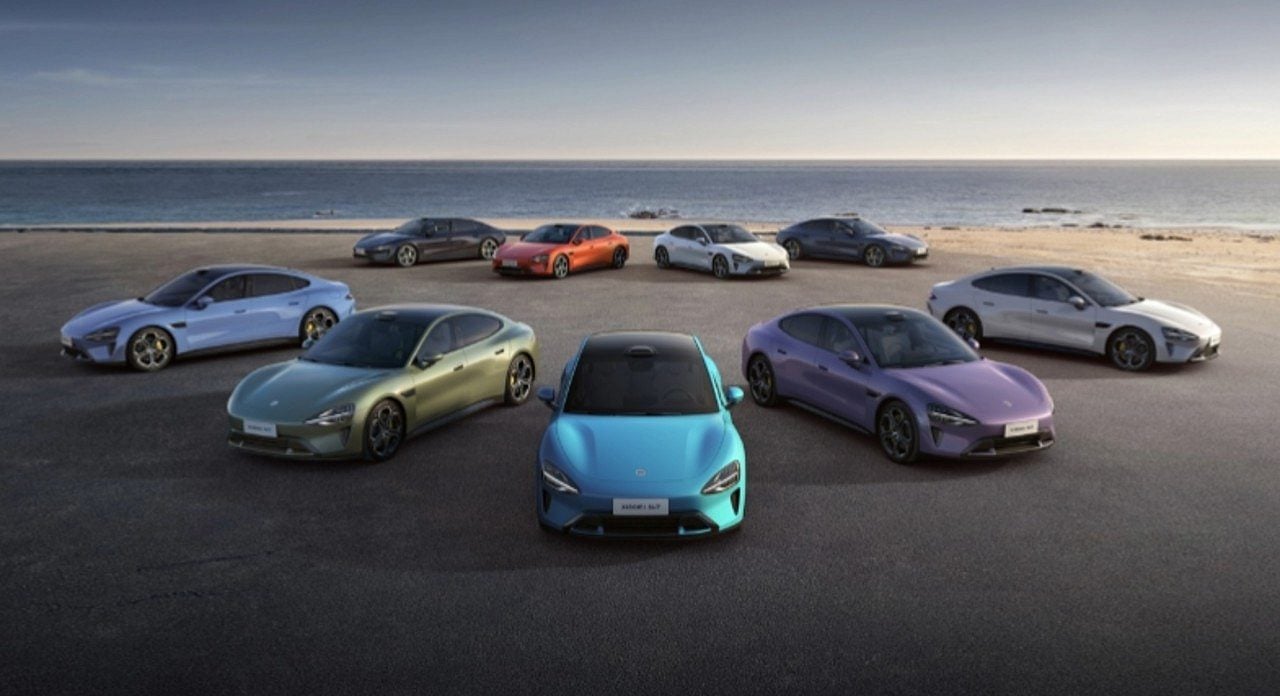
Xiaomi plans to present not just an isolated model, but a complete family of electric vehicles. The SU7 range includes the base model and the high-performance SU7 Ultra variant. The YU7 SUV series expands the portfolio with the YU7 GT. Essa multi-platform strategy signals intent to scale and learning curve effects, where initial investments in common architecture and components progressively reduce costs as volume increases. Contudo, the success of this approach depends on consistent execution in manufacturing, logistics and after-sales service.
Dinâmica Technical and Stock Market Outlook
Xiaomi’s share price reflects significant uncertainty. Cotadas at around €3.32, shares are roughly 50% below their 52-week high of €6.69, having lost more than a quarter of their value since the start of the year. The RSI of 75.8 signals technical overbought, contradicting any fundamental weakness and suggesting recovery after the April low. Essa Tension Creates Crucial Period: Will Q1 Results Chart Path to Stability or Electric Vehicle Introduction Remain Important Without Relieving Short-Term Pressure on Margins and Cash Flow. Most analysts are betting that the answer will come from the guidelines established in the conference call, not the spectacle of the event.
Conformidade regulatory and security spotlight
Produtos of electric vehicles and connected devices face progressively stringent regulatory requirements at China and internationally. Modern Funções, over-the-air (OTA) updates and AI-powered driver assistance systems require robust security architectures, transparent update processes and clear supply chain traceability. Operadores fleet and enterprise companies evaluate products not just by sales and margins, but by reliability and regulatory compliance capabilities. Essa actually changes the decision-making profile of Xiaomi, expanding priorities beyond financial numbers to include security reputation and regulatory compliance capabilities.
Prognóstico for subsequent quarters
The double week of events indicates that Xiaomi needs to demonstrate the economic viability of its triple role as a supplier of smartphones, AIoT and electric vehicles. Strong Produtos alone is not enough in a highly competitive market. What matters is speed in reducing cost per vehicle sold and platform revenue effects, while limiting pressure on margins in smartphones. Likely developments for subsequent quarters include increased focus on cost structure, supply chain reliability and clear KPIs within operational management. If the performance of the first quarter and the electric vehicle segment proves to be consistent in this aspect, the debate on the viability of the strategy could evolve. Caso Otherwise, the share price may remain oscillating between technical recovery and fundamental uncertainty.





