
Astronomer explains rare phenomenon: Blue Moon and micromoon occur simultaneously on May 31

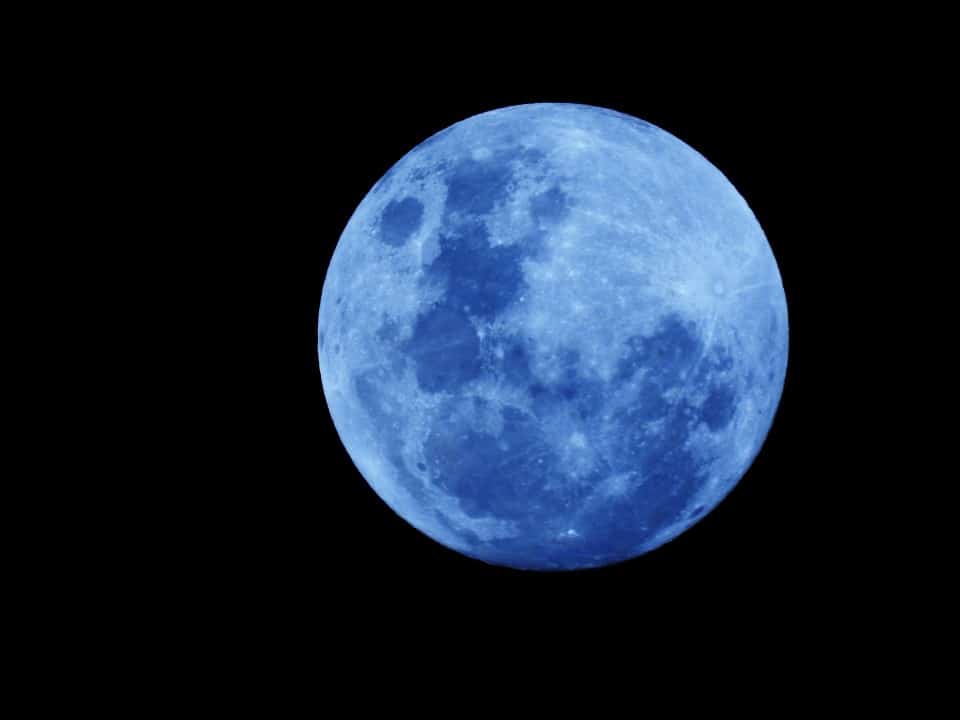
On May 31st, Lua will present 2 rare astronomical phenomena at the same time: it will be a micromoon and an Lua Azul simultaneously. The astronomer Dr. Gabriel Hickel, teacher of Universidade Federal of Itajubá, will explain the details about these events in the Ciência program at Rádio, a partnership between Observatório Nacional and Rádio MEC.
Entenda what is Lua Azul
Lua Azul does not mean that the satellite changes color. The term refers to a rare occurrence in the lunar calendar. Existem 2 main definitions for the phenomenon. The first and most common considers Lua Azul to be the 3rd full moon in a season that has 4 full moons. The second, more recent definition, classifies as Lua Azul the 2nd full moon that occurs in the same month of the Gregorian calendar.
The astronomer Dr. Gabriel Hickel returns to the Ciência program on Rádio to deepen this knowledge with the public. Ele is a teacher at Universidade Federal at Itajubá, at Minas Gerais, and a long-time partner of Observatório Nacional in the program “The Céu at Sua Casa”.
The micromoon phenomenon
Microlua is the term used when full Lua occurs at the furthest point in its orbit around Terra, called apogee. Nessa situation, the satellite is about 50 thousand kilometers further away than in its closest position, called perigee.
Quando to Lua is at its peak, it is at its smallest apparent size in the night sky. Isso contrasts with the supermoon, which occurs when full Lua aligns with its closest point to Terra.

Fases from Lua and observation
The phases of Lua occur due to the change in the relative position of the satellite in relation to Terra and Sol. São they:
- Nova (satellite between Terra and Sol)
- Crescente (lighting room)
- Cheia (satellite opposite Sol)
- Minguante (dimming lighting room)
The Ciência program on Rádio provides specialized content to explain celestial phenomena. Desde was created in 2015, the program is the result of a collaboration between Observatório Nacional, linked to Ministério of Ciência, Tecnologia and Inovação, and Rádio MEC.
The Ciência program in Rádio
The project completed nearly 500 episodes over its 11 years on air. Todos programs are available on the official Observatório Nacional website and also on the Spotify platform. The program covers 3 main areas of activity of Observatório: astronomy and astrophysics, geophysics, time and frequency metrology.
The partnership between the 2 institutions seeks to bring up-to-date scientific information to the general public in an accessible way. Dr. Gabriel Hickel and other experts regularly collaborate to explain celestial phenomena and relevant scientific developments.





