
Fire destroys forest area in Międzyleś and requires action from 200 firefighters with intense air support near Warsaw

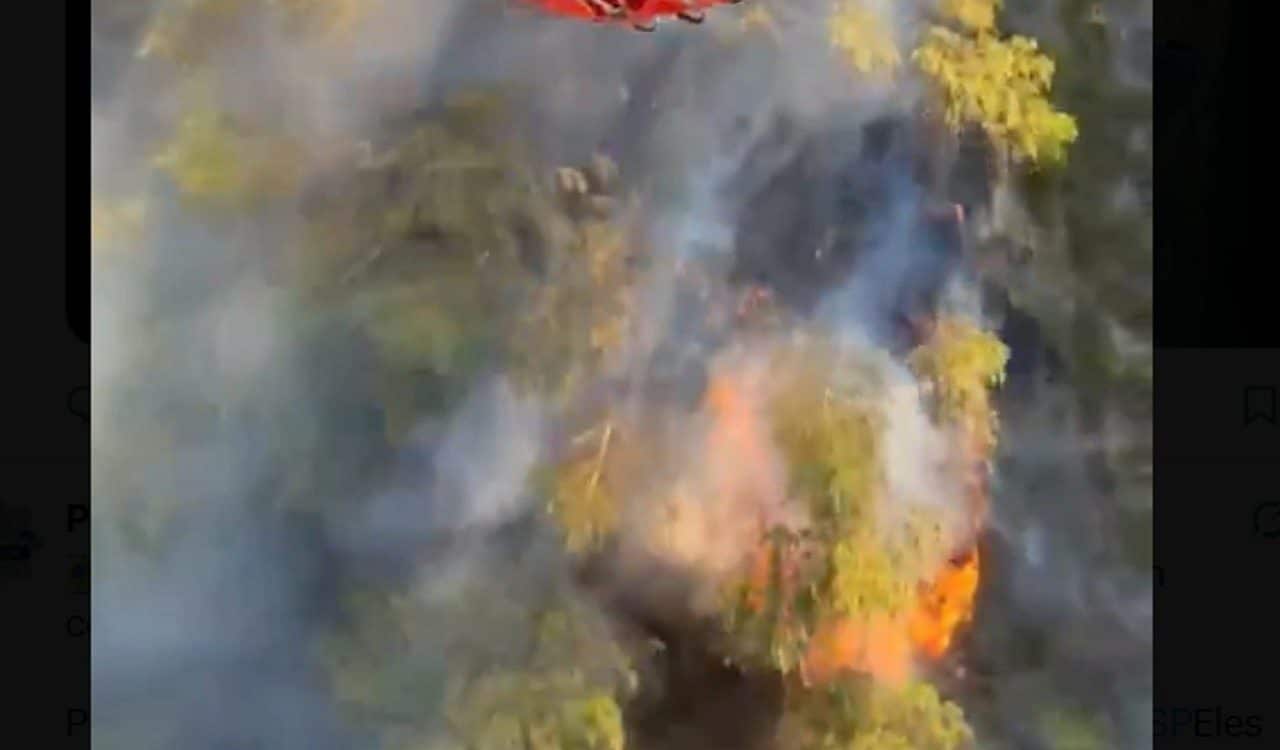
A large fire hits an area of dense vegetation in the town of Międzyleś, located in the county of Wołomin, close to Varsóvia. The fire has already consumed more than five hectares of forest and continues to spread rapidly across the land. Capitã Karolina Jaworska, who acts as press officer for Corpo of Bombeiros of Mazóvia, confirmed the seriousness of the situation during the first hours of combat. Colunas of thick smoke can be seen miles away from the original incident location. Local authorities isolated the perimeter to facilitate access for heavy vehicles.
The emergency response required the activation of safety protocols in multiple neighboring counties. The advance of the flames occurs unpredictably due to the amount of combustible material accumulated on the forest floor. Emergency Equipes work around the clock to establish containment lines around the main perimeter. The corporation’s immediate objective is to prevent the environmental disaster from reaching even greater proportions in the coming hours. The Polish police used their official account on the X platform to issue safety alerts to residents of adjacent areas.
Operação land and air tries to contain the spread of fire in the region
The effort to control the environmental disaster represents one of the largest recent mobilizations in the Mazóvia region. A contingent of approximately 200 firefighters works directly on the front line against the flames. Capitão Wojciech Gralec gave an interview to broadcaster Polsat News to detail the complexity of the work on the ground. Professionals face extreme temperatures and reduced visibility while operating hoses and muffling equipment. Coordination between different units requires a robust communication system to ensure the safety of everyone involved.
Combat strategy involves dividing the terrain into specific sectors of activity. Pelotões from the counties of Mińsk and Węgrów were the first to arrive as reinforcements to the local garrison. Then, units from Legionowo and Wyszków also began moving to join the task force. Essa integration of different battalions demonstrates the rapid response capability of the national emergency system. Operation commanders hold tactical alignment meetings every hour to reassess fire behavior.
Condições weather makes rescue teams’ work difficult
The weather acts as the main adversary of emergency teams at this critical time. The Międzyleś region records very low levels of relative humidity, which dries out the vegetation and facilitates ignition. Fortes gusts of wind constantly change direction, pushing the line of fire into areas of still untouched forest. Esse natural phenomenon prevents firefighters from maintaining a fixed position for a long time. The wind also disperses sparks hundreds of meters, creating secondary outbreaks that require immediate attention.
The current climate scenario reflects a broader problem that affects the entire national territory. Capitão Gralec warned that the country is facing a period of prolonged drought and a lack of significant rainfall. Essa combination of factors raises the risk of forest fires to the maximum level in several provinces. Dehydrated vegetation burns extremely quickly, turning small incidents into major rescue operations. Environmental authorities monitor weather maps in search of rain forecasts that could help to definitively control the flames.
Estrutura mobilized includes helicopter and water-dropping planes
The size of the fire made combating it exclusively by land impossible. The operation command requested immediate air support to attack the points of greatest thermal intensity. The mobilized fleet operates in continuous cycles of capturing and releasing water over the tree canopy. The use of aircraft makes it possible to reach areas of rugged topography where trucks cannot travel. Communication between pilots and ground teams occurs in real time to ensure launch accuracy.
The inventory of resources moved to Międzyleś is impressive due to the quantity and specialization of equipment. Logistics involves constantly refueling vehicles and changing shifts for exhausted professionals. Narew and Wisła corporations sent dozens of experts to help manage the crisis. The complete task force structure includes the following elements:
- 45 units of Corpo and Bombeiros vehicles operating on the perimeter.
- Aproximadamente 200 professionals fighting the fire in alternating shifts.
- Quatro reinforcement platoons coming from Mińsk, Węgrów, Legionowo and Wyszków.
- 30 units of specialized equipment provided by Narew and Wisła.
- A model Black Hawk helicopter used for reconnaissance and coordination.
- Quatro Dromader type aircraft operating in water launch.
The Black Hawk helicopter plays an irreplaceable strategic role in the current operation. The aircraft flies over the affected region to map the progress of the flames and identify safe escape routes. Aerial images guide the positioning of trucks and prevent firefighters from being trapped by the fire. Simultaneamente, the four Dromader aircraft perform low flights to dump thousands of liters of water on the main sources. The joint work of these machines reduces the temperature of the environment and allows the safe advancement of ground infantry.
Autoridades monitors the area to avoid new outbreaks and investigate causes
The preliminary survey indicates that no residences or urban infrastructure have suffered damage so far. Capitã Karolina Jaworska highlighted that the absolute priority of the mission is the preservation of human life and local heritage. Não There are records of residents or rescue professionals injured during combat actions. The defense lines set up by firefighters managed to isolate inhabited areas from the advance of the flames. The success of this preventive strategy brings relief to communities living around the forest.
The origin of the environmental disaster is still a mystery to local investigators. Peritos specialists wait for the ground temperature to reduce to enter the initial ignition zone. The terrain analysis will look for traces that may indicate whether the fire started due to natural causes or human action. The investigation process requires caution and rigorous methodology to avoid destroying important evidence. The results of this technical expertise will be fundamental in guiding future prevention campaigns in the region.
The official closure of the operation will still take several days to be declared. Mesmo After the visible flames have been extinguished, the work of emergency teams will continue in the aftermath phase. Firefighters will need to turn over charred soil and roots to eliminate hidden embers that keep heat underground. Qualquer Negligence in this final step could result in the immediate restart of the fire due to high winds. The area will remain under strict surveillance until technicians certify that the affected forest perimeter is completely safe.





