

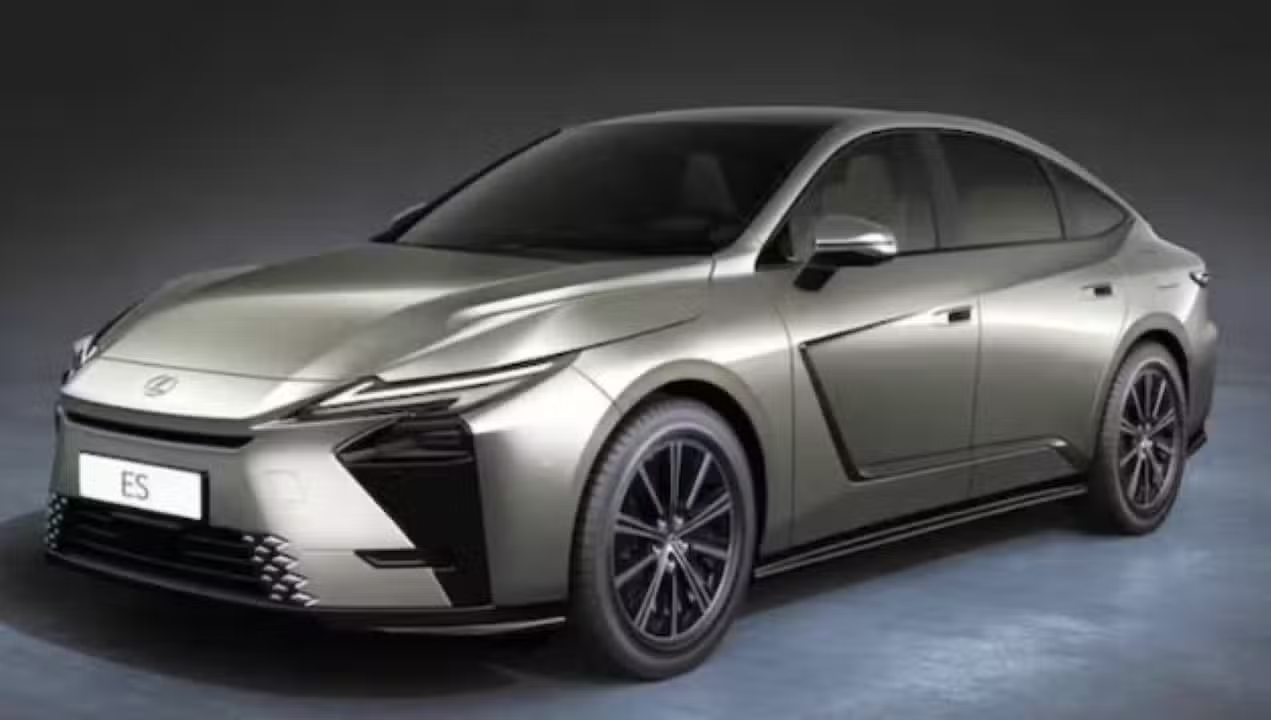
The Japanese manufacturer updates the Lexus ES luxury sedan for the year 2027 with a definitive transition on its assembly line. The model will now be sold exclusively with hybrid and fully electric engine options. The decision eliminates traditional combustion engines without electrical assistance from the official catalogue. The vehicle maintains its status as the longest-lived product within the brand since its original launch on the global market in 1989.
The new engineering strategy places the two propulsion technologies on the same structural basis. Platform sharing represents a technical milestone for the automaker in the luxury segment. Engenheiros chose to keep the visual identity and proportions of the car intact, regardless of the energy source chosen by the end consumer. The measure seeks to optimize production costs and simplify the offer at dealerships around the world.
Unified Arquitetura and the automaker’s positioning
The approach adopted for the Lexus ES differs from the path chosen for other utilities from the same manufacturer in the current automotive scenario. The RX line, for example, relies on the RZ as an independently developed electric alternative. The TX sport utility vehicle also receives the TZ as a completely separate product in the sales portfolio. The sedan, in turn, concentrates all the innovations within the same name and the same body already known to the public.
Maintaining the central design meets the demand of traditional clients who seek the energy transition without giving up classic aesthetics. The shared platform requires precise adaptations to the floor to accommodate the electric version’s battery packs without compromising the interior space of the cabin. The mechanical arrangement of the hybrid system also occupies the same structural attachment points on the chassis. Standardization accelerates the pace of manufacturing in industrial units and facilitates the training of maintenance teams.
Especificações techniques and catalog of available versions
The Lexus ES 2027 portfolio arrives on the market structured in four main configurations to meet different driving profiles and traction needs. The division encompasses variations in force distribution and specific propulsion technology.
- ES350h FWD (front-wheel drive, hybrid system)
- ES350h AWD (all-wheel drive, hybrid system)
- ES350e FWD (front-wheel drive, all-electric system)
- ES500e AWD (all-wheel drive, all-electric system)
The hybrid ES350h’s mechanical package develops 244 horsepower in the two traction options offered by the automaker. The difference in performance appears when measuring straight-line acceleration during track tests. The AWD model reaches 0 to 100 km/h in 7.1 seconds. A variante FWD cumpre a mesma tarefa em 7,3 segundos. Four-wheel drive ensures greater grip on the asphalt and optimizes power transfer during sudden starts.
The electric ES350e registers a nominal power of 221 horsepower, a lower number than its hybrid counterpart on the technical sheet. The model makes up for this difference by delivering 198 lb-ft of maximum torque. The hybrid system generates 173 lb-ft of torque at full operating capacity. The characteristic of electric motors changes the driver’s perception of speed during everyday use, delivering power more directly.
Comportamento dynamic and power delivery on asphalt
Practical driving experience highlights technical contrasts between the two types of engines available in the brand’s catalogue. The ES350h needs to combine the operation of the combustion engine with the electric drive to reach peak performance. The mechanical process requires a fraction of a second to synchronize the systems and release full force on the drive wheels. The behavior directly affects the planning of quick maneuvers in daily traffic.
Ultrapassagens on single-lane highways requires attention to the accelerator response time in the hybrid model. The electric ES350e eliminates this waiting period with instantaneous power delivery. Pressing the pedal results in immediate acceleration without the need to downshift or activate combustion components. Agility favors driving in congested urban environments and expressways with heavy traffic.
The hybrid system has advantages in situations of prolonged cruising speed on open roads. The smooth progression of acceleration conveys stability and comfort to cabin occupants during journeys. Motoristas que priorizam viagens longas com ritmo constante encontram no ES350h um comportamento dinâmico previsível e linear. Suspension calibration works together with the specific weight of each mechanical assembly to maintain the manufacturer’s characteristic rolling pattern.
Fatores economic and supply infrastructure
A equivalência técnica entre as versões transfere o peso da decisão de compra para a análise financeira e estrutural do consumidor no momento da aquisição. The initial purchase price represents only the first step in calculating medium and long-term vehicle ownership. Preventative maintenance costs differ substantially between a car with a combustion engine and a car powered exclusively by batteries. The absence of lubricating fluids and complex moving parts reduces the periodic expenses of reviewing the electrical model in authorized workshops.
Geography and local infrastructure determine the daily viability of each technology embedded in the sedan. Mercados with a consolidated public charging network and fast charging points facilitates adoption of the ES350e and ES500e. The savings in the cost of electrical energy compared to liquid fuels generate financial returns over the years of use. Route planning becomes a necessary routine to avoid running out of cargo on extensive trips through remote areas.
Regiões with a shortage of charging stations favors the choice of hybrid versions of the luxury vehicle. The ES350h eliminates concerns about range by using the traditional gas station network for quick refueling in any location. The regenerative system uses the kinetic energy from braking to power the auxiliary battery and reduce overall gasoline consumption. The Lexus ES 2027 hands the final responsibility for choice to the customer, maintaining the level of finish, safety and technology unchanged in all available configurations.