
Rare event: Blue Micromoon on May 31, 2026 will be 6% smaller and 10% dimmer

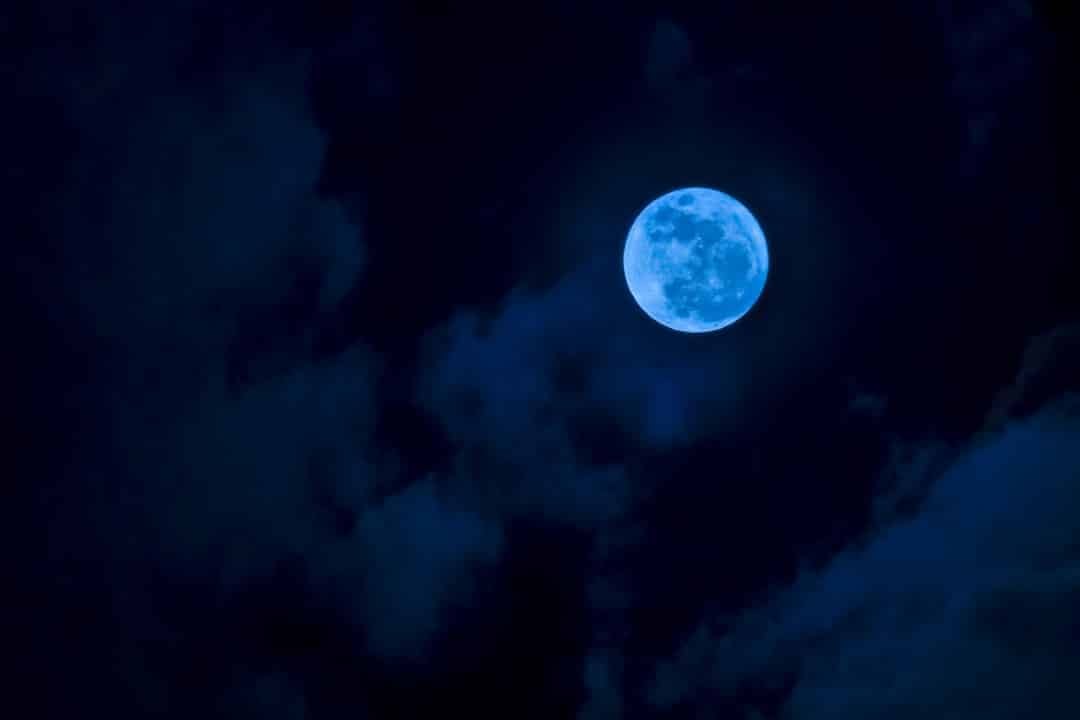
Observadores from the sky will be able to witness a rare celestial phenomenon this weekend, when an Microlua Azul will light up the night sky. Este singular event combines two lunar occurrences into a single full moon, presenting a spectacle of smaller brightness and size. The peak is scheduled for May 31, 2026.
The name “Lua Azul” refers to the second full moon recorded in the same calendar month. In turn, a “Micromoon” occurs when the Moon reaches its full phase close to its apogee, the furthest point in its orbit in relation to Terra, as detailed by Science Alert. The combination of these two factors results in the smallest and most distant full moon of the year.
Características from Microlua Azul in 2026
The next full moon will reach its maximum point at 8:45 UTC on May 31, 2026. At this point, the natural satellite will be approximately 405,900 kilometers from Terra, giving it a slightly smaller and less luminous appearance than a conventional full moon. The visual difference will be subtle, with Lua appearing about 6% smaller and 10% less bright than the observed average.
The occurrence of Luas Azuis generally occurs every two or three years, an interval explained by the length of the lunar cycle, which is approximately 29.5 days and does not align perfectly with the calendar months. Essa periodicity contributes to the rarity of the event.
Apesar From its name, the Lua will not display colors like turquoise or sapphire. Ela will present the usual appearance of a pale white moon or, depending on its position on the horizon, a golden-orange hue.
Expectativas for observing the phenomenon
The difference in Lua’s diameter will be notable, appearing about 5% to 10% smaller compared to a typical full moon. Essa diminution can reach 14% compared to a “supermoon”, which is the opposite of the micromoon in terms of proximity to Terra. The spectacle should be particularly impressive in Hemisfério Sul regions and throughout the Pacífico area. Nesses locations, Lua will pass in front of Antares, the bright red star in the Escorpião constellation, intensifying the visual experience.
No Hemisfério Norte, observers will still be able to see Lua shining nearby the star. Gianluca Masi, Projeto Telescópio Virtual astronomer, who plans to broadcast the Itália event live, highlighted that most people may not immediately notice Lua’s reduction in size without a direct comparison to a normal full moon.
Para a better watching experience, some guidance may be helpful:
- Melhor time:The best time to see Microlua Azul is right after moonrise or late in the afternoon, taking advantage of the visibility in different locations.
- Equipamento:Não It is essential to use telescopes to appreciate the event, although binoculars can highlight details of the lunar surface.
- Fotografia:Astrofotógrafos interested in recording the difference in size are advised to take photos for future comparison with a supermoon.
Definição and lunar context
Microlua Azul, therefore, is the specific combination of two astronomical conditions that result in the appearance of a more distant and smaller full moon. Este event highlights variations in the lunar orbit and their visual implications for observers at Terra. Lua’s elliptical orbit around our planet causes its distance to vary, culminating in phenomena such as the supermoon and, in this case, the micromoon.





