

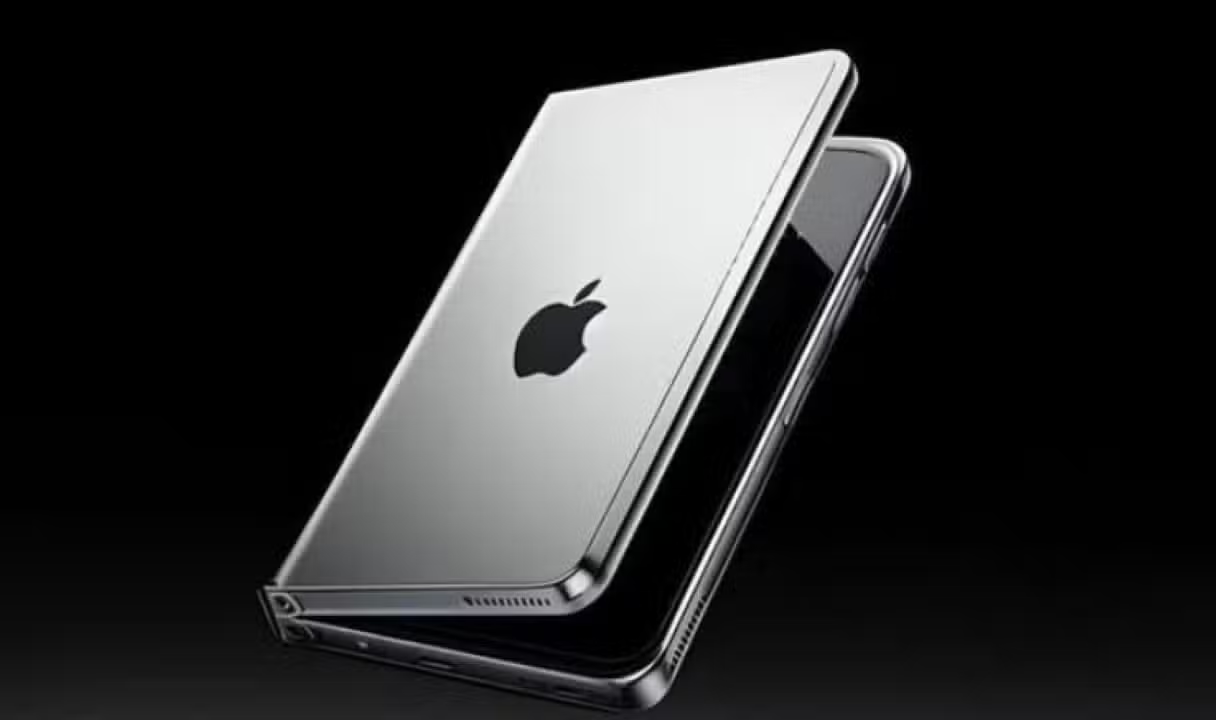
A three-dimensional project released on YouTube displays the supposed visual and technical characteristics of the iPhone Ultra. The model represents Apple’s first foray into the flexible screen smartphone segment. The conceptual images show a device focused on reduced thickness and high energy capacity. The device does not yet have official confirmation from the manufacturer. The mobile technology market has been awaiting the company’s entry into this niche for years.
The rendering details a folding mechanism designed to minimize the screen’s central crease. Concorrentes have already established design and functionality standards over the past few generations. The hollow material indicates a strategy based on premium materials and extreme optimization of internal space. Engineering seeks to balance portability with the need to house complex components in an articulated chassis.

Detalhes structural and dimensions of the device
The measurements presented in the video place the device among the thinnest in the foldable category. The smartphone registers 9.5 millimeters thick when folded. The open format reaches 4.5 millimeters. Essa thickness surpasses the profile of the iPhone Air, which measures 5.6 millimeters. Reducing dimensions in articulated devices requires advanced solutions for the assembly and distribution of printed circuit boards.
The central hinge mechanism is just 0.15 millimeters thick. The drastic reduction in this component allows the two halves of the screen to close without leaving visible gaps. Dispositivos flexible devices from previous generations suffered from dust accumulation in these openings. The new design proposes an airtight closure. The structure uses an improved titanium alloy to guarantee the rigidity of the chassis against accidental twisting.
The titanium exterior finish offers resistance to corrosion and drops. The metal alloy replaces stainless steel and aluminum in premium smartphone lines. The material has an ideal weight-resistance ratio for large devices. Surface treatment prevents fingerprint marks and superficial scratches on the metal body.
Capacidade energetic and image capture system
The iPhone Ultra’s power supply is based on a 5,800 mAh battery. The number represents a significant leap compared to the brand’s traditional phones. Larger Telas require higher electrical consumption during continuous use. Allocating a power cell of this size into a 4.5 millimeter body requires new manufacturing techniques and battery chemistry.
The photographic set maintains the company’s characteristic minimalist aesthetic. The main camera houses a 48-megapixel sensor. The rear module avoids excessive protrusions that would compromise the flat design of the device when opened. Integrating high-resolution lenses into ultra-thin chassis remains a challenge for the optical components industry.
- Espessura of closed device: 9.5mm
- Open Device Espessura: 4.5mm
- Capacidade total battery: 5,800 mAh
- Main camera Resolução: 48 megapixels
The combination of a robust battery with an advanced photo sensor indicates a focus on high-performance users. Profissionais who use the telephone as their main work tool require prolonged autonomy. Thermal management of a 5,800 mAh battery in a confined space requires efficient heat sinks. Battery technology with high silicon density can explain the high capacity in such a restricted volume.
Adapted Interface and multitasking capabilities
The operating system displays structural modifications to take advantage of the expanded display area. The interface includes a slider positioned on the left side of the screen. The feature allows you to quickly switch between different open applications. The split screen functionality makes it possible to run two programs simultaneously.
The brand’s current phones do not natively support splitting the screen with two apps active at the same time. The introduction of this tool on the iPhone Ultra changes the system’s usage dynamics. The transition between the closed and open state occurs fluidly, adapting the content instantly. The software recognizes the angle of the hinge to adjust the display of videos and virtual keyboards according to the device’s position.
The app ecosystem will need to undergo updates to support the new screen aspect ratios. Desenvolvedores will have to adapt interfaces that previously only worked in fixed rectangular formats. Standardizing design guidelines for flexible displays will ensure a uniform experience. The company has a history of strict control over the appearance of software in its official app store.
Posicionamento in the flexible display market
Apple’s late entry into the foldables sector follows the company’s historic strategy. The manufacturer usually observes the maturation of new technologies before launching commercial products. The Galaxy Z Fold 7 acts as the main market benchmark in this segment. The competing model has an estimated thickness of 4.2 millimeters or less.
The fight for leadership in thickness and weight defines the current generation of flexible devices. Consumidores reject devices that cause excessive bulk in pockets. The iPhone Ultra attempts to resolve the equation between mechanical durability and svelte design. The use of 3D printed components helps reduce the total weight of the equipment without compromising structural integrity.
Engenharia of display materials and resistance
The flexible internal screen protection uses a dual tempered glass system. Technologies known as UTG and UFG form a barrier against scratches and direct impacts. The glass panel works together with a hinge made of liquid metal. The special metallic alloy absorbs the mechanical stress generated by the repetitive daily opening and closing movement.
Laboratory Testes liquid metal hinges demonstrate superior resistance to hundreds of thousands of bending cycles. The material has elastic properties that prevent structural fatigue over the years. The application of 3D printed parts allows the creation of complex internal geometries. Estas shapes would be impossible to produce through traditional industrial machining methods.
The central crease becomes practically imperceptible in this material configuration. The smoothness of the mechanism extends the life of the display and improves the user’s touch experience. Relatórios from Asian supply chains monitors the manufacturer’s procurement of these specific materials. The project remains in the speculation phase until a formal announcement occurs on the company’s official communication channels.