
Astronomical phenomenon blocks sunlight in Europe and the Arctic during total eclipse in August 2026
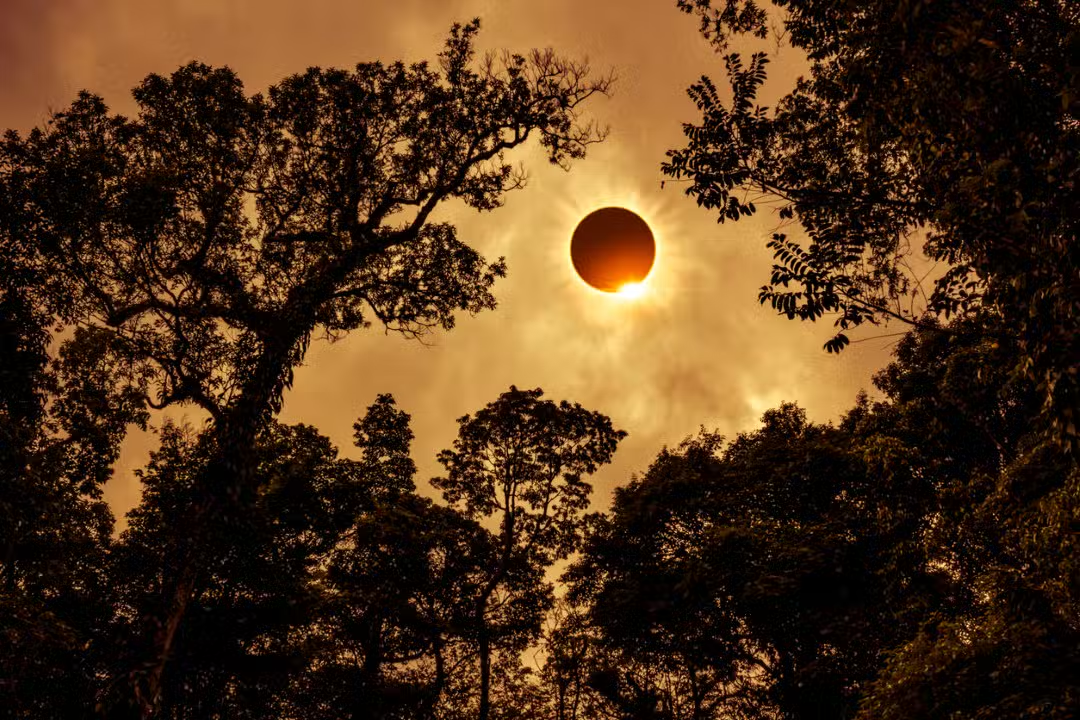
A total solar eclipse will occur on August 12, 2026 and block light from Sol in a band that crosses Ártico, Groenlândia, Islândia and north of Espanha. The exact alignment between Lua, Terra and Sol creates the stage of totality, when the solar disk disappears and the stellar corona becomes visible to the naked eye. Observadores positioned in these geographic regions will record minutes of darkness during the local afternoon.
The phenomenon reaches its maximum duration of 2 minutes and 18 seconds in the vicinity of the west coast of Islândia. The lunar shadow follows a specific path that affects densely populated areas of the European continent, which facilitates access for the public and researchers. Cientistas from space agencies track the progression of the event using satellites and mathematical models to predict the exact visibility conditions. The occurrence marks the first event of this type visible in the continental territory of Europa since 1999.
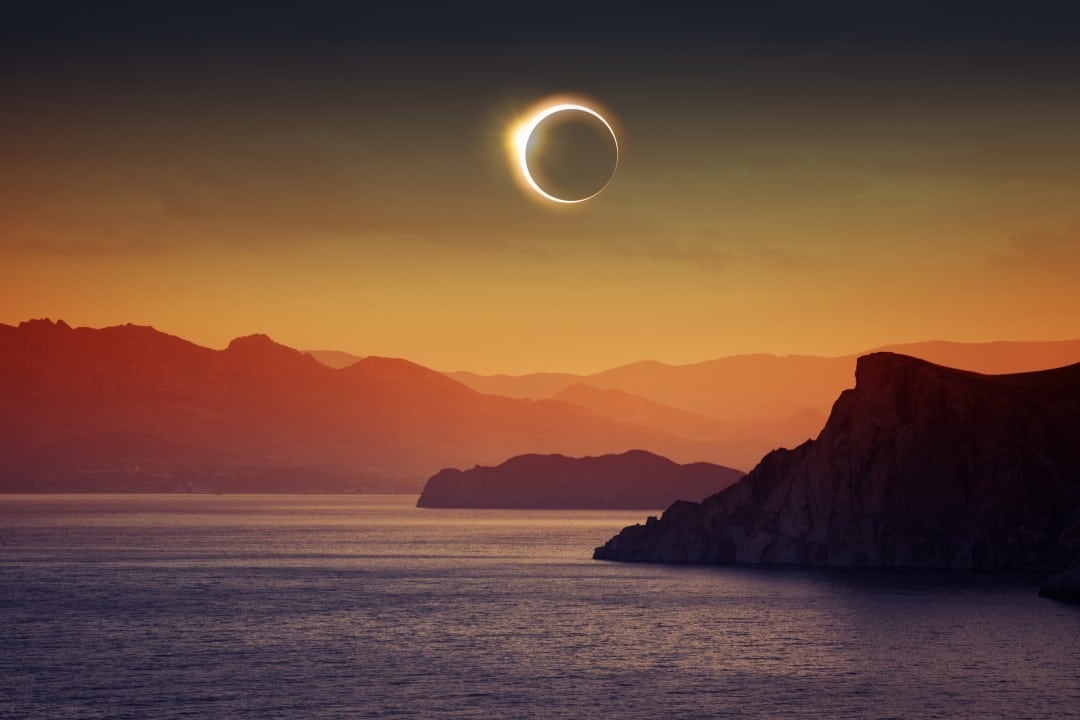
Trajetória of the lunar shadow across the northern hemisphere
The shadow’s path begins in remote areas of the Russian Sibéria and quickly advances over the waters of the Oceano Ártico. The trajectory heads south shortly after passing through the geographic Polo Norte. Essa initial east-west configuration undergoes a natural curvature due to the rotation of Terra and the orbital mechanics of the solar system. The band of totality itself maintains a restricted width of approximately 180 kilometers for most of the travel, limiting absolute darkness to a well-defined geographic corridor.
Após crosses the ocean, the path of darkness reaches the eastern portion of Groenlândia and advances over the western territory of Islândia. The duration of solar blocking varies according to the observer’s position in relation to the center of the band of totality. Durante the minutes of maximum occultation, the sky becomes dark enough to allow the brightest stars and planets in the solar system to be seen. Ambient temperature also registers a drop of a few degrees Celsius in response to the abrupt interruption of direct solar radiation on the Earth’s surface.
Condições visibility in European countries
The astronomical event crosses Atlântico Norte before reaching Península Ibérica later in the local day. Sol’s position will be low on the western horizon during the phase of totality in Espanha, which requires advance planning to avoid visual obstructions caused by mountains or urban buildings. The partial phase of the phenomenon covers a much larger area, including vast regions of the northern hemisphere, parts of Ásia, western África and northern América of Norte.
- The Groenlândia has visibility of 1 minute and 46 seconds in ice areas like Scoresby Sund.
- Islândia offers observation points on the Snæfellsnes peninsula and in the vicinity of the Reykjavik capital.
- The north of Espanha records the phenomenon in cities such as Burgos, Zaragoza and Coruña.
- As Ilhas Baleares, including Palma of Maiorca, enter the lunar shadow route.
- A small northeastern portion of Portugal also captures the minutes of total occultation.
The observation at Islândia occurs with Sol positioned at approximately 25 degrees above the horizon, with an estimated duration of 2 minutes and 10 seconds in locations such as Parque Nacional and Snæfellsjökull. Na Espanha, total darkness time is around 1 minute and 40 seconds in the northern provinces. Tourist demand for accommodation in these specific locations tends to register a significant increase in the months leading up to the event date, boosting the local economy through scientific tourism.
Security Recomendações for visual observation
Direct viewing of the partial phases of the eclipse requires the mandatory use of glasses certified with the international filter ISO 12312-2. Esses protective equipment blocks ultraviolet and infrared radiation, which have the potential to cause irreversible damage to the human retina. Exposing the eyes to sunlight without adequate filtration results in serious eye damage even over short periods of time, requiring strict attention from public health authorities.



The use of improvised methods, such as conventional sunglasses, x-ray plates or photographic negatives, does not guarantee the necessary protection and should be discarded by observers. Apenas during the exact minutes of absolute totality it becomes safe to look at the solar corona without protective equipment. The observer must replace the certified glasses immediately as soon as the first beam of direct light reappears on the edge of the lunar disk, resuming the visual safety protocol.
Impacto of light decay in animal behavior
The temporary interruption of sunlight and the consequent thermal reduction cause immediate changes in the behavior patterns of several animal species. Pássaros with daytime habits interrupt their flights and return to their nests as if the night period had started early. On the other hand, nocturnal animals begin their hunting and movement activities typical of the night, confused by the sudden change in environmental conditions.
Registros Scientists from previous astronomical events point to a collective silence among birds, followed by the beginning of the singing of insects such as crickets and cicadas. Insetos pollinators, such as bees and ants, stop foraging and seek shelter in their colonies. Pesquisadores positioned in zoos and environmental reserves monitor these reactions to deepen the understanding of the influence of solar radiation on the circadian cycles of wild and captive fauna.
Parâmetros astronomical and transmission alternatives
The August 2026 phenomenon occurs approximately 2.2 days after lunar perigee, the point at which Lua reaches its closest proximity to the planet Terra. Essa reduced orbital distance increases the apparent diameter of the natural satellite, which ensures complete and precise blocking of the solar disk. The magnitude calculated for the event reaches the mark of 1.0386, an index that ensures the clarity of totality in the central band of the shadow. Astrônomos uses this time window to collect data on atmospheric processes in the solar corona, which normally remains obscured by the star’s brightness.
Instituições research and astronomical observatories organize live broadcasts with high-definition equipment for global audiences. Essa digital infrastructure allows people located outside the shadow path to track the progression of phases and details of the entirety in real time. No Brasil, the event does not produce visible changes in the daytime sky, and virtual coverage represents the main alternative for viewing the astronomical spectacle with safety, precision and access to comments from experts in the field.
Veja Tambem em Latest News (EN)

Gigabyte Radeon RX 9060 XT Gaming OC 16GB graphics card optimizes 1440p gaming with FSR 4.1 technology

Motorola anticipates launch of Razr Fold foldable smartphone with exclusive FIFA edition

Nvidia introduces RTX PRO 6000 Blackwell to optimize local enterprise data processing

Apple maintains Dynamic Island format on iPhone 18 Pro due to technical screen barriers

Nintendo’s planning for the Switch 2 console includes new Star Fox and recreation of Zelda Ocarina of Time

Huawei Watch Fit Special Edition device monitors 100 sports and features a battery that recharges in 45 minutes

ASUS ROG Strix G18 laptop with RTX 5050 receives special discount on Amazon

PlayStation 5 and Pro model undergo adjustment of up to R$600 in Brazil before the arrival of GTA 6

Consumer reports severe burn after sleeping with Galaxy Watch 8 and manufacturer rules out failure

Forbes names Real Madrid at the top of the most valuable clubs on the planet in 2026

Manufacturer projects performance leap with new LPDDR6 memory in the future Galaxy S27 Ultra
