

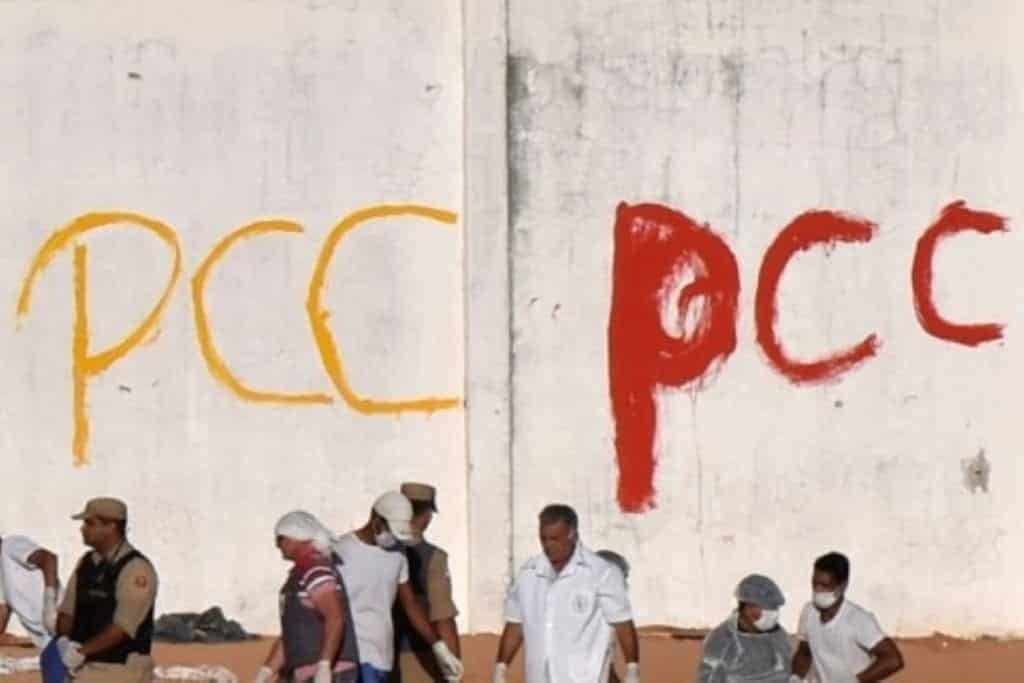
Departamento of Estado of Estados Unidos announced the classification of the Brazilian factions Comando Vermelho (CV) and Primeiro Comando of Capital (PCC) as terrorist organizations. The measure designates both groups as “Globais Especialmente Designados Terrorists” (SDGTs), effective immediately after the official announcement. Inclusion in the list of “Terroristas Estrangeiras Organizations” (FTOs) is scheduled for June 5th.
The decision comes amid conversations between Senator Flávio Bolsonaro (PL-RJ) and US officials, including US Estado Secretary Marco Rubio and President Donald Trump. Rubio publicly defended the classification, arguing that the actions of the factions go beyond the borders of Brasil. The American government highlighted that the initiative is part of a larger commitment by the Trump administration to dismantle cartels and criminal organizations in the region.
Formalização of classification and procedures in Congresso
Departamento of Estado of Estados Unidos formalized the designation of Comando Vermelho and Primeiro Comando of Capital. Esta initial action categorizes the factions as “Globais Especialmente Designados Terrorists”, a classification that carries immediate financial impacts. The measure is jointly supervised by Departamento of Estado and Departamento of Tesouro from the USA. Ela paves the way for the application of economic sanctions, the freezing of assets and severe restrictions against members and supporters of these criminal groups.
Para the official inclusion in the list of “Terroristas Estrangeiras Organizations”, the measure requires formal notification to the US Congresso. The American Legislativo will have a period of seven days to analyze Departamento’s decision of Estado, as provided for in the protocols for classifications of this nature. Contudo, parliamentarians have few effective mechanisms to block a government decision. With the current Republican majority in Câmara and Senado, the general expectation is that there will be no significant resistance to the full implementation of the measure.
US Justificativas for counterterrorism designation
In announcing the classification, the US government described Comando Vermelho and Primeiro Comando of Capital as some of the most violent criminal organizations active in Brasil. The groups, which have thousands of members, are held responsible for “brutal attacks” directed at police officers, public authorities and civilians. Essa rigorous assessment served as the basis for the Washington decision, which aims to intensify the fight against the transnational actions of these factions.
Marco Rubio, a key figure in the US government, stated on social media that the factions’ influence extends significantly beyond Brazilian borders. Ele indicated that criminal groups reach other countries in the region and even Estados Unidos themselves, representing a growing threat. The Trump administration, according to Rubio, intends to mobilize all available tools to protect national security interests. The central objective is to cut off funding and resources for narco-terrorists, a crucial point in the American strategy to combat organized crime.
Repercussão on Brasil and the government’s vision Lula
The Lula government, behind the scenes, actively acted to try to prevent Estados Unidos from adopting this measure. Planalto’s assessment in Palácio was that classification as a terrorist group could open room for tougher US actions in the future. In an extreme scenario, the Americans could use this argument to conduct military operations on the Brasil, a precedent that has already occurred in other countries. A source interviewed by reporter Guilherme Balza, from GloboNews, stated that the Brazilian government was not informed in advance of the decision.
Especialistas in public security in Brasil also question the practical effectiveness of the designation, arguing that Brazilian legislation already provides for rigorous mechanisms. The law to combat criminal factions, for example, establishes harsher penalties than Brasil’s own anti-terrorism law. In May 2025, David Gamble, interim head of coordination of Departamento of Sanções of Estados Unidos, had already requested the Brazilian government to classify the PCC and CV as terrorist organizations. The request was denied at the time by Segurança Pública’s national secretary, Mario Sarrubbo, who defended the view that the factions do not fit the Brazilian constitutional definition of terrorism, since their main motivation is profit, and not political or religious ideologies.
Classificações distinct: FTOs and SDGTs
The two classifications applied by Estados Unidos to PCC and CV, although often directed at the same entities, operate with different functions and have varied legal implications. Compreender these nuances are key to analyzing the spectrum of sanctions and legal consequences that designated factions will face globally.
The designation of “Terroristas Estrangeiras Organizations” (Foreign Terrorist Organizations – FTOs) is the sole prerogative of the U.S. Secretary of Estado and applies solely to non-U.S. groups. Para to be included on this list, the organization must be proven to be involved in terrorist activities, or demonstrate the capacity and intention to carry them out. Além must also pose a direct threat to the security of Estados Unidos. Esta specific classification establishes a solid legal basis for investigations and criminal prosecutions directly involving the group.
The second designation, “Globais Especialmente Designados Terrorists” (Specially Designated Global Terrorists – SDGTs), is jointly managed by the Departamento of Estado and the Departamento of the US Tesouro. Unlike FTO, SDGT can be applied to both organizations and individuals. Seu’s main focus is the financial dimension, which allows the imposition of economic sanctions, the blocking of assets and the application of severe restrictions against members and supporters of designated groups, aiming to decapitalize their operations.
Implicações legal criteria and criteria for designation
Nos Estados Unidos, the classification of a group as a terrorist organization is not automatic, but a process that follows strict legal criteria and multiple governmental steps. The US Departamento of Estado establishes three main conditions that must be met for an organization to receive such a designation. Primeiro, the entity must be foreign; second, it must be involved in terrorist activity or have the clear capacity and intention to carry it out; and third, it must pose a direct threat to the safety of American citizens or U.S. national security.
The final decision for this designation rests with the secretary of Estado, after detailed consultations with Departamento of Justiça and Departamento of Tesouro. A robust dossier, compiled with information from open and confidential sources, proves compliance with all required legal criteria. Após internal approval and formal notification to Congresso, the designation is published in the official government registry, becoming fully effective. The direct legal consequences of this measure include:
- Criminalização support:Passa makes it a crime in the US to provide “material support” to the group, which includes money, training, weapons or services of any nature. Essa ban seeks to cut off the factions’ sources of support.
- Asset Bloqueio:Ativos financial transactions linked to the organization can be immediately blocked, and any financial transactions related to the designated groups become prohibited. The goal is to dismantle the financial infrastructure.
- Restrições visa and deportation:Membros identified from the group may have their visas denied or be subject to deportation from American territory. The measure makes it difficult for its members to move and operate internationally.
Essa designation also aims to isolate the group internationally and cut off its funding sources, hindering its expansion. Há records PCC members operating in American states as Flórida, Nova York, Nova Jersey, Connecticut and Tennessee. No Massachusetts, the federal prosecutor’s office announced charges against 18 Brazilians with alleged links to the faction. The fact that the PCC is considered the largest criminal group of the Américas, operating in around 30 countries and with more than 40 thousand members, also significantly influenced the North American assessment.