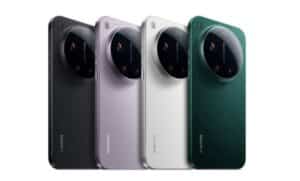
Xiaomi 17T Pro debuts on the market with 7,000 mAh battery and camera system signed by Leica

The Chinese manufacturer officially launched the Xiaomi 17T Pro on the global smartphone market. The device starts at 899.99 euros and relies on cutting-edge specifications to attract the demanding public. The model features a 7,000 mAh battery and a set of cameras developed in partnership with the German company Leica. The brand’s strategy aims to win over consumers who are looking for advanced hardware resources without exceeding the thousand-euro range.
The new member of the line focuses on cost-benefit and succeeds the Xiaomi 15T, skipping number 16 in the company’s official chronology. The device seeks to democratize technologies previously restricted to the ultra-premium category of the telephone market. With rigorously selected components, the smartphone offers a balance between high processing performance and prolonged everyday use. The integration of the Android 16 system with the proprietary HyperOS interface dictates the pace of the user’s browsing experience.
Refined Design and AMOLED screen with extreme brightness
The structure of the Xiaomi 17T Pro uses aluminum and crystal in its external composition. The body of the device maintains the visual identity of the previous generation and inherits features from the manufacturer’s more expensive models. The rear camera module has right angles and a slight curvature on the finishing edges. The photographic piece protrudes discreetly from the rear of the chassis. Consumers can find the device in black, blue and purple, as well as an exclusive white version for e-commerce sales. The physical volume and lock buttons are strategically positioned to make it easier for your thumb to reach during handling. The optical fingerprint reader, however, is located very close to the bottom edge of the glass screen.
The 6.83-inch AMOLED display represents one of the main technical attractions of the equipment. The screen delivers a resolution of 2,772 x 1,280 pixels and a density of 447 ppi. Maximum brightness reaches an impressive 3,500 nits. Essa luminous capacity guarantees full visibility of texts and images even in direct sunlight. In completely dark environments, the panel reduces brightness to just 1 nit. The adaptive sensor quickly adjusts light settings depending on the lighting in the room. The refresh rate reaches up to 144 Hz to guarantee extreme fluidity when scrolling pages. The stereo audio system has good overall volume, although the lower speaker demonstrates greater sound power than the upper component.
Desempenho of MediaTek Dimensity 9500 and HyperOS system
The smartphone’s data processing is carried out by the MediaTek Dimensity 9500 chip. The semiconductor architecture includes a 4.21 GHz main core and three high-performance cores operating at 3.5 GHz. The system also has four energy-efficient cores running at 2.7 GHz. The device has 12 GB of RAM memory to manage multiple applications simultaneously. Internal storage options vary between 256 GB, 512 GB and 1 TB of space. The hardware runs heavy games and complex tasks without slowing down or stuttering. The internal thermal control keeps the temperature stable for most of the time of use. Housing heating only occurs when recording videos in 4K resolution or uninterrupted demanding gaming sessions.
The HyperOS interface runs natively on the Android 16 operating system. Screen transition animations occur in an agile and highly responsive manner. UFS 4.1 storage technology enables read rates of 0.99 GB/s. Installing new large applications takes just a few seconds. The software incorporates artificial intelligence features for offline language translation and deep home screen customization. The brand also invests in connectivity between devices through the Quick Share feature for file transfer. Apesar system fluidity, the software displays advertisements in native applications and sporadic notifications. Essa commercial practice generates questions from users on a device positioned in the premium segment price range.



Autonomia extended and fast charging system
Energy capacity defines the main competitive differentiator of the Chinese manufacturer’s new model. The 7,000 mAh battery supports more than 60 hours of continuous use in mixed usage scenarios. The component resists intense routines of electronic games, streaming media consumption and browsing social networks. In stress tests with mobile data sharing for 16 hours straight, consumption registered just 31% of the total available charge. The numerical result proves the energy efficiency of the processor combined with the physical size of the battery. The device perfectly suits users who spend long periods away from sockets or make frequent work trips.
The energy recharging system supports high powers to minimize waiting time at the socket. The device supports 100W wired charging and 50W inductive wireless charging. Reverse charging technology operates at 22.5W to power other compatible accessories such as headphones. The manufacturer chose not to include the plug adapter in the official product box. The evolution of wired charging presents the following filling time frames:
- 5 minutes plugged in recovers 17% of battery capacity.
- 15 minutes of continuous charging achieves 37% energy storage.
- 30 minutes connected to the electrical network guarantees a 56% charge.
- 45 minutes of recharging reaches 79% of the total available.
- 60 minutes on power reaches the 92% battery level.
- 83 minutes completes 100% of the device’s charging cycle.
The incoming energy flow maintains a constant and linear speed in the first few minutes of connection. The charging rate slows down considerably after the system reaches the 90% safety mark. The injection of approximately 3,500 mAh in just half an hour guarantees quick usability of the equipment in daily emergency situations.
Conjunto photographic Leica highlights 5x telephoto lens
The Xiaomi 17T Pro cameras deliver consistent, professional results through a technology partnership with Leica. The 50-megapixel main sensor has an f/1.67 aperture and built-in optical image stabilization. The lens captures accurate colors and properly manages contrast between areas of light and deep shadows. Digital image processing noticeably smoothes textures on screen. Natural background blur works subtly to highlight central elements in the foreground. The 32-megapixel front camera produces sharp self-portraits with good color processing for social media.
The 50-megapixel telephoto lens with 5x optical zoom stands out on the rear capture set. The hardware component allows for detailed zooming and precise cropping in the app’s portrait mode. The sensor supports digital magnifications of up to 10x without significant loss of visual quality. The artificial intelligence system works at greater approximations to correct noise, but generates artificial-looking images above 50x zoom. The 12-megapixel wide-angle camera performs worse than the other sensors in the set. The lens suffers from the loss of fine details and color distortion in environments with low natural lighting.
Video recording exposes the main technical limitation of this model’s photographic hardware. The combination of electronic stabilization and optical stabilization generates visual artifacts during sudden operator movements. The software super stabilization mode does not fully correct the loss of sharpness when the file is played on larger screens. The device allows video captures in 4K resolution at 120 frames per second for high-definition static scenes. Prolonged use of this maximum setting increases the device temperature and restricts the continuous recording timeout. The native camera app offers exclusive color profiles developed by Leica to customize the final result of photographs before the click.
Veja Tambem em Latest News (EN)

Corinthians guarantees millionaire transfer from FIFA with Memphis Depay’s call-up for the World Cup

New Xiaomi 17T and 17T Pro line hits the market with 50 MP Leica camera and 7,000 mAh battery

LG Electronics rejects rumors about selling television unit to Chinese Hisense

Anthropic Launches Claude Opus 4.8 Model with Thought Control, Plans Public Listing

Apple plans launch of the new iPhone 18 line for 2026 with the development of the unprecedented Ultra foldable model

One Piece manga introduces warrior Douzan and details historical combat against Imu in chapter 1,183
Corinthians will receive daily compensation from FIFA for Memphis Depay at the 2026 World Cup

Portugal advances with the European Union’s first reusable spaceport in the Azores; ESA plans landing in 2028

Samsung One UI 9 requires PIN to turn off Galaxy, strengthening security against theft

Fluminense stipulates R$60 million to negotiate Canobbio with River Plate

Toyota dominates Rally Japan 2026 with 4 cars at the top; Evans secures isolated lead on day one