

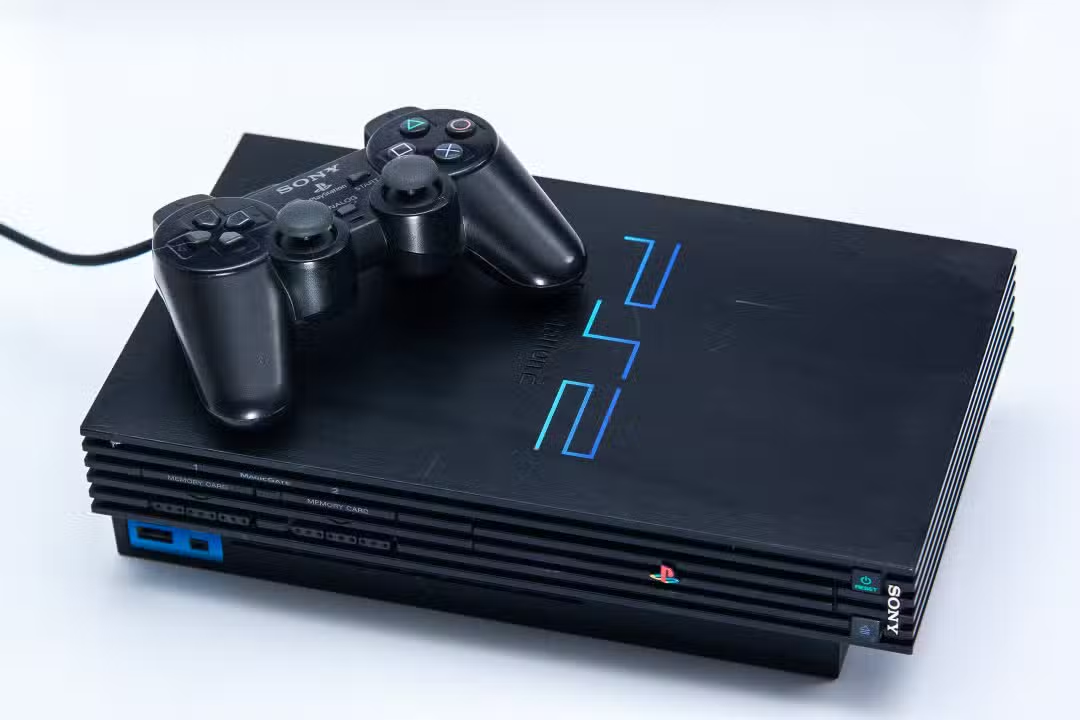
Content producer James Channel has developed a working portable console from a damaged PlayStation 2 unit Slim. The project was named JamesStation 2 and uses a combination of repurposed electronic parts and electrical tape to hold the structure together. The modified device achieved a milestone of 5 hours of power autonomy while playing classic games. The continuous operation time recorded by the handcrafted device exceeds the standard performance of current systems on the market, such as the Steam Deck.
The initiative began with the rescue of a discarded video game that had multiple hardware failures, including severe media reading problems. The reverse engineering process required replacing vital components and adapting old peripherals to create a standalone gaming experience. The final assembly contrasts low-cost materials with a high level of technical knowledge applied to the Sony’s original system motherboard. The result delivers a platform capable of running the console’s original library anywhere, depending only on an external battery.
Internal Components Restauração Starts Conversion Project
The first stage of JamesStation 2 development focused on restoring the basic functionality of the PlayStation 2 Slim before any physical modifications. The base device had an inoperative optical reader, which prevented the recognition of any disc inserted in the compartment. James Channel had to diagnose electronic faults using direct analysis tools on the video game board. The technical approach ensured that the operating system and data reading returned to operating within the parameters required by the manufacturer.
The initial repair involved replacing the motherboard’s CMOS battery, an essential component for storing system settings and the internal clock. Após the replacement, the creator carried out a recalibration process of the laser responsible for reading the physical discs. The procedure used diagnostic programs based on official Sony software to adjust the focus and intensity of the optical cannon. The precision of this adjustment allowed the video game to load games again without presenting reading errors or crashes during execution.
Para To validate the repairs, the content producer used a USB UART adapter connected to the mainboard terminals. The test equipment made it possible to verify the integrity of the electronic circuits and data communication between the console’s chips. Passing all diagnostic stages confirmed that the scrap was ready to receive structural modifications. The rigorous methodology in the restoration phase prevented pre-existing problems from compromising the functioning of the future portable device.
Integração of repurposed parts defines device structure
The transformation of the table console into a portable format required the adaptation of several peripherals to compose the commands and screen of the JamesStation 2. The project used the housing and buttons of an Mad Catz Dual Force 2 control, an accessory manufactured by third parties for the original platform. Integrating the controls required soldering wires directly to the contacts on the PlayStation 2 Slim board. The manual process ensured that the electrical signals from the buttons were interpreted correctly by the video game processor.
The control’s trigger system required a physical extension of the wiring to achieve the new ergonomic position envisioned by the creator. The adaptation maintained the original sensitivity of the controls, allowing the execution of precise actions in racing and action games. Progress data storage also received special attention during hardware assembly. The original memory card ports were repositioned and soldered onto the new structure, ensuring games can be saved without the need for software emulation.
The list of materials used in the construction of the device highlights the focus on reusing old electronics:
- Placa-mother of a rescued PlayStation 2 Slim with read failures.
- New Bateria CMOS for handling volatile system data.
- Componentes physical and electronic components of an Mad Catz Dual Force 2 control.
- Tela LCD extracted from an old car GPS device.
- High capacity external Bateria for powering the set.
- Fita black insulation applied as structural fixing material.
The images are displayed through an automotive GPS monitor adapted to receive the analog video signal from the console. The choice of screen reduced project costs and maintained the philosophy of recycling obsolete electronic components. Fixing all parts, including the monitor, motherboard and controls, was mostly carried out with insulating tape. The rustic finish gave the device a unique visual identity, highlighting the experimental nature of the assembly.
Autonomia power reaches mark higher than modern consoles
The JamesStation 2’s power management delivered results that exceeded initial estimates for home-built hardware. The device has an external 10,000 mAh battery connected to the main board and LCD screen power circuits. The component’s capacity provided the current necessary to keep the processor, disk reader and monitor running simultaneously. Practical tests recorded energy efficiency higher than that of many equipment developed specifically for the portable market.
Durante performance evaluations, the creator ran Tony Hawk’s Pro Skater 4 game to measure continuous power consumption. The title requires constant reading of the disc and intense graphic processing to render the three-dimensional scenarios. Após 60 minutes of uninterrupted gameplay, the external battery indicator showed 71% remaining charge. The metric indicates an optimization in the electrical consumption of the PlayStation 2 Slim board when operated in conjunction with the GPS screen.
The consumption projection based on tests indicates that the device can operate for up to 5 hours on a single full charge. The continuous usage time establishes a direct advantage over the Steam Deck, a current portable console that often drains in less than 3 hours depending on the game. The comparison demonstrates that the Sony’s legacy architecture, combined with a high-capacity power supply, offers significant operational longevity. The milestone achieved validates the viability of the project for prolonged entertainment sessions away from power outlets.
Rustic Design exposes disc player and generates security alert
The appearance of JamesStation 2 reflects the prioritization of functionality over aesthetic finish and traditional ergonomics. Extensive use of electrical tape leaves parts of the printed circuit board and internal wiring visible to the user. James Channel defended the design approach by stating that the successful operation of the hardware justifies the unconventional assembly methods. The improvised structure attracts attention from the console modding community, but presents obvious physical vulnerabilities.
The main point of concern lies in the location and exposure of the physical media reading mechanism. The rotation motor and laser cannon were fixed to the back of the device without any type of protective cover. Quando the console is turned on, the game disc spins at high speed just centimeters from the player’s fingers. The absence of a physical barrier creates a real risk of accidents when handling the device, especially during sudden movements.
Exposing the disk also compromises the durability of the media and the stability of data reading. Accidental contact with the surface of the moving CD or DVD may cause irreversible scratches or eject the disc from the center spindle. Dust and moisture from the environment have direct access to the delicate optical barrel, which may require recalibrations in a short period of time. The current configuration requires the user to operate the handheld console with extreme caution to avoid equipment damage and hand injuries.
The project consolidates the application of advanced electronics knowledge in modifying old hardware. Transforming a faulty unit into a standalone gaming platform proves the flexibility of the PlayStation 2 Slim architecture. The feat is impressive. The device remains a reverse engineering experiment that challenges industrial manufacturing standards through creative solutions and affordable materials.