

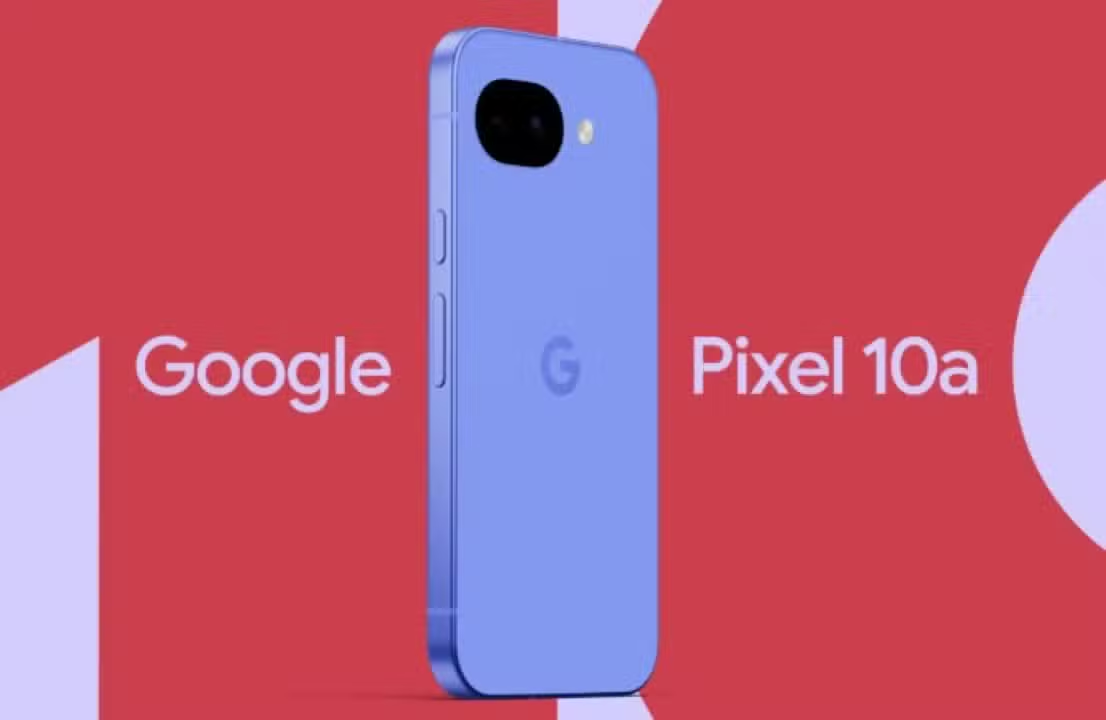
Google officially announced the launch of the Pixel 10a smartphone, the latest addition to its line of mobile devices aimed at the premium mid-range segment. The new device hits the market with the promise of redefining durability and autonomy standards in the technology industry. The manufacturer confirmed that the model features a 5,100 mAh battery, the largest ever integrated into a device in this category by the company. The main highlight of the announcement involves the software support policy, which now guarantees 10 years of operating system updates and security packages for users.
The technology giant’s strategy aims to attract consumers looking to extend the life cycle of their electronic equipment. The movement occurs at a time of transition in the global market, where concerns about electronic waste and sustainability are gaining relevance in purchasing decisions. The device will be available for purchase from March 5th on the brand’s official digital platforms and in partner retail chains. The suggested starting price for the base version is US$499.
Preço initial and global market launch strategy
The pre-sale phase of the device begins immediately after the official announcement. Consumers who choose to purchase in advance will receive specific benefits, including credits for use at the company’s official store and discounts on the purchase of complementary accessories. The $499 price applies to the model with 128 gigabytes of internal storage capacity. The company structured distribution to reach the main international markets simultaneously, seeking to consolidate its participation in the smartphone segment that offers advanced specifications at a lower cost than top-of-the-line models.
The price positioning puts the device in direct competition with other established brands in the mobile phone industry. Offering a decade of technical support represents a significant competitive differentiator, considering that the industry average for mid-range devices varies between three and five years of updates. The initiative forces the market to rethink planned obsolescence strategies. Analistas from the technology sector point out that the decision could force other manufacturers to extend their own software warranty periods to maintain commercial competitiveness in the long term.
Mudanças on structural design and display specifications
The visual design of the new smartphone presents substantial changes compared to previous generations of the product family. The most notable change occurs at the rear of the equipment, where the traditional horizontal camera bar has been eliminated. The company’s engineers opted for a lens module integrated directly into the rear panel, creating a flat, continuous surface. Esta structural modification not only changes the aesthetics of the product, but also improves the weight distribution of the device, making daily handling more ergonomic for the end user.
The device’s screen measures 6.1 inches and uses advanced display technology with a refresh rate of 120 Hz. The specification guarantees more fluid image transitions when browsing applications, reading texts and playing electronic games. The front panel is protected by high-resistance glass against accidental drops and scratches. The equipment is certified for protection against water and dust, allowing the smartphone to withstand temporary submersion in fresh water without compromising the internal electronic components.
Arquitetura processing and artificial intelligence capabilities
The device’s performance is managed by a processor with a proprietary architecture, specifically developed to optimize machine learning and artificial intelligence tasks. The component works together with 8 gigabytes of RAM memory. The configuration allows you to run complex applications and maintain multiple processes in the background without losing speed. The chip dedicated to artificial intelligence processes information locally on the device. The approach reduces dependence on internet connections for simultaneous translation and speech recognition functions, increasing the privacy of user data.
The image capture system consists of a 48-megapixel main sensor and a 13-megapixel ultra-wide-angle lens. The optical assembly operates seamlessly with image processing algorithms to deliver high-precision results. Photo management software includes several automated tools for visual enhancement.
- Remoção of unwanted objects and people in the background of images with intelligent scene filling.
- Correção of blurring in old photographs or those captured in motion through digital reconstruction.
- Combinação takes multiple captures of the same group of people to select the best facial expressions for each individual.
Video recording capability has also received significant technical improvements. The system automatically adjusts exposure and contrast frame by frame, even in poorly lit environments or against sunlight. The built-in microphones use noise cancellation based on artificial intelligence to isolate the user’s voice when recording in places with a lot of external noise, ensuring clarity in the recorded audio.
Autonomia power and satellite connectivity
The 5,100 mAh battery represents a milestone in the internal engineering of the product line. The physical component occupies the majority of the device’s chassis and provides enough power to exceed 30 hours of continuous use under normal conditions of browsing, media playback and calls. The operating system includes an extreme power saving mode. The function deactivates secondary processes and limits connectivity, allowing the device to remain on for up to 120 hours in emergency situations where there is no access to electrical charging sources.
User safety has been increased with the introduction of a satellite communication module. The technology allows text messages to be sent to rescue services when the device is outside the coverage area of traditional cell phone networks. The system guides the user to point the device at the correct position in the sky, establishing a direct connection with satellites in low orbit. The service will be offered free of charge during the first years of use of the equipment, guaranteeing assistance in remote areas or during natural disasters that affect terrestrial telecommunications infrastructure.
Longevidade system and internal storage options
The commitment to provide 10 years of operating system updates and security packages changes the smartphone ownership dynamic. The warranty ensures that the device will receive new interfaces, software features and defenses against digital vulnerabilities within the next decade. The measure combats hardware obsolescence, allowing the device to maintain its resale value for an extended period. The initiative aligns with emerging global regulations that require greater durability and ease of repair for large-scale consumer electronics equipment.
Consumers can choose from four color options for the exterior finish: purple, red, light gray and black. The internal storage portfolio is restricted to two variants, offering capacities of 128 gigabytes or 256 gigabytes. The hardware design does not include a compartment for microSD memory cards. The lack of physical expansion directs users who need more space to contract cloud storage services. The internal memory architecture uses high-speed standards, ensuring fast reading and writing of large files throughout the life of the equipment.