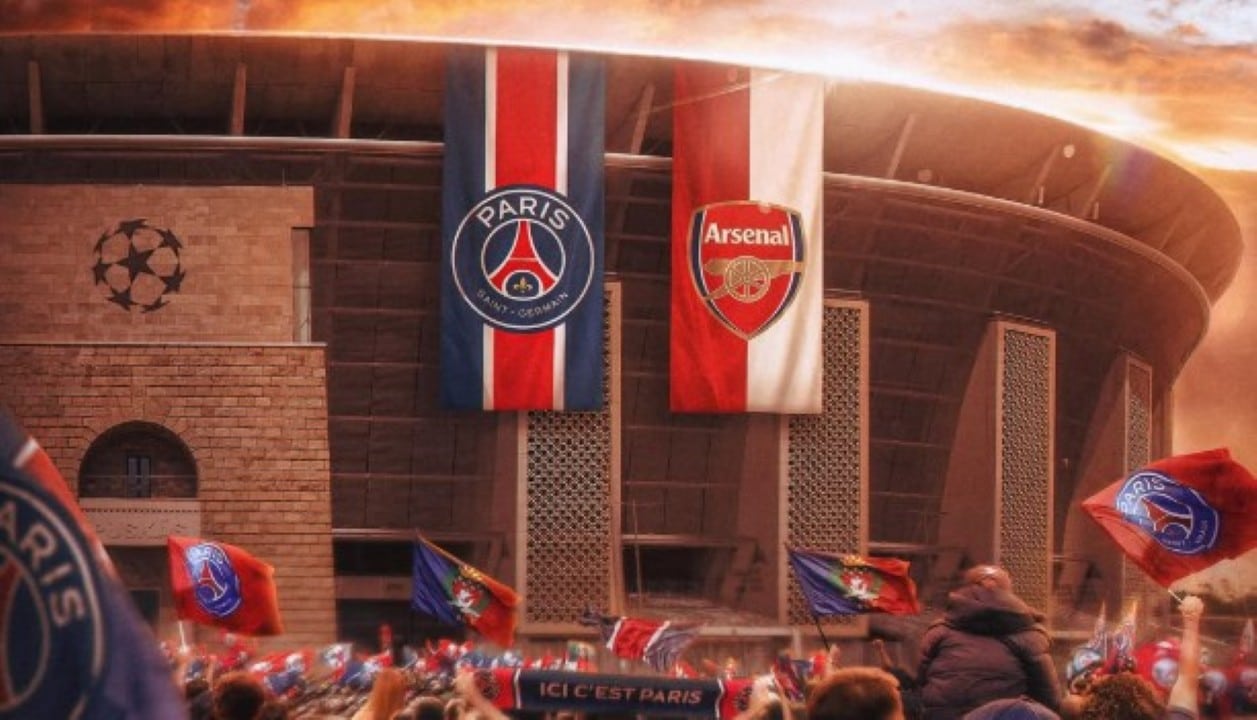
Paris Saint-Germain and Arsenal take to the field this Saturday, May 30, 2026, to compete in the UEFA Champions League final. The decisive confrontation takes place at Puskás Arena, located in the city of Budapeste, at Hungria. The ball starts at 1pm, at Brasília time. The two clubs have officially confirmed the starting lineups for the duel that defines the season’s European champion. The match brings together two of the most consistent teams on the continent in a clash of high technical level.
Coaches Luis Enrique and Mikel Arteta chose to maintain the tactical base that guaranteed success in the knockout stages of the competition. The French team reaches the decision presenting impressive numbers in the offensive sector. The English team stands out for the strong defensive system built throughout the tournament. The final pits different playing styles face to face, but based on controlling ball possession and occupying space. The expectation attracts the attention of fans and sports analysts around the world.

Formação Paris Saint-Germain holder prioritizes speed on the sides of the field
Coach Luis Enrique structured Paris Saint-Germain in a 4-3-3 tactical formation. Goalkeeper Matvei Safonov takes on the responsibility of defending the French goal in the decision. The defensive line has right-back Achraf Hakimi and left-back Nuno Mendes. The two wingers have offensive characteristics and offer depth options on the wings. The core defense is formed by the captain Marquinhos and the Ecuadorian Willian Pacho. The duo combines the Brazilian defender’s experience with the young defender’s physical vigor.
The midfield sector features a trio focused on ball retention and quick distribution of passes. Warren Zaïre-Emery works alongside the Portuguese Vitinha and João Neves. The trio’s mission is to dictate the pace of the match and break the opponent’s marking lines. Vitinha acts as the main organizer of plays in the center lane. João Neves provides support in recovering possession and quickly transitioning into attack.
Paris Saint-Germain’s offensive system relies on unpredictability and dribbling to overcome the English defense. Ousmane Dembélé plays open on the right side, while Khvicha Kvaratskhelia occupies the left wing. The two wingers have freedom of movement to seek submissions or assist their teammates. Young Désiré Doué completes the attacking trio. The choice of Doué indicates a strategy aimed at agility in short spaces within the penalty area.
Arsenal defines team with focus on defensive consistency and central creation
Coach Mikel Arteta mirrored the opposing formation and also sent Arsenal onto the field in a 4-3-3 formation. David Raya is the starting goalkeeper and a key player in getting the ball out with his feet. The English defense features Cristhian Mosquera on the right flank and Piero Hincapié on the left flank. The starting defense duo brings together William Saliba and Gabriel Magalhães. The two defenders form one of the most solid partnerships in European football today. The rapport between Saliba and Gabriel Magalhães is the pillar of the London team’s defensive system.
Arsenal’s midfield balances physical strength and creative ability. Declan Rice serves as the main protector of the defensive line. The English midfielder also initiates counterattack movements with vertical passes. Martin Ødegaard wears the captain’s armband and serves as the team’s brains. The Norwegian dictates the offensive pace and looks for deep passes. The young Myles Lewis-Skelly gained the trust of the coaching staff and completes the central sector in the starting position.
The English team’s attack features versatile players with high finishing power. Bukayo Saka plays on the right side and represents the team’s main escape valve. Leandro Trossard occupies the left flank and offers danger with cuts to the middle and medium-range shots. Kai Havertz acts centrally in the attack command. The German constantly moves to open up spaces in the opponent’s defense and act as a reference in aerial plays.
Destaques singles and head-to-head matches on the Puskás Arena pitch
The UEFA Champions League final features individual duels that could determine the outcome of the match. Paris Saint-Germain’s wingers will have the task of containing Arsenal’s wingers. The direct confrontation between Nuno Mendes and Bukayo Saka on the field promises intensity during the ninety minutes. In midfield, the fight for possession of the ball involves players with high technical ability.
- Achraf Hakimi: acceleration and precise crossings down the right aisle.
- Marquinhos: technical leadership and positioning in defensive coverage.
- Vitinha: control of pace and distribution of passes in midfield.
- William Saliba: physical imposition and precision in tackles in defense.
- Martin Ødegaard: vision of the game and creation of offensive opportunities.
- Bukayo Saka: dribbling ability and finishing with the left leg.
The performance of goalkeepers also gains relevance in a single match. Matvei Safonov needs to demonstrate security in the face of English attacks. David Raya will have the challenge of stopping the quick finishes of the French attack. Efficiency in dead balls represents another determining factor. Both teams have specialist takers and defenders with good use in the offensive aerial game.
Estrutura of the stadium, refereeing team and match broadcast
Puskás Arena was chosen by UEFA to host the grand final of the continental tournament. The stadium located at Budapeste has the capacity to receive more than 60 thousand spectators. The modern infrastructure guarantees good conditions for playing football. The lawn has been prepared over the last few weeks to present a standard of excellence. Torcedores from both teams sold out the number of tickets available for the decision.
The arbitration committee appointed the German Daniel Siebert to referee the match. The referee has an extensive background in high-level matches in European football. The referee team includes experienced assistants and full video referee technology support. Daniel Siebert’s profile indicates a rigorous conduct of the match, with the application of cards to prevent violent plays. The objective is to maintain discipline on the field without interrupting the flow of the game excessively.
Brazilian fans have three different options to follow the live broadcast of the final. SBT shows the match on open television nationwide. TNT provides complete coverage on pay television channels. The HBO Max streaming platform offers the game signal over the internet. Broadcasters prepare special programs with tactical analyses, exclusive reports and interviews before kickoff.
Trajetória of the teams and the historical weight of the European decision
Paris Saint-Germain reaches the final with the status of having the most positive attack in the current edition of UEFA Champions League. The French team overcame traditional opponents in the previous stages with strong performances. The club seeks to consolidate its sporting project by winning the most coveted trophy on the continent. Presence in the final reaffirms the power of investment and the ability to assemble competitive squads.
Arsenal built the campaign based on the solidity of the defensive system. The English team conceded few goals throughout the tournament and demonstrated maturity in knockout games away from home. The London club is chasing the first title in its history in the UEFA Champions League. The achievement would represent the culmination of the reconstruction work led by Mikel Arteta in recent years. The players see the match as an opportunity to mark their name in the history of the institution.
The two teams enter the field undefeated in several statistical criteria of the competition. Direct confrontation between the clubs has occurred few times in the recent past. The absence of an extensive history of direct rivalry shifts the focus completely to the teams’ current moment. The winner of the duel in Budapeste will lift the cup and guarantee the title of best Europa team of the season.