

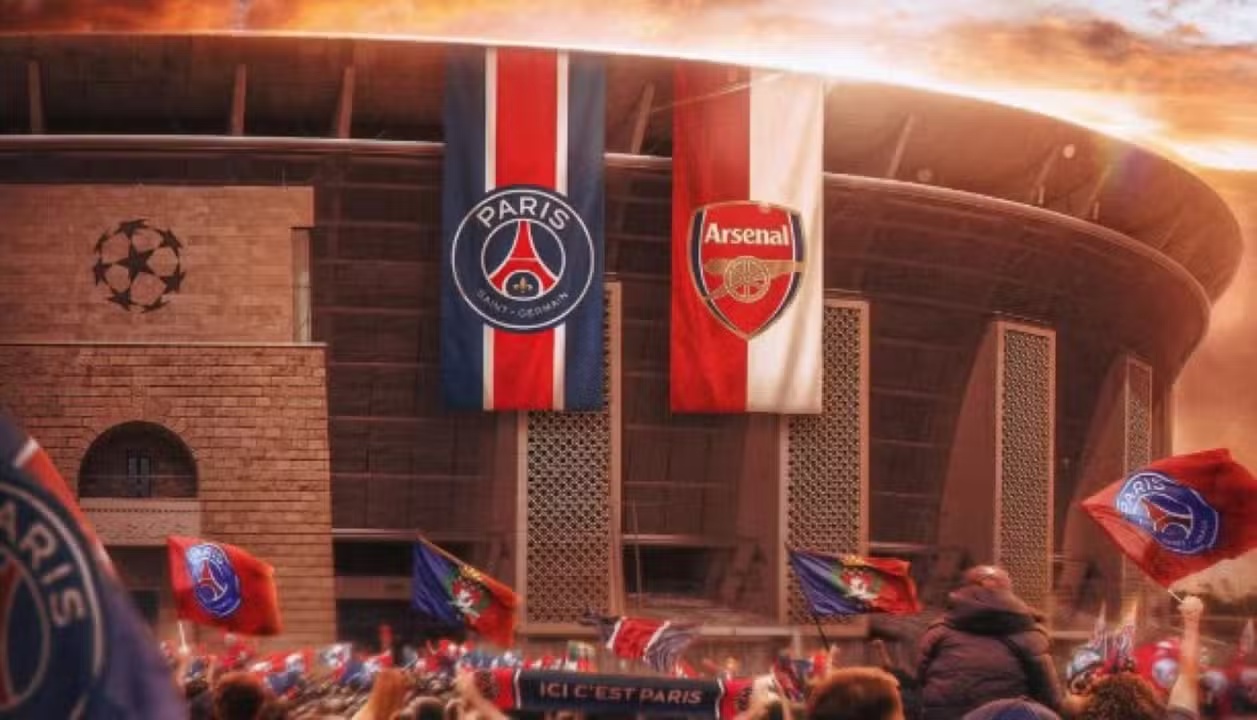
Paris Saint-Germain and Arsenal take to the field this Saturday, May 30, 2026, to compete in the UEFA Champions League grand final. The decisive confrontation takes place at Puskás Arena, located in the city of Budapeste, at Hungria. The start of the match is scheduled for 1pm, according to Brasília’s timetable. Coaches Luis Enrique and Mikel Arteta confirmed the official lineups for the two teams hours before kickoff. The duel defines the champion of the main club tournament on the European continent this season.
Formação Paris Saint-Germain’s tactics prioritize the offensive sector
Coach Luis Enrique defined the structure of Paris Saint-Germain in a 4-3-3 tactical formation. Matvei Safonov takes responsibility in goal for the French team. The defensive system has the presence of Achraf Hakimi on the right flank and Nuno Mendes on the left flank. The defense duo features captain Marquinhos alongside Willian Pacho. The Spanish coach maintains the base he played in the knockout stages of the competition. The defensive line acts advanced to pressure opponents in the attacking field.

In the midfield sector, Paris Saint-Germain presents a formation focused on ball possession and quick transition. Warren Zaïre-Emery performs alongside Vitinha and João Neves. The trio has the function of controlling the pace of the match. Vitinha frequently drops back to help get the ball out to defenders. João Neves supports marking and distributing short passes. The dynamics of the sector aim to break the opposing team’s marking lines.
The French team’s attack concentrates the main offensive actions on the sides of the field. Désiré Doué, Ousmane Dembélé and Khvicha Kvaratskhelia form the front trio. Kvaratskhelia and Dembélé are given freedom of movement to look for individual plays and infiltrations into the opponent’s area. Choosing Doué adds unpredictability in approach plays. The team has the most positive attacking record in the current edition of the European tournament.
Arsenal’s defensive Estrutura supports the team’s strategy
Pelo on the English side, coach Mikel Arteta chose to mirror the tactical scheme and will also send Arsenal onto the field in a 4-3-3 formation. David Raya occupies the starting goalkeeper position. The line of four defenders is made up of Cristhian Mosquera, William Saliba, Gabriel Magalhães and Piero Hincapié. The London team reaches the decision boasting the status of the least leaked defense in the championship. Saliba and Gabriel Magalhães form a consolidated partnership in the center of defense.
Arsenal’s midfield combines physical strength and creative ability. Martin Ødegaard acts as the main organizer of offensive plays. Declan Rice performs the protection function in front of the defensive line and initiates counterattacks. Myles Lewis-Skelly completes the sector after gaining space in the starting team during the final stretch of the season. The compression of this sector represents one of the main characteristics of the work developed by Arteta.
The offensive sector has Bukayo Saka positioned on the right side of the field. Kai Havertz acts centrally in attack command. Leandro Trossard completes the formation on the left side. Saka represents the team’s main escape valve in speed plays. Havertz acts as a reference to retain the ball in the offensive field. Arsenal enters the field with the aim of winning the first UEFA Champions League title in its history.
Detalhes Arbitration and Puskás Arena Infrastructure
UEFA selected Puskás Arena as the venue for the continental decision. The stadium located at Budapeste has the capacity to receive more than 60 thousand spectators. Local authorities set up a strong security scheme around the arena to welcome fans of both teams. The lawn underwent technical inspections during the week and presents ideal conditions for sports. The venue’s infrastructure meets the standards required for large events.
The arbitration committee appointed German Daniel Siebert to referee the final confrontation. The referee has a history of playing in high-level matches in European football. The refereeing team includes field assistants and professionals responsible for the operation of the video assistant referee. The statistical average of Siebert indicates disciplinary rigor in the application of cards. The referee’s profile seeks to maintain control of games played physically.
Opções broadcast available to Brazilian audiences
Brazilian fans have different alternatives to follow the live broadcast of the match. Image rights holders have prepared special coverage that begins hours before the scheduled kickoff time. Broadcast teams include narrators, expert commentators and reporters stationed on the Puskás Arena lawn.
The distribution of the signal throughout the national territory occurs through three different platforms, serving different audience profiles:
- SBT: responsible for broadcasting the event on open television throughout the country.
- TNT: responsible for showing the match through pay television channels.
- HBO Max: streaming platform that offers a live signal to subscribers of the digital service.
The division of rights allows the public to choose the consumption format of the match. The broadcasters scheduled tactical analysis, exclusive interviews and behind-the-scenes viewing of the event during the pre-game period. Coverage extends until the cup ceremony.
Retrospecto of the teams and expectations for the confrontation
The clash marks the meeting of two teams in a consistent phase. Paris Saint-Germain seeks to consolidate the sporting project with the trophy. Arsenal tries to crown the restructuring process led by its technical committee in the last years of work on Londres. The clubs have recorded few direct confrontations recently. The final pits the best attack and the best defense in the competition face to face.
The players carried out field reconnaissance and final tactical activities on the eve of the match. The technical committees focused on dead ball training and penalty kicks. The competition regulations establish that the winner in normal time guarantees the cup directly. In case of a draw, the match goes to extra time and, if equality persists, to maximum penalties.
The event organizers prepared a closing ceremony before the teams entered the field. Delegations arrived at Hungria in advance to adapt to the time zone and local climate. The ball rolls at 1pm, defining the end of the official Europa club calendar for this season.