

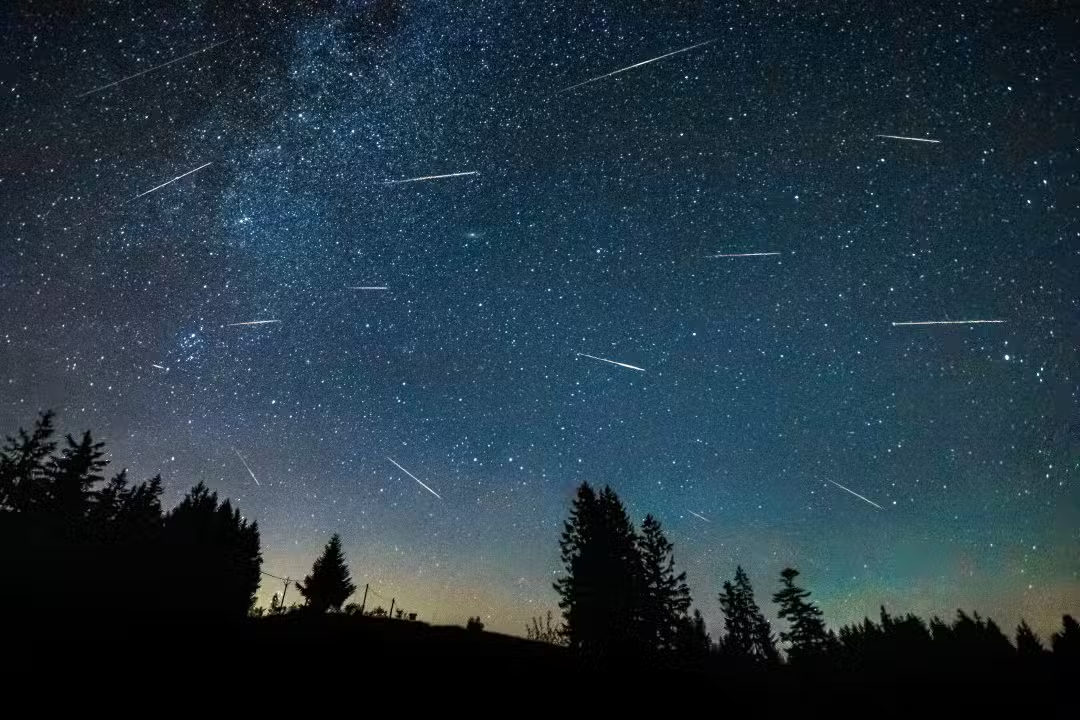
A sequence of astronomical phenomena will mark the month of June 2026. The highlight is the approach between Vênus and Júpiter, the two brightest planets seen from Terra. Lua Morango also appears at the end of the month. Esses events can be observed with the naked eye in many regions of the planet.
The period offers opportunities for those who like to look at the sky without sophisticated equipment. Conditions include conjunctions, Lua phases, and Via Láctea visibility.
Conjunção between Vênus and Júpiter attracts attention at the beginning of the month
Vênus and Júpiter will get very close on June 8th and 9th. The apparent separation between them should reach about 1.5 degrees. Isso allows the two stars to appear almost side by side in the evening sky.
Quem using binoculars will be able to see both in the same field of view. The pair will appear low on the western horizon shortly after sunset. Mercúrio can also be seen nearby in the first few days of the month.
The gradual movement of the planets began at the end of May. The conjunction represents one of the highlights for amateur observers.
- Vênus appears as the brightest point in the evening sky
- Júpiter follows close behind in intensity
- The approach takes place in the constellation of Gêmeos
- The phenomenon lasts a few days with good visibility
- Não requires a telescope to follow
Outros celestial encounters involve Saturno and Marte
On June 10th, Saturno and the rising Lua come close. The angular distance should be about 5 degrees. The pair appears above the eastern horizon after midnight.
Já on the 11th, Marte, Lua and Saturno form a diagonal line before dawn. Esses alignments help identify planets in the sky.
Saturno’s position allows you to observe its rings with small telescopes or powerful binoculars. The month favors this type of observation.
Summer Solstício and Via Láctea Visibility
The summer solstice in the Northern Hemisphere occurs on June 21st. The date marks the longest day of the year in the region. No Brasil, which is in the southern hemisphere, begins astronomical winter.
June nights offer a good opportunity to see the center of Via Láctea in places with dark skies. The period coincides with favorable conditions for this type of observation.
Lua Morango closes the month as micromlua
June’s full Lua, known as Lua Morango, peaks on June 29. The name comes from traditions of North American indigenous peoples, who associated the phase with the strawberry harvest.
Full Essa Lua will be a micromoon. Ela occurs when Lua is further away from Terra, which makes it appear slightly smaller and less bright. The phenomenon happens around 7:56 pm Brasília time.
Lua appears on the southeast horizon at dusk. Durante at sunrise and sunset may show orange tones due to the atmosphere.
Chuva of Bootídeos meteors peaks in June
The Bootídeos meteor shower peaks on June 27. The phenomenon is caused by residue from a comet. The expected rate is low in most years, with occasional outbreaks possible.
The almost full Lua can hinder observation. Mesmo so, anyone in dark places can try to see some tracks.
Dicas to observe events
Escolha a place away from light pollution. The sky needs to be clear. Astronomy Aplicativos helps you identify the position of the stars in local time.
Leve a reclining chair for greater comfort during observation. Evite bright lights to preserve eye adaptation. Paciência is important as some phenomena require time to appreciate.
The events of June 2026 bring together favorable conditions for different types of observers. The conjunction of Vênus and Júpiter and Lua Morango are the main attractions.