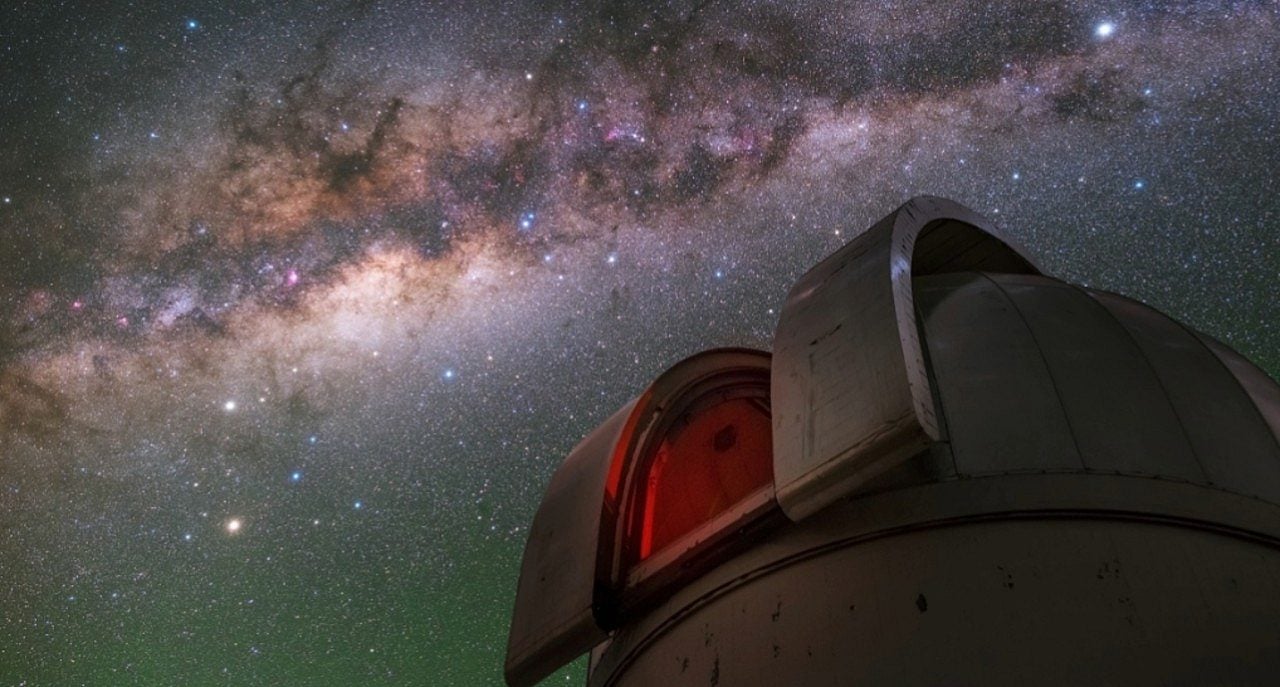
The scientific community witnessed a significant advance in astronomy with the unveiling of the Henrietta, an innovative spectrograph designed to reveal the atmospheres of distant exoplanets. Desenvolvido by Carnegie Observatories researchers, the instrument promises unprecedented precision in analyzing gases, thermal structures and potential biosignatures on worlds outside our solar system. Sua presentation took place at the SPIE Astronomical Telescopes + Instrumentation conference on Copenhagen, marking a crucial step in the search for conditions for extraterrestrial life. Henrietta, now close to operational readiness, aims to overcome the limitations of previous measurements of planetary size and mass. Este technological breakthrough redefines scientists’ ability to characterize planetary environments and understand cosmic diversity on a detailed scale.
Detalhes and Henrietta Analysis Capability
Henrietta is designed to go beyond traditional exoplanet classification metrics such as size and mass, which provide only a limited view of the true nature of these worlds. Astrônomos, for years, relied on this information to categorize new findings. The spectrograph offers the ability to directly analyze the composition of exoplanetary atmospheres. Essa new approach allows the detection of specific gases, the identification of complex thermal structures and, potentially, the discovery of biosignatures, elements that indicate the presence of life. The clarity and level of detail are far superior to previous methods.
The project is led by researchers from Carnegie Observatories, an institution with a history of innovation in astronomical instrumentation. Henrietta’s contribution represents a fundamental evolution, transforming distant points of light into chemically rich worlds with unique identities. Dr. Jason Williams, postdoctoral researcher at Carnegie Observatories and scientific and technical leader of the Henrietta project, emphasized the importance of this change. “Mass and size only provide limited information,” Dr said. Williams. Ele exemplified: “If we measured Terra and Vênus this way, we would think they were almost the same planet, but we know that their atmospheres and conditions are completely different.” Sua statement underscores the key challenge in exoplanet science: two planets can have similar physical properties and yet harbor radically different environments.
Precision and “first light” Engenharia
The development of the Henrietta involved a complex multi-phase process, including assembly, integration and exhaustive testing, before reaching the stage known as “first light”. Este crucial moment represents the capture of the first astronomical data by the instrument. According to the study presented in Copenhagen, the spectrograph underwent rigorous calibrations to ensure its ability to detect subtle spectral signatures. Tais signatures are revealed when starlight filters through a planet’s atmosphere during transit events.
Montado in Swope Telescope, located in Carnegie Science’s Las Campanas Observatory, in Chile, Henrietta benefits from a meticulously engineered optical design. Este design is optimized to offer high stability and sensitivity, essential features for high-precision observations. The instrument’s spectrographic capabilities enable the separation of light into its constituent wavelengths with exceptional precision. Isso enables the revelation of molecular “fingerprints” of compounds such as water vapor, carbon dioxide and methane. Essas observations are crucial for identifying planets that may possess conditions suitable for life or that challenge existing models of planet formation. The design of the Henrietta reflects a broader trend in modern astronomy, which is the shift toward specialized tools that complement large observatories, focusing on targeted, high-impact measurements.
The sophistication of the control system
The performance of the Henrietta is equally dependent on an advanced control architecture, detailed in a second study titled “Control architecture for Henrietta spectrograph on the Swope Telescope”. Este sophisticated system coordinates the instrument’s mechanical, optical and software components, ensuring that observations remain stable over long periods and under diverse environmental conditions. The ability to adjust in real time is one of the most valuable features of the control system. Ele allows astronomers to adjust for factors such as temperature fluctuations, mechanical drift and atmospheric interference, which can compromise data quality. Este level control is vital, especially when measuring extremely faint signals, where even small instabilities can hamper information collection.
The integration of automated processes with human supervision ensures a balance between precision and flexibility, enabling efficient observation campaigns. Tais innovations highlight how modern astronomy increasingly depends on seamless integration between hardware and software. The Henrietta’s capabilities are not only a product of its optical design, but also the intelligent systems that manage and optimize its performance during observations. Esta collaboration between different disciplines is critical to pushing the boundaries of discovery.
Abertura from a new window to distant worlds
The launch of Henrietta comes at a time of rapid evolution in the study of exoplanets, driven by discoveries from renowned missions such as Kepler and TESS. These Embora missions have identified thousands of planets, understanding their atmospheres remains one of the most pressing and complex challenges in the field. Instrumentos like Henrietta are specifically designed to fill this gap, offering a more detailed view of planetary environments across a wide range of star systems. By focusing on atmospheric characterization, Henrietta complements the largest existing space observatories, contributing to the construction of a more complete panorama of planetary diversity in the galaxy. Suas observations can reveal unexpected chemical compositions, complex atmospheric dynamics or even signs of processes linked to habitability.
- Vapor water
- Dióxido carbon
- Metano
- Potenciais biosignatures
Atmospheric analysis Benefícios:
- Determinar detailed gas composition
- Identificar atmospheric thermal structures
- Avaliar planetary habitability conditions
- Desafiar and refine planetary formation models
Redefinindo exploring exoplanets
As Henrietta moves toward full scientific operations, it represents more than simply a new instrument; it signals a paradigmatic shift toward a deeper, more nuanced exploration of worlds beyond our solar system. The ability to analyze alien atmospheres with increasing precision brings astronomers closer to answering one of humanity’s oldest questions: What are these distant worlds really like? Este spectrograph has the potential to transform the way we perceive and study exoplanets, offering an unprecedented view of their most intimate features.
The long-term impact of Henrietta can be seen in the formation of new theories and validation of hypotheses about planetary diversity and the ubiquity of life in the universe. Suas scientific contributions promise not only to expand our catalog of exoplanets, but also to enrich our understanding of the conditions necessary for the emergence and sustainment of life. With this, the instrument positions itself as a milestone in astronomy, providing essential tools for the next generation of cosmic discoveries. The path to unlocking the secrets of these distant worlds now has a powerful technological ally, pushing science towards new horizons.