
Scotland and Curaçao draw in the first half of an international friendly after Jürgen Locadia was sent off

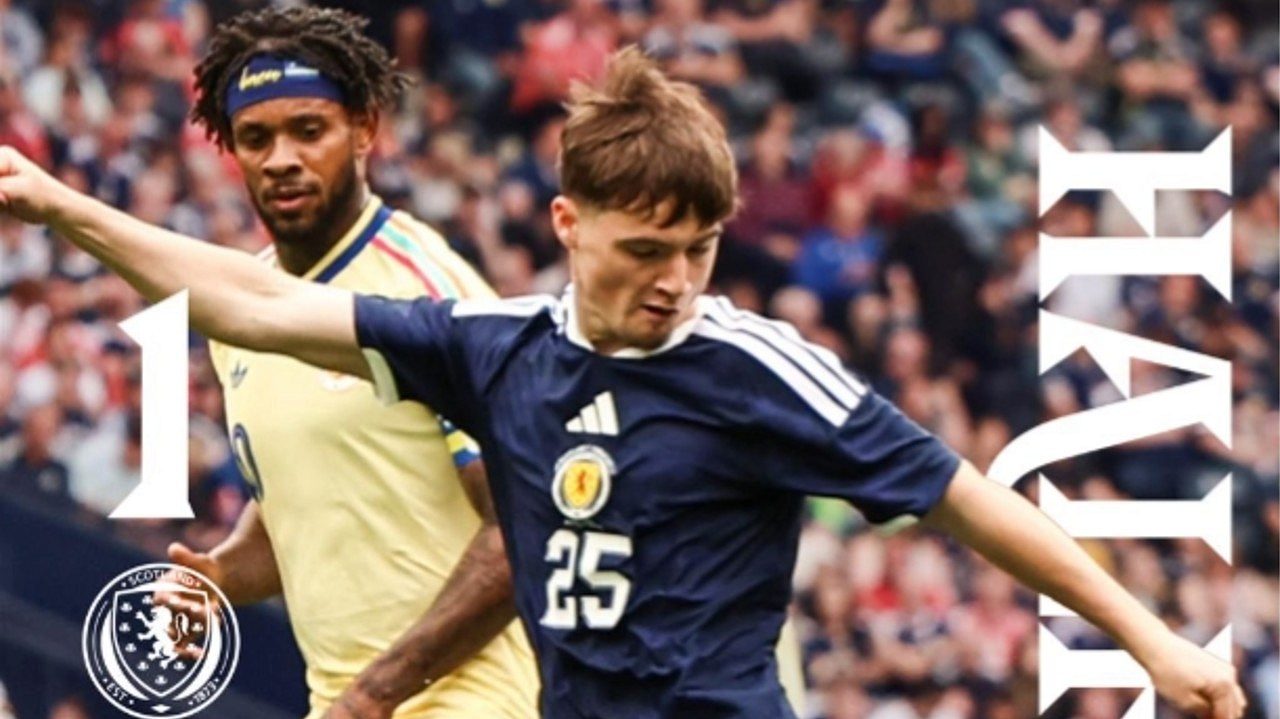
The Escócia team and the Curaçau team draw 1-1 in the international friendly held at the Barclays Hampden stadium, located in the city of Glasgow. The clash meets the date stipulated by the world football organization for tests between teams. The first stage of the game presented alternations in control of ball possession. The visitors opened the scoring midway through the opening half. The home team equalized the score in stoppage time. The duel remains underway for the final 45 minutes.
The match started with a strong physical dispute in the midfield sector. The two teams sought to establish territorial dominance in the opening minutes. Aos three minutes, George HIRST risked the first submission for Escócia. The attempt demonstrated the offensive posture planned by the home team. The pace of the game suffered frequent interruptions due to excessive infractions. Jurien GAARI and Juninho BACUNA committed successive fouls to contain the Scottish advances in the opening moments of the match.
The initial scenario and the opening of the scoreboard in Glasgow
Aos nine minutes in, Andrew Robertson advanced through the left sector and executed a shot against the opponent’s goal. The defensive system blocked the ball’s trajectory efficiently. The Curaçau team withstood the initial pressure and began to explore the spaces left by the marking. Aos 17 minutes, the visiting strategy worked objectively. Armando Obispo found Tahith CHONG in a favorable position inside the box. The player finished with precision and beat the Scottish goalkeeper. The goal surprised the audience present in the Barclays Hampden stands.
The disadvantage on the scoreboard forced Escócia to advance their marking lines immediately. The home team increased the volume of offensive play. Curaçau’s team withdrew their steering wheels to protect the entrance to the area. The confrontation took on the form of attack against defense. The visiting defenders hit back and forth crosses aimed at the small area. The intensity of the disputes for the ball resulted in disciplinary warnings for both sides of the field.
The expulsion of Jürgen Locadia and the immediate reaction
The tactical panorama of the match underwent a drastic change in the 38th minute. Jürgen Locadia committed a serious infraction and received a straight red card. The expulsion left the Curaçau team with ten athletes on the field. The referee applied the rule strictly after the foul committed. The numerical inferiority forced the visiting coach to quickly reorganize the defensive system. Mesmo with one player less, Juninho BACUNA managed to mount a quick counterattack in the 40th minute and finished against the Scottish goal.
Escócia’s pressure reached its maximum level in the final minutes of the first stage. The home team used its numerical advantage to trap the opponent in its own field. Aos 45 minutes, the offensive insistence generated practical results. Kenny McLEAN dominated the ball in the middle and watched Findlay Curtis infiltrate. The pass found his teammate unmarked. The shot beat the goalkeeper and declared a draw before the half-time whistle.
Cronologia of the main moves of the initial stage
The chronological record of the first half highlights the intensity of the international confrontation. The determining events occurred within a short period of time. The referee had to intervene in moments of tension between the athletes.
- Aos 3 minutes, George HIRST takes the first shot on goal of the match for Escócia.
- Aos 17 minutes, Tahith CHONG opens the scoring for Curaçau after a pass from Armando Obispo.
- Aos 36 minutes, the referee presents a yellow card to Tahith CHONG for a harsh play.
- Aos 38 minutes, Jürgen Locadia receives the red card and leaves Curaçau’s team with ten men.
- Aos 45 minutes, Findlay Curtis ties the game for Escócia with an assist from Kenny McLEAN.
- Aos 46 minutes, Andrew Robertson tries the comeback with a strong shot from long range.
- Aos 47 minutes, George HIRST commits an offensive foul and ends the actions of the initial stage.
The sequence of moves reflects the change in the teams’ stance throughout the 45 minutes. The visiting goal forced an immediate reaction from the hosts. The expulsion accelerated the process of territorial pressure. The injury-time equalizer changed the psychological dynamic for the locker room.
Alterações tactics and the impact of substitutions
Coach Steve Clarke used the break to modify the structure of Escócia’s selection. The commander made six changes to the team. Findlay Curtis left the field in the 42nd minute of the first half due to physical issues. Billy Gilmour took over the midfield spot. In the return for the second stage, Tyler Fletcher replaced Ben GANNON-DOAK. Nathan PATTERSON replaced Aaron HICKEY on the right flank to give more speed to the sector.
The changes continued in the defensive and offensive sector of the home team. John SOUTTAR took Grant Hanley’s position in defense. George HIRST gave up his place to Lyndon DYKES in attack command. Scott MCKENNA replaced Dominic HYAM. The substitutions indicate the intention to maintain high physical intensity against a worn-out opponent. The selection of Curaçau made only one exchange. Gervane KASTANEER took Riechedly Bazoer’s place to restore the containment system and close the spaces.
Perspectivas for match development
The second half begins with a clear and defined tactical design. Escócia controls possession of the ball and looks for spaces on the sides of the field. The full-backs advance simultaneously to create numerical superiority in the offensive sector. Curaçau’s team positions two compact defensive lines close to the penalty area. The visiting objective is to block shots and wait for a passing error to trigger the attackers at speed.
Friendlies organized on official dates on the world calendar have strategic importance. The teams use these clashes to test variations in tactical schemes before official competitions. The evaluation of young players is highlighted in these scenarios. Escócia seeks to consolidate a competitive group for the next continental tournaments. The Curaçau team uses international experience to raise the competitive level of its main squad. The match at Glasgow offers a test of resilience for the visitors.
The Scottish coaching staff guides the rapid movement of the ball from one side to the other. Midfielders constantly try to reverse plays to disorganize the opponent’s marking. The goalkeeper of the Curaçau team delays ball throw-ins whenever possible. The tactic aims to guarantee physical recovery time for overloaded defenders. The confrontation requires extreme patience from the home team to overcome the blockade established at the entrance to the area. The final result of the friendly will directly depend on the efficiency of goal completions and the resistance capacity of the visiting defensive system during the final 45 minutes.





