Brooklyn Rivera, 73, dies after three-year arbitrary detention in Nicaragua; rights groups demand answers
Brooklyn Rivera, 73, dies after three-year arbitrary detention in Nicaragua; rights groups demand answers
The human rights community worldwide is demanding a thorough investigation into the death of Brooklyn Rivera, a prominent 73-year-old indigenous leader from Nicaragua, who passed away following a prolonged arbitrary detention by the governing regime. Rivera, a revered figure among the Miskito people and a tireless advocate for indigenous rights and autonomy, had been held in state custody for approximately three years without formal charges or a fair trial, according to multiple international organizations. His passing underscores grave concerns regarding the treatment of political prisoners and the deteriorating human rights situation within the Central American nation.
Rivera’s death on February 23, 2026, has ignited a fresh wave of condemnation against the Nicaraguan government, which stands accused of systematically suppressing dissent and incarcerating critics. For decades, Rivera championed the cause of his people, advocating for their ancestral lands and self-determination on the country’s Caribbean coast. His detention in 2023 marked a significant escalation in the government’s crackdown on any perceived opposition, silencing one of the most vocal and historically influential indigenous voices.
A Legacy of Advocacy and Resistance
Brooklyn Rivera’s life was intricately woven with the struggle for indigenous rights in Nicaragua. Born in Prinzapolka, on the North Caribbean Coast, he rose to prominence during the Sandinista Revolution in the 1980s. He co-founded YATAMA (Yapti Tasba Masraka Nanih Asla Takanka), an indigenous political party that has been a crucial voice for the Miskito, Sumu (Mayangna), and Rama peoples, as well as Creole communities. His political trajectory was complex, at times collaborating with the Sandinista National Liberation Front (FSLN) and at other times fiercely opposing it, always with the autonomy and well-being of his people as the central focus.
His dedication led to the establishment of the Autonomy Statute of 1987, a landmark legislation that granted significant self-governance to the Caribbean Coast regions. Despite this achievement, Rivera consistently argued that the statute’s implementation remained incomplete, with indigenous communities still facing encroachment on their lands and a lack of genuine political participation. His persistent advocacy made him a target for successive governments, culminating in his final, arbitrary detention.
Details Surrounding His Confinement
Rivera was reportedly arrested in September 2023 under opaque circumstances, with authorities offering no clear explanation for his apprehension. Rights groups quickly denounced his detention as arbitrary, highlighting the absence of due process, access to legal representation, and communication with his family. His health, already fragile at 73, was a constant concern, with reports suggesting inadequate medical care during his incarceration.
* Lack of Formal Charges: Despite being held for three years, no official charges were publicly brought against Rivera, or if they were, they lacked transparency and due process.
* Incommunicado Detention: For extended periods, Rivera was held incommunicado, preventing family visits and legal counsel.
* Health Concerns: His advanced age and pre-existing conditions made his detention particularly perilous, prompting repeated calls for his release on humanitarian grounds.
* Political Motivation: Human rights advocates universally viewed his detention as politically motivated, aimed at silencing a critical voice against the government’s policies.

His case became emblematic of the broader human rights crisis in Nicaragua, where the space for dissent has progressively shrunk since the widespread protests of 2018. Hundreds of political prisoners have been jailed, many under vague charges of treason or terrorism, and often denied fundamental rights.
International Outcry and Calls for Accountability
Following Rivera’s death, several international human rights organizations issued strong condemnations, reiterating their demands for justice and accountability. Organizations like Amnesty International and Human Rights Watch have consistently documented the Nicaraguan government’s repressive tactics, including arbitrary detentions, forced disappearances, and the systematic erosion of democratic institutions. They highlight that Rivera’s death in state custody, after years of arbitrary detention, necessitates an immediate, independent, and impartial investigation into the circumstances surrounding his passing and the conditions of his imprisonment.
The Inter-American Commission on Human Rights (IACHR) had previously expressed concern over Rivera’s situation, calling for his immediate release and adherence to international human rights standards. His death now adds a tragic chapter to Nicaragua’s human rights record, drawing renewed attention to the plight of countless other political prisoners still held by the regime. These groups are urging the international community to increase pressure on the Nicaraguan government to release all political prisoners, restore civil liberties, and allow independent human rights monitoring within the country.
The Broader Context of Repression
Rivera’s death occurs amidst a deeply entrenched pattern of authoritarian rule in Nicaragua under President Daniel Ortega and Vice President Rosario Murillo. The government has systematically dismantled democratic institutions, suppressed independent media, and targeted civil society organizations, religious leaders, and political opponents. Thousands of Nicaraguans have fled the country, seeking asylum from political persecution. The crackdown has intensified in recent years, with the judicial system frequently used as a tool to silence critics and consolidate power.
This environment of fear and repression has had a particularly severe impact on indigenous communities, who often find
Veja Tambem em Últimas Notícias

Paterson urges heightened scrutiny for One Nation amidst political shifts; national minimum wage decision looms

Bolsa família: governo federal detalha novas regras e benefícios complementares do programa

Astro do reality Alaskan Bush People, Matt Brown é encontrado morto em rio aos 43 anos
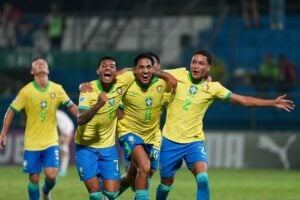
Seleção Brasileira define rota no Grupo C da Copa do Mundo 2026 com estreia diante de Marrocos

Reestruturação global da fabricante OnePlus afeta liderança e Robin Liu deixa comando na Índia

Nintendo libera atualizações técnicas para estabilizar dez jogos do console original no Switch 2

Samsung descarta tecnologia AES para a S Pen e mantém sistema clássico no Galaxy S27 Ultra

Transmissão do Xbox Partner Preview revela detalhes inéditos de Stranger Than Heaven e S.T.A.L.K.E.R. 2

Shows de Jay-Z no Yankee Stadium registram ingressos de arquibancada a US$ 12 mil em revenda

Aparelho da Apple mantém alto desempenho e atrai consumidores com chip A18 e câmeras avançadas em 2026

Linha Galaxy S26 ganha integração automática com AirDrop da Apple por meio do Quick Share