FIFA confirms 2026 World Cup calendar with opening in June and 48-team format
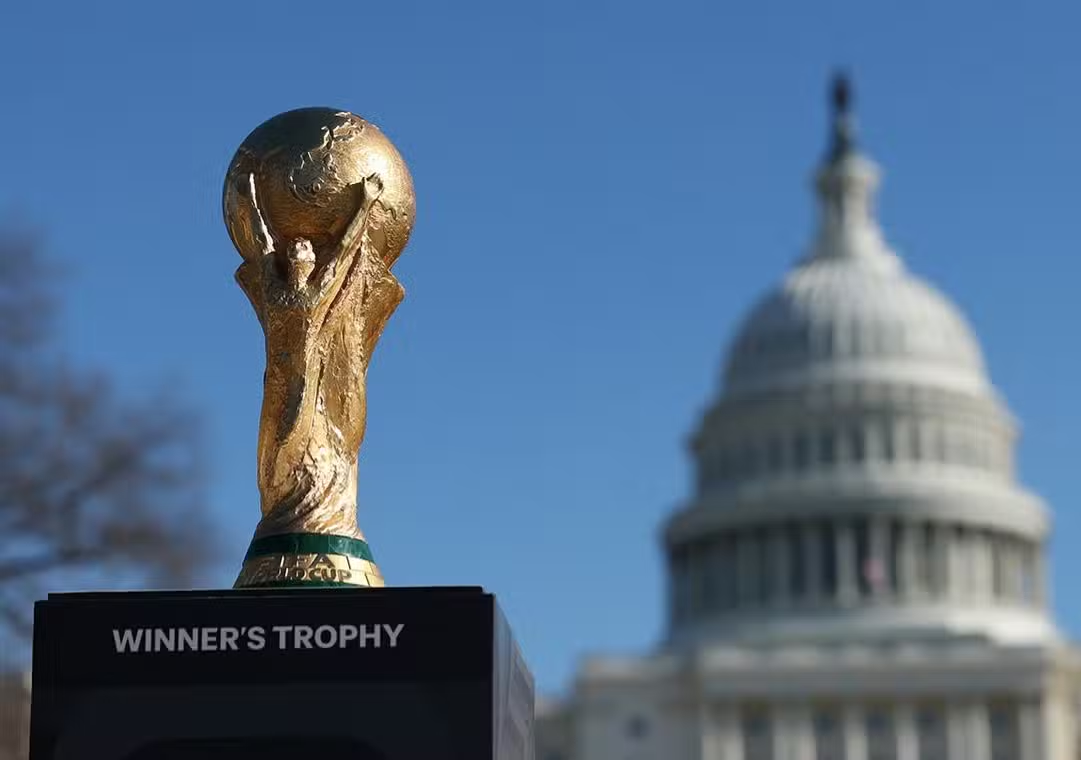
Federação Internacional of Futebol Associação (Fifa) has defined the official schedule for Copa of Mundo 2026, with the start scheduled for June 11th. The tournament will take place in an unprecedented way in three countries simultaneously, encompassing Estados Unidos, Canadá and México as joint venues. The final match is scheduled for July 19th. The cycle ends just over a month of uninterrupted competitions, consolidating the biggest event in world football.
The main change in the regulations involves the increase in the number of participants, jumping from 32 to 48 national teams. The change directly affects the number of games, the logistics of traveling delegations and the classification system for the continental qualifiers. Regional confederations received additional quotas of direct vacancies, changing the dynamics of preliminary disputes around the globe. The new model aims to expand geographic representation in the main sporting event on the planet.
Official Cronograma sets group stage dates until decision
The tournament organization structured a calendar that spreads the matches over five full weeks. Planning requires complex logistical coordination due to the continental distances between the North American host cities. The initial phase concentrates the largest volume of daily clashes, requiring teams to adapt to the different time zones in the region.
The organizing committee detailed the specific windows for each knockout stage of the competition. The format introduces an additional knockout phase, the round of 32, prolonging the path to the dispute for the trophy. The distribution of dates follows the official standard established by the entity:
- Jogo Opening: June 11, 2026
- Primeira round: June 11th to 17th
- Segunda round: June 18th to 23rd
- Terceira round: June 24th to 27th
- Round of 32: June 28th to July 3rd
- Oitavas Finals: July 4th to 7th
- Quartas Finals: July 8th to 11th
- Semifinais: July 14th and 15th
- Third Place Disputa: July 18
- Final: July 19, 2026
The inclusion of the round of 32 stage represents a direct increase in the length of stay for teams that advance in the competition. The squads will need to play more matches to reach the title compared to previous world championships. The rest interval between qualifying games was adjusted to maintain the physical integrity of professional athletes during the month of competitions.
Unprecedented Expansão changes dynamics with 48 participating teams
The increase in the number of participants reconfigures the group system for the first phase of the World Cup. The previous format had 32 teams divided into eight groups of four teams. Agora, the tournament will have 16 groups made up of three teams each. The change guarantees a greater volume of matches in total and offers new classification opportunities for global confederations.
The structural change expands direct access to the tournament for several nations. Mais countries get a direct place or advance through specific regional qualifiers. Fifa justifies the expansion of the format as a direct means of democratizing international competition. The new championship design changes the scoring dynamics necessary to advance to the knockout stage.
Football’s highest governing body also projects substantial financial gains from changing the regulations. The official justification points out that the increase in the number of teams generates more revenue from ticket sales at the stadiums. Television broadcasting rights also experience direct appreciation due to the expanded number of matches available for the global market.


Organização splits matches between Estados Unidos, Canadá and México
The winning triple bid split infrastructure responsibilities between the three América and Norte nations. Os Estados Unidos receives the largest number of host cities, taking advantage of the existing structure of large stadiums. The country will concentrate most of the decisive matches from the more advanced knockout stages onwards.
México and Canadá contribute their main urban centers to host the group stage matches and the first knockout matches. The exact definition of stadiums and cities has already been made official by Fifa after rigorous technical inspections. Cada nation has a proven history of international competitions and infrastructure ready to receive a large audience.
The distribution of cities and stadiums between three countries required unprecedented coordination on the part of local organizing committees. The first round calendar underwent specific adaptations to accommodate the 16-group structure. Anteriormente, a single nation hosted the entire competition, facilitating the internal transit of delegations and accredited fans.
Seleção Brasileira secures a place and awaits definition of the squad
Seleção Brasileira secured its presence in the tournament following the results obtained in the South American qualifiers. Brasil maintains the historical record of participating in all Copa editions of Mundo since its creation. The national team is part of the group of selections confirmed among the 48 places available for the 2026 event.
Confederação Brasileira of Futebol (CBF) will begin logistical planning for choosing the training center in North American territory. The coach and definitive squad will still be defined according to the entity’s official calendar. The technical department evaluates options for sports facilities that meet the standards required by the national technical committee.
The final list of players called up will be announced weeks before Brasil’s debut match. The official call-up follows the pattern established in previous tournaments, awaiting the end of the clubs’ regular seasons. The medical and physical monitoring of the players will guide the final choices of the coach responsible for the team.
Impacto financial and audience projections break historic records
The expanded format promises greater fan circulation between the three host countries. Partidas held in different cities attract different audiences and significantly boost the local economy. The confederations project a significant increase in ticket sales when compared to the traditional 32-team model.
Global sponsors are already reinforcing their investments with a view to the 2026 event. Grandes brands see the expansion as an opportunity for greater commercial exposure during the month-long tournament. The corporate market has a high demand for sponsorship quotas and marketing actions associated with participating teams.
Broadcasting rights also attract record offers from television broadcasters on every continent. Streaming platforms enter the competition for digital exhibition packages, fragmenting the audience and generating new sources of revenue. The organizing committee monitors commercial proposals to maximize the global reach and financial return of the sporting event.
Veja Tambem em Latest News (EN)

Avi Loeb explains meteor explosion that shook Massachusetts with 2% energy from the Hiroshima bomb

Courtney Clenney’s defense inspects murder knives at Florida hearing

Jhon Durán agrees with Galatasaray and returns to Turkish football

List brings together 11 cozy science fiction games for relaxing experiences in space; check out what they are

Max Domi faces complications after back surgery and is out indefinitely from the Toronto Maple Leafs

William Pacho renews with PSG after two-time Champions League title

Adidas presents the Colombian team’s new white uniform for the 2026 World Cup

Chyler Leigh reveals regret about not filming scene with Eric Dane on Grey’s Anatom

Taylor Swift announces original song for Toy Story 5 after rumors

Roberto Martínez does not rule out Cristiano Ronaldo in the 2030 World Cup
Argentina leads squad repetitions for the 2026 World Cup with almost 65% of the 2022 team