

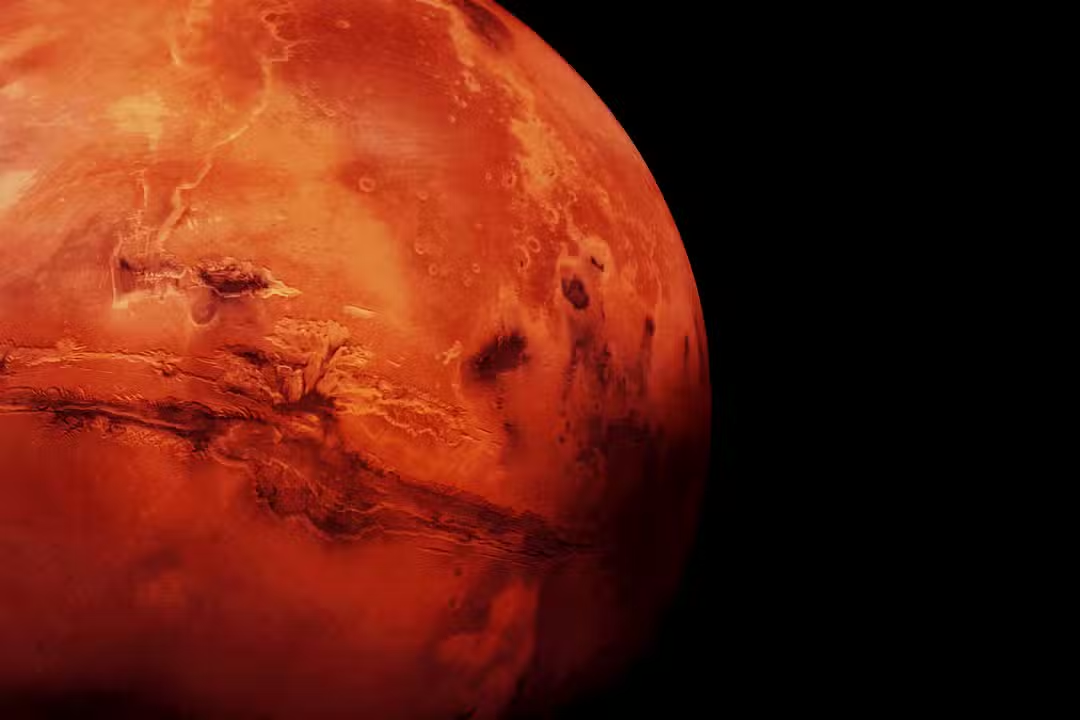
Research analyzed a zircon crystal extracted from a Martian meteorite. The material is 4.45 billion years old and shows signs of interaction with hot water. The discovery opens up new perspectives on the initial conditions of the red planet.
The study was led by researchers at Curtin University, at Austrália. Eles examined a zircon grain from the NWA 7034 meteorite, known as Black Beauty. The fragment fell into Terra after being ejected from Marte by an ancient impact.
Zircon Cristal records traces of hot fluids
The analyzed zircon preserved specific geochemical patterns. Elementos such as iron, aluminum, yttrium and sodium appear in concentric layers within the crystal. Essa structure, called oscillatory zoning, indicates that the mineral formed in the presence of mineral-rich water.
- Zircon is 4.45 billion years old
- Ele came from the meteorite Black Beauty (NWA 7034)
- Analysis used nanoscale imaging techniques
- Trace elements suggest hydrothermal processes
- The find dates back to the pre-Noachian period of Marte
Técnicas advanced spectroscopy allowed us to map these elements precisely. The researchers identified that hot water circulated through the Martian crust during the planet’s early formation.

Meteorito Black Beauty offers rare sample from the Martian surface
NWA 7034 was found in Saara in 2011. Like other Martian meteorites, Diferente consists of regolith breccia, a mixture of fragments from the surface of Marte. Isso makes it valuable for understanding the planet’s ancient environment.
The material contains crystals formed between 4.48 and 4.43 billion years ago. São the oldest known pieces of Marte that made it into Terra. A violent impact launched the meteorite into space, where it traveled until it fell on our planet.
The presence of water at such an early stage suggests that Marte had different conditions than previously imagined. Sistemas Hydrothermal vents such as hot springs are environments where life may have emerged in Terra. The same may have happened in Marte.
Implicações for Red Planet Habitability
The discovery pushes back the confirmed record of water in Marte. Previous Evidências pointed to more recent periods, such as the Noachian, around 4.1 billion years ago. Agora, the data indicates aqueous activity shortly after the formation of the Martian crust.
Dr. Aaron Cavosie, one of the study’s authors, highlighted the use of nanoscale geochemistry. The technique revealed fingerprints of hot fluids preserved in the crystal. Isso reinforces that Marte had key ingredients for potentially habitable environments from an early age.
Outros Martian meteorites have previously shown indirect signs of water. Porém, this is the oldest direct record found so far. The research was published in the journal Science Advances.
Métodos analysis reinforces reliability of results
Scientists combined high-resolution imaging with trace element analysis. The process avoided contamination and allowed the conditions for zircon formation to be reconstructed. The mineral is known to resist changes over time, which preserves the original information.
Equipes from different institutions collaborated on the work. The focus was on the precise chemical composition of the crystal. Similar Resultados in other grains from the same meteorite may expand conclusions in the future.
Próximos steps on space missions may confirm findings
Agências and Nasa plan to return samples from Marte with missions like Mars Sample Return. Materiais collected directly from the surface can validate the meteorite data. Enquanto that, studies in terrestrial laboratories continue to extract information from fragments like Black Beauty.
The research contributes to the debate about the evolution of Marte. Ela also fuels discussions about where to look for signs of past life on the planet.