
Eruption of the Hunga Tonga volcano in 2022 cleaned methane released into the atmosphere
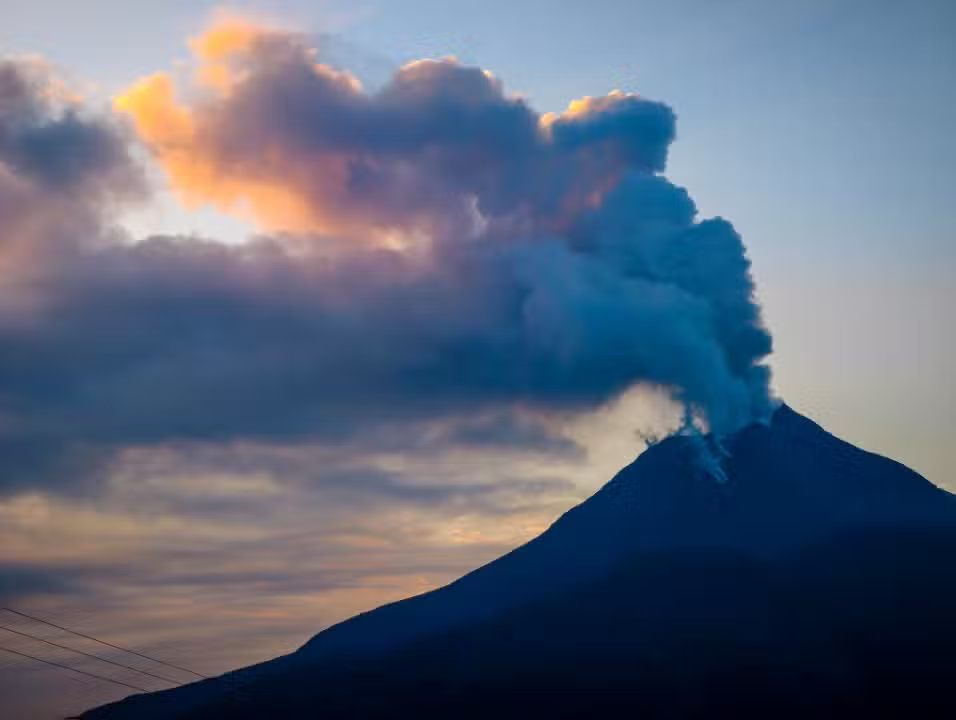
An underwater volcano on Pacífico Sul erupted in January 2022. The explosion of Hunga Tonga-Hunga Ha’apai released enormous amounts of ash, steam and gases. Agora, a study published in May 2026 shows that the event also helped to break down some of the methane it itself emitted.
The discovery came from satellite data. Cientistas observed a cloud of formaldehyde in the stratosphere. Essa substance appears when methane breaks down in the atmosphere.
Erupção generated cloud with salty vapor and ash
The volcano spewed material equivalent to 58,000 Olympic swimming pools of salt water vapor mixed with ash. Sunlight reacted with this mixture. The process formed chlorine atoms. Esses atoms attacked methane molecules.
The team led by Maarten van Herpen detected the phenomenon. The Acacia Impact Innovation physicist at Holanda coordinated the analysis. The formaldehyde cloud persisted for more than ten days.
- The eruption released around 330,000 tons of methane.
- Cerca of 900 tons decomposed per day at peak.
- Formaldehyde reached up to 12 parts per billion at 30 km altitude.
- The process took at least a week.
The researchers compared it with known phenomena. Partículas dust from Saara on Atlântico generate similar reaction. In the case of Hunga Tonga, the scale was much larger.
Estudo confirms accelerated methane oxidation
The research was published in the magazine Nature Communications. Dados of Sentinel-5P and other satellites were used. The volcanic plume traveled around the planet. Shock Ondas made two complete revolutions.
Methane has a warming potential 80 times greater than carbon dioxide in 20 years. Ele accounts for a third of current global warming. Reduzir its concentration in the atmosphere would bring rapid effects.
The eruption released methane equivalent to that of two million cows per day. But the same feather removed part of it. Essa unexpected cleanliness caught scientists’ attention.
Reação can inspire techniques against climate change
Chlorine generated in the stratosphere attacked methane. Formaldehyde served as a marker. Como lasts a few hours, its continued presence indicates active decomposition.



Van Herpen suggests that the finding paves the way for interventions. Injetar iron-bearing particles in oceanic areas could replicate the effect. The objective would be to decompose methane in anthropogenic sources.
Pete Edwards, from Universidade from York, on Reino Unido, expressed caution. Ele did not participate in the study. The troposphere, where human emissions occur, has different dynamics than the stratosphere. Efeitos collaterals need to be rigorously evaluated.
Detalhes from the eruption reinforces the strength of the event
The Hunga Tonga-Hunga Ha’apai exploded with power hundreds of times greater than the Hiroshima bomb. The tsunami and shock wave affected distant regions. Imagens satellite captured the smoke column rising 64 km.
The study quantified methane oxidation. The plume contained enough material to sustain the reaction for days. Isso explains low levels of other observed compounds.
Cientistas from several institutions collaborated. Entre them, the Royal Belgian Institute for Space Aeronomy and the Universidade for Utrecht. The analysis crossed multiple satellite sources.
Implicações for future emissions monitoring
The formaldehyde detection method can be improved. Ele allows you to measure methane removal on a large scale. Isso helps validate geoengineering techniques.
Especialistas emphasize that direct emissions reduction remains essential. Methane comes from agriculture, trash and fossil fuels. Qualquer add-on solution requires extensive testing.
The 2022 eruption provided a rare natural experiment. Ela showed that volcanoes can both pollute and clean the atmosphere. Equilibrium depends on specific chemical conditions.
Veja Tambem em Latest News (EN)

Yuki Yamada posts photo with beard and grimace on Instagram and surprises fans

Costco sees record demand at U.S. gas stations with lower prices

Passenger tries to enter cockpit and forces diversion of United Airlines flight to Madison
Astronomer explains white light recorded after meteor falls near volcano in Philippines

Comedian Sakamoto-chan reveals type 2 diabetes remission after lifestyle changes

Avi Loeb says discovery of alien intelligence can unite humanity amid global crises

Police investigate death of Hilde Ann Lynn Helphenstein in room at Rosewood São Paulo
Avi Loeb suggests that dark comet 1998 KY26 could be Soviet probe Phobos 1
Typhoon Chan-mi approaches Okinawa and Amami with strong winds this Tuesday

Bad smell in children’s feet has specific causes and can be controlled by parents

Google releases Android 17 Beta 4.1 for Pixel devices
